







A snow-covered small-town street at dusk, with lit white clapboard houses, bare trees, and a grain elevator silhouetted against an orange and blue twilight sky.

Heat Pump Repair in Center, ND

Tell us about the job

Takes about a minute. No obligation.

RepairHeat PumpOliver County, ND
Step 1 of 2

What ZIP code is the job in?

A heat pump in Oliver County runs through a long, cold winter, and the compressor carries that load for months at a stretch. The county falls in zone 6A, the rating given to places with exactly that kind of demanding cold. Winter brings more than cold air. Oliver County saw 26 winter storms between 2015 and 2024, heavy snow and ice that build up on the outdoor unit and force it to run in conditions it wasn't built to idle through. The same stretch of years brought 32 hail events, and the cabinet, coils and fan take that beating even when the system sits idle. A unit worked this hard, this often, wears sooner than one that gets an easier season elsewhere. When something in it starts acting up, that's usually why.

9 months
September through May, your system heats
2 months
July through August, it cools
6°F
the average winter night it heats against
80°F
the average summer afternoon it cools against
Isometric cutaway illustration of a small house showing interior rooms with furniture, an indoor air handler with ductwork, and lines running to an outdoor condenser unit beside the building.
Your system heats September through May and cools July through August.

NOAA nClimDiv, 1991–2020 normals

A heat pump that won't switch out of defrost, or stays frozen over, is telling you something before a tech ever shows up.

Check the outdoor unit for a thick coat of ice, listen for the indoor fan running without warm air, and look at the thermostat setting before you pick up the phone.

Electricity here is cheap. A heat pump running wrong still adds up when it runs this much.

Power here costs 12.72 cents per kilowatt-hour
Climate zone 6A
Cooling runs July through August
The First Cold Snap Finds the Weak PartHeat here runs September through May, and September is when a part that barely made it through last winter gives out.

A heat pump that's short cycling, running constantly, or stuck in a mode it shouldn't be in is pulling power the whole time it does that. Power here is cheap, which keeps the damage down, but cheap isn't free, and a unit fighting Oliver County winters for months doesn't take a short break while you decide when to call. Most homes here lean on propane for heat, so the heat pump is likely doing part of the job rather than all of it, but a malfunction still runs up what it draws for as long as it sits unrepaired. The longer a bad compressor or a stuck defrost cycle keeps pulling current, the more it costs before anyone looks at it. Getting it checked soon is the way to stop paying for a problem instead of a fix.

Worked This Hard, It's Worth Diagnosing Right

A unit under this much strain doesn't fail cleanly. It struggles first, and that struggle looks like a dozen other things. What's acting up in your heat pump right now is worth having a tech actually diagnose, rather than guess at, so whatever gets fixed stays fixed through the next cold snap.

Find a contractor
A man in a dark cap, gray long-sleeve shirt and brown work pants climbs porch steps toward a navy front door, carrying a canvas tool tote with tools in its pockets, beside a potted evergreen shrub in a blue planter.
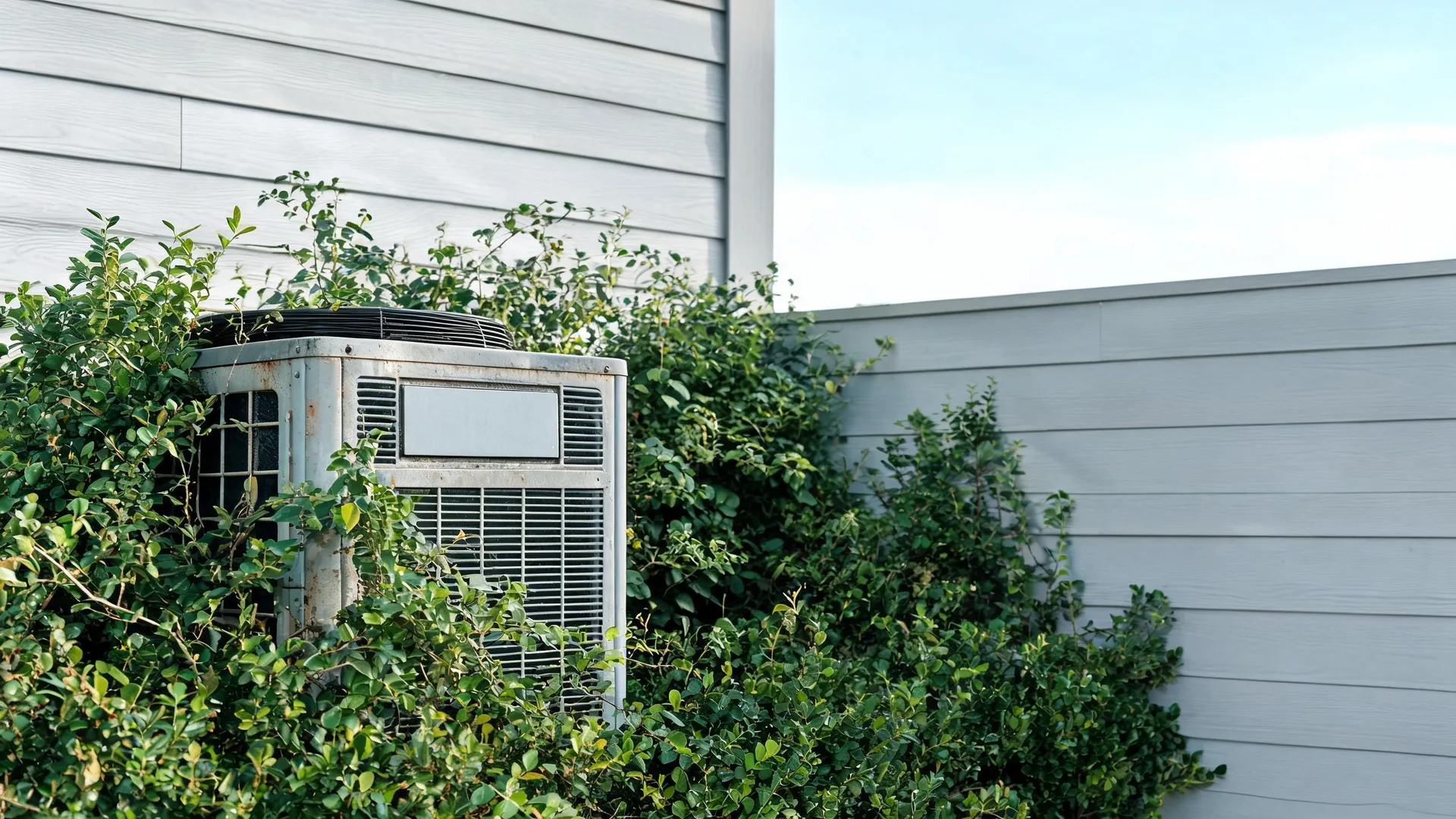
A residential heat pump outdoor unit mounted on a concrete pad next to a house with gray vinyl siding.

The Parts That Give Out First

A heat pump fails from the outside in. The outdoor unit sits through every freeze, every thaw, every gust of wind, and that's where trouble usually starts. The compressor is the part most likely to end a heat pump's life, and it's also the most expensive to replace. It can fail from running low on refrigerant for too long, from an electrical fault that makes it strain to start, or simply from age after years of cycling on and off. The reversing valve, which lets the system switch between heating and cooling, can stick in one position and leave the system blowing the wrong temperature of air. Defrost controls fail too. A bad sensor or control board can leave the outdoor coil icing over and never clearing, or clear it so often that the system can't keep up with the heat the house needs. Fan motors wear out from bearings going dry, and a fan that won't spin means the coil can't do its job in either direction. Capacitors weaken over seasons of starting and stopping the compressor and fan, and when one goes, the unit can hum without starting or shut off on its own partway through a cycle. None of these parts fail without warning. They usually show it first in how the system runs, not in a sudden stop.

What You'll Notice First

A heat pump in trouble usually tells on itself through the vents before anything quits outright. Air blowing cool when it should be warm, a room that won't hold its set temperature, or the system running long stretches without shutting off are the common early signs. Odd sounds matter too. A clicking at startup that doesn't resolve into a run, a hard bang from the outdoor unit, or a hiss that wasn't there before all point to something specific wearing out, not just age catching up with the machine.
Why It's Worth Naming the Symptom

What the homeowner hears or feels usually points straight at a part. Warm air that turns cool partway through a cycle often means the reversing valve isn't holding position. A unit that hums but won't start points at a weak capacitor or a motor dragging on a dry bearing. Ice that won't clear from the outdoor coil points at the defrost control. Telling a tech exactly what's happening, and when it happens, gets the right part checked first instead of the whole system taken apart to find it.

A heat pump that's struggling doesn't need to be left running while you wait for a tech. If the compressor is low on charge, every hour it keeps cycling is another hour it runs hotter and harder than it should, and that's what kills compressors for good. A reversing valve stuck halfway can make the system work against itself, trying to heat and cool at the same time, which strains parts that were never built for that fight. Ice on the outdoor coil that isn't clearing cuts off airflow, and a system starved for airflow pulls harder to do the same job, which wears the fan motor and the compressor both. None of this fixes itself by giving it time. Shutting the system off until someone can look at it usually costs less than letting a small fault run.

A diagnostic visit starts outside, at the unit itself. A tech will check refrigerant pressures, look at how the compressor is drawing current, and watch a full cycle to see where it hesitates or runs long. Electrical connections get checked for corrosion or a loose terminal, since those cause as many failures as a worn part does. Inside, the coil and blower get a look too, because restricted airflow on one side of the system shows up as a problem on the other. A lot of this comes down to testing the parts that fail quietly: a capacitor gets checked under load, not just by sight, and a reversing valve gets tested in both positions, not just the one it's stuck in. The goal is to find the part actually causing the symptom, not to start swapping parts and see what helps.