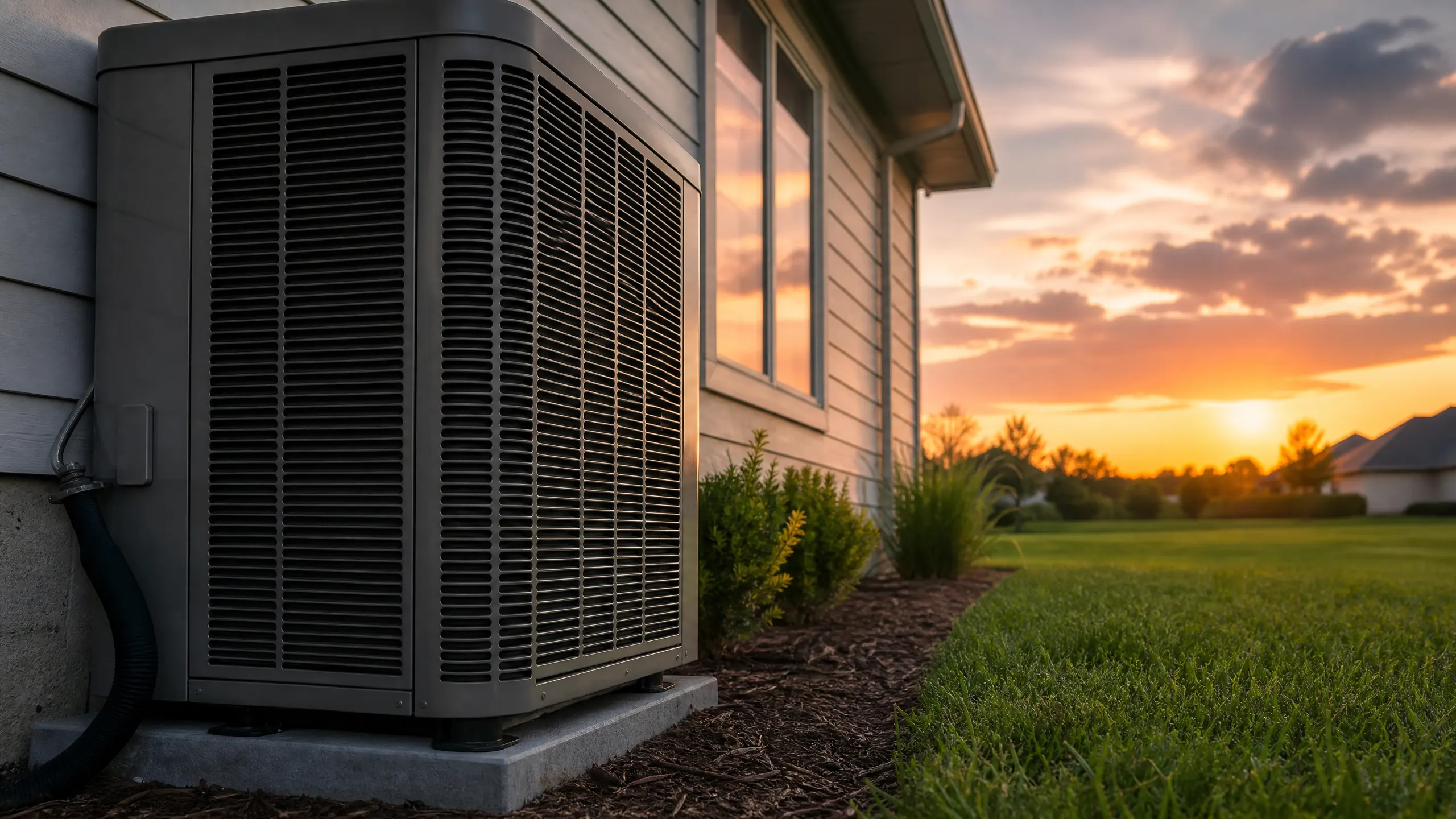




An outdoor air conditioning condenser unit mounted on a concrete pad beside a house at sunset.

Heat Pump Repair in Bowman, ND

Tell us about the job

Takes about a minute. No obligation.

RepairHeat PumpBowman County, ND
Step 1 of 2

What ZIP code is the job in?

Winter nights here average 9°F, and a heat pump is built to run in that kind of cold. Bowman County gets its share of wind, hail and winter storms, but none of that is what wears on a heat pump. What causes a breakdown is usually the same thing you'd find anywhere. A failing capacitor. A low refrigerant charge. A reversing valve stuck in one position. A thermostat sending the wrong signal. If your heat pump is blowing cold air when it should be heating, or running nonstop without catching up, that points to one of those parts, not the weather outside. A contractor who checks the system against what it's actually doing can find which one it is.

10 months
September through June, your system heats
2 months
July through August, it cools
9°F
the average winter night it heats against
81°F
the average summer afternoon it cools against
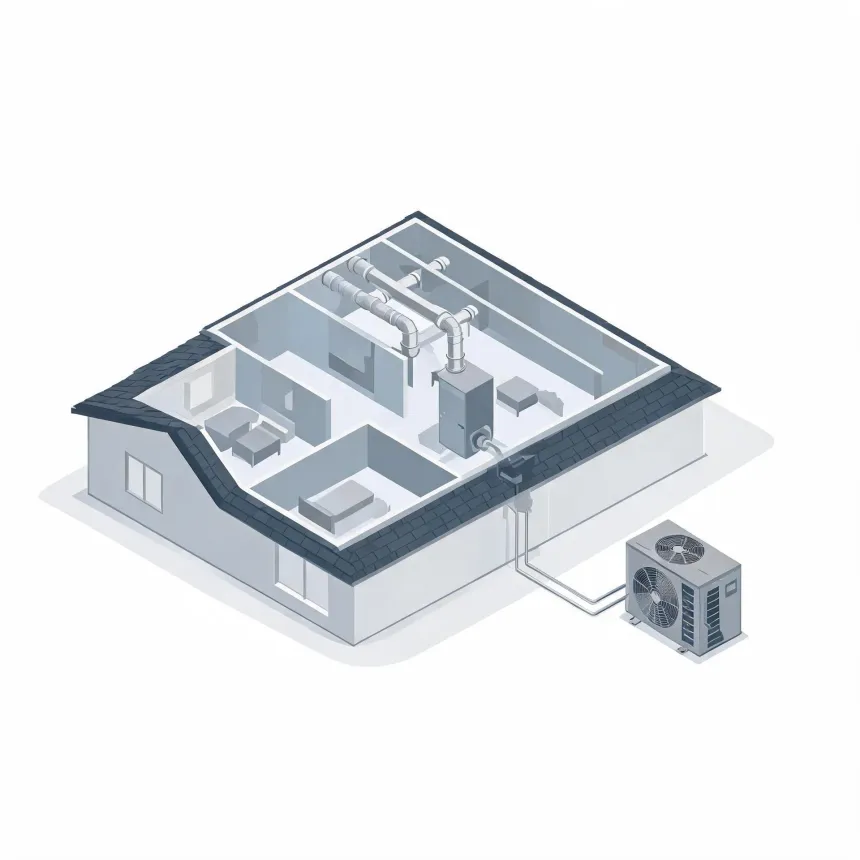
Isometric cutaway illustration of a single-story house showing interior rooms with ductwork, a furnace or air handler, and refrigerant lines running outside to a condenser unit on a pad.
Your system heats September through June and cools July through August.

NOAA nClimDiv, 1991–2020 normals

Heat here starts in September, right after a month of mild weather in August.

A heat pump with a weak part can limp through summer and fail the first cold night it has to work hard.

Half the homes in Bowman County were built by 1972, old enough that the heat pump itself may be the original

Half the homes here were built by 1972
70 damaging wind events from 2015 to 2024
44 hail events from 2015 to 2024

Electricity in North Dakota ran 11.51 cents per kilowatthour in 2024. A heat pump moves heat instead of burning gas to make it, so it costs less to run than straight electric heat strips at that rate. That math doesn't change because a part fails. A stuck reversing valve or a weak capacitor just means the system is spending that electricity without getting the heat into your house. Fixing the part is what gets you back the efficiency you're already paying for.

Get the usual fix

Nothing about this area is especially hard on it. It's most likely the usual problem with the usual fix.

Find a contractor
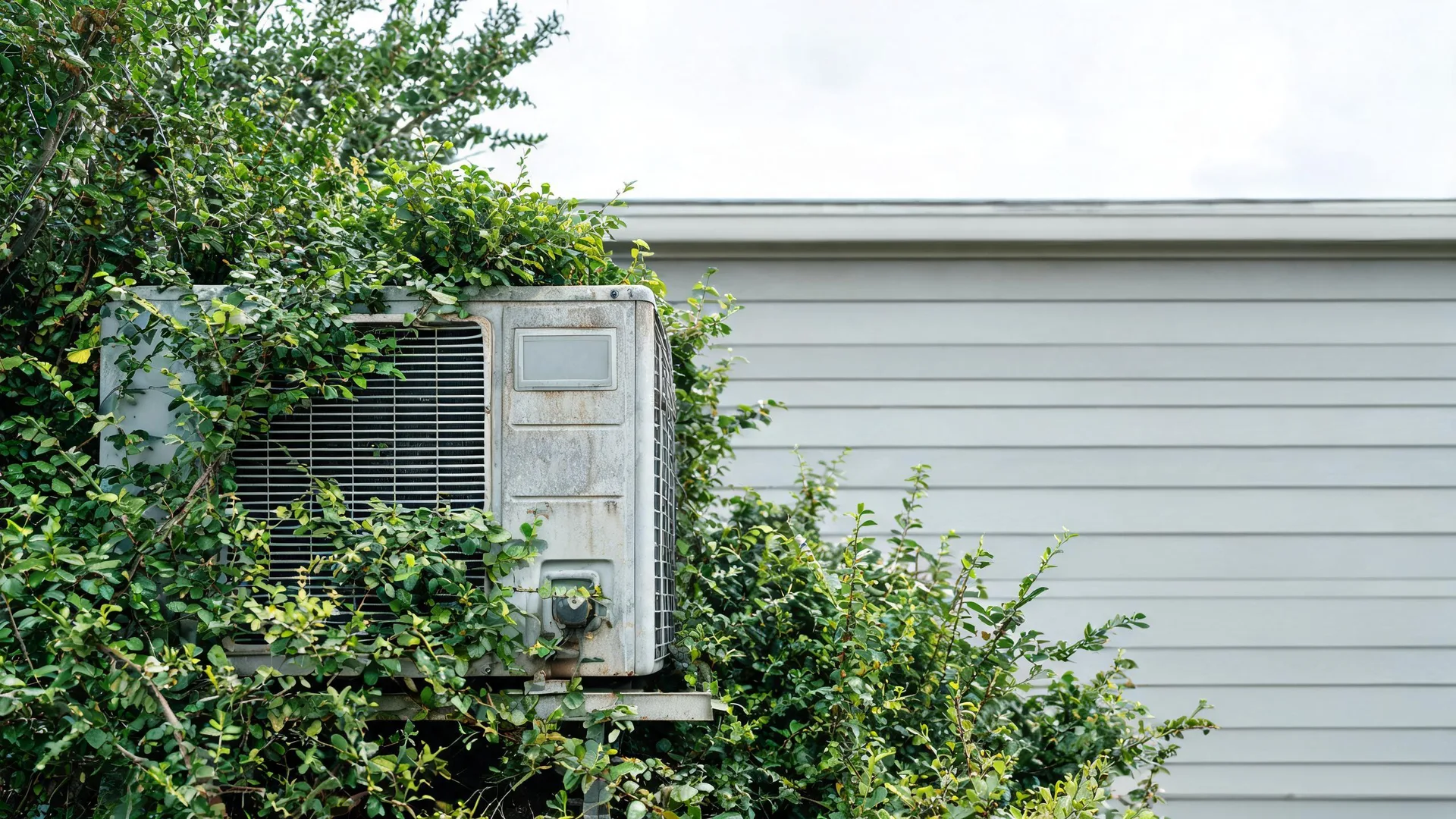
A white mini-split heat pump outdoor unit mounted on a concrete pad beside a gray-sided house, surrounded by gravel and green shrubs.

The longer it runs, the sooner a weak part shows itself

A heat pump runs for months at a stretch, through the mild weeks and into the stretch where it has to work hardest. That runtime is what brings a weak part to the surface. A capacitor that was getting by in easier weather will stop being able to start the compressor once the system has to run longer to keep up. A reversing valve that sticks once in a while in mild weather will start sticking every time once the system is cycling more. Watch for ice on the outdoor unit that doesn't clear during the defrost cycle, air from the vents that feels cooler than it should, or the system running long stretches without the house actually warming up. Short cycling, where it shuts off and restarts every few minutes instead of finishing a cycle, is another sign something is working harder than it should for the same result. None of this shows up out of nowhere. It's usually a part that was already wearing down, caught by the season that finally asked more of it.

Most failures are electrical, not mechanical

A capacitor weakens over time and eventually can't give the compressor or fan motor the jolt it needs to start. A contactor pits from years of arcing until it stops making clean contact. Neither failure has anything to do with how cold it is outside. They fail from age and from the number of times the system has cycled on and off.
What that means for the repair

A contractor testing a heat pump that won't start checks the capacitor and contactor before anything else, because they're the most common point of failure and the easiest to confirm. If the compressor hums but doesn't start, or the outdoor fan doesn't spin, that's usually where the problem sits. Replacing one of these parts is a straightforward fix once it's found.

A few things are worth checking before you call anyone out. Go to the thermostat first and make sure it's set to heat, not fan only, and that the temperature you want is actually above room temperature. Check your breaker panel for a tripped breaker, both the one for the indoor air handler and the one for the outdoor unit, since a heat pump that's completely dead is often just that. Look at the outdoor unit itself. If it's buried in snow or has ice built up around the base, clearing it away can be enough to get airflow moving again. Walk around the house and check that supply vents aren't closed or blocked by furniture. Last, check your air filter. A filter clogged with dust chokes off airflow and can make a working system feel like it's failing. If you've checked all that and it's still blowing cold air, short cycling, or not starting at all, the problem is inside the system and it's time to get someone out to look at it.

A diagnostic visit starts with questions, not tools. What's the system doing, when did it start, does it happen all the time or only sometimes. Then the contractor checks power at the disconnect and the breaker before opening anything up, because a dead system is sometimes just a dead circuit. With power confirmed, they test the capacitor and contactor, since those fail more than anything else in the unit. If those check out, they move to refrigerant pressures and the reversing valve, watching how the system responds when it's told to switch between heating and cooling. Airflow gets checked too, at the filter, the coil and the vents, since weak airflow can look like other problems that have nothing to do with airflow at all. By the end, the failing part has usually shown itself, and the contractor can tell you what it is and what it takes to fix it.