





A snow-covered small-town street at dusk, lined with illuminated two-story houses and a grain elevator on the horizon.

Furnace Repair in Wahpeton, ND

Tell us about the job

Takes about a minute. No obligation.

RepairFurnace or heatingRichland County, ND
Step 1 of 2

What ZIP code is the job in?

Nine months of heat a year wears a furnace down faster than people expect. From September through May, yours is the thing standing between the house and a 5°F night outside. That's not a system that gets to rest much. By the time something starts acting up, a lot of hours are already on it, and whatever's failing has usually been failing slowly for a while. A proper diagnosis finds the actual part behind it, not just the symptom, so the fix holds instead of giving out again next cold snap.

9 months
September through May, your furnace is on duty
5°F
the average winter night it heats against
60 winter storms
in ten years, the nights a failure hurts most
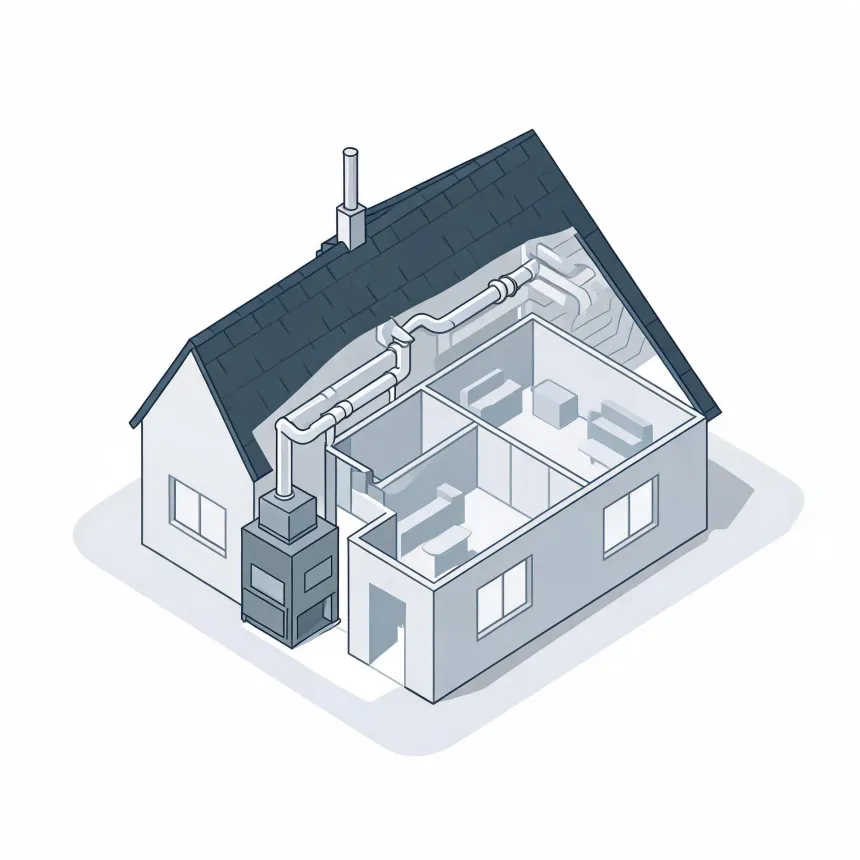
Isometric line illustration of a cutaway single-story house with a dark shingled roof, showing interior rooms and ductwork connected to a gray furnace unit with a flue pipe.
Your furnace works hardest from November through March.

NOAA nClimDiv, 1991–2020 normals

Half the homes in Richland County were built in 1972 or earlier.

If your furnace came with a house that old, it's worth asking how much life is left in it before you pay for a big repair.

Electricity here runs $33.73 per million Btu, and a furnace that's struggling burns more of it every month it goes unfixed

Heat runs September through May
Winter nights average 5°F
Climate zone 6A
Nine months of heat start in SeptemberFurnace problems in Wahpeton tend to surface in the first cold weeks, not mid-winter.

If your furnace is cycling on and off more than it used to, or running longer to hit the same temperature, don't wait on it. A furnace that's starting to fail rarely just stops, it loses ground a little at a time, and a 5°F night is a bad time to find out how much. Getting it looked at now means a tech can trace the actual cause, a cracked heat exchanger, a weak igniter, a blower pulling too much, instead of just patching whatever's easiest to reach. That's the difference between a repair that holds through May and one you're paying for again in January.

Know what you're repairing before you pay for it

A tech who's already out for the repair can tell you how much life your furnace has left. Worth asking before you spend on a part for a unit that's on its way out anyway.

Find a contractor
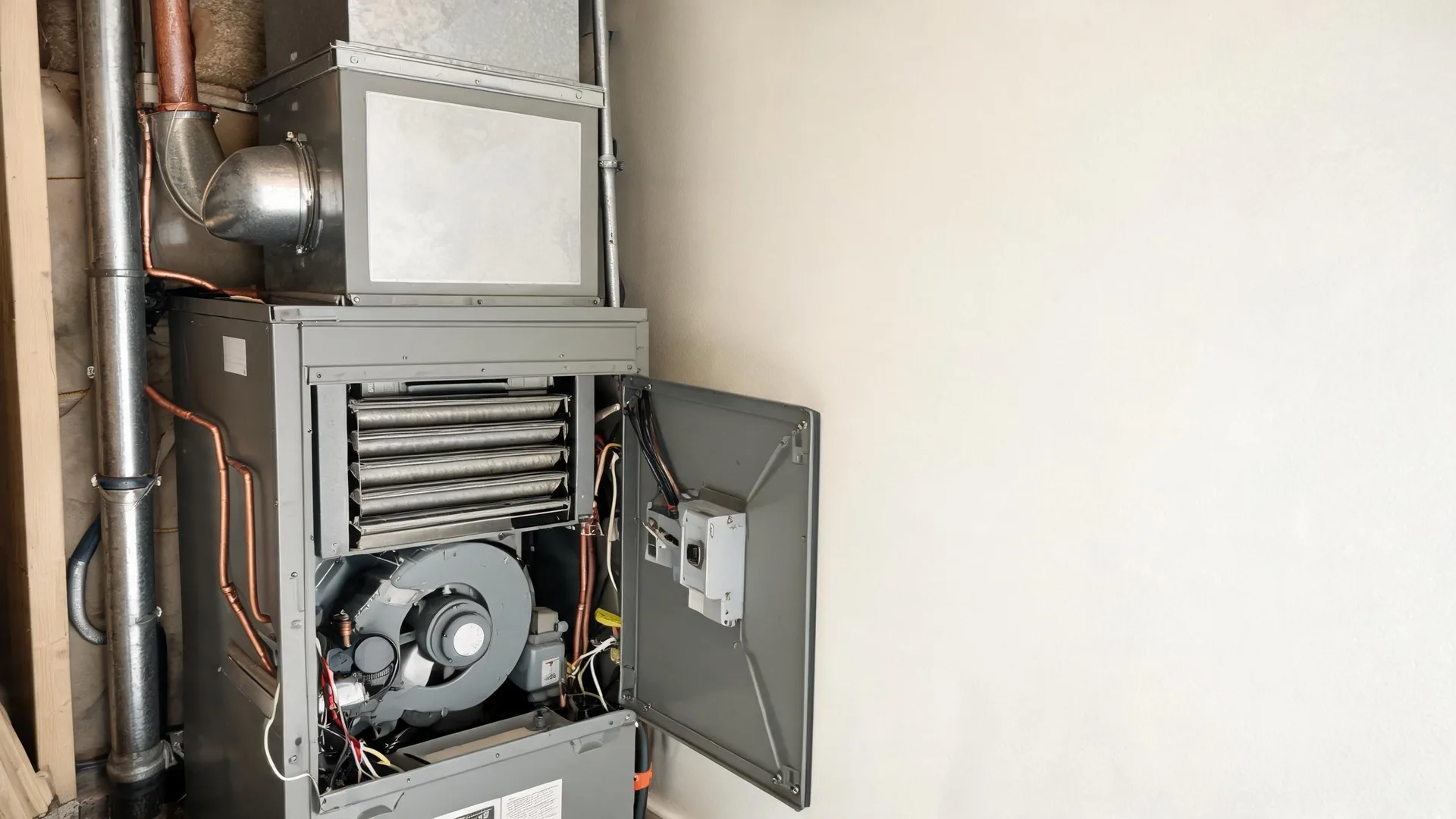
A gray high-efficiency gas furnace installed in an unfinished basement, surrounded by gas lines, a condensate drain, and sheet-metal ductwork.

What you can rule out yourself

Before anyone comes out, there's a few things worth checking yourself. Start at the thermostat. Make sure it's set to heat, not just fan, and that the setting is actually above room temperature. Dead batteries in the thermostat cause more trips than people think. Next, check the filter. Hold it up to a light. If you can't see through it, air isn't moving through it either, and a furnace starved for air will shut itself off or run long without heating well. Go to the breaker panel and look for a tripped switch. Furnaces often sit on their own breaker, and it can trip without taking out anything else in the house. If you have a standing pilot, check whether it's lit. If it's an electronic ignition system, look for a blinking light on the control board, most boards flash a code that means something specific, and some manufacturers print the code key right on the inside of the access panel. Last, check that the vents in each room are open and nothing's blocking a return air grille. None of this requires taking anything apart. If the furnace still won't run, or it runs but blows cold air, or you smell anything like gas, stop checking and call someone.

A smell is never nothing

A burning dust smell at the first run of the season clears on its own in a few minutes. A smell like gas, or a sharp electrical smell that doesn't fade, means shut the furnace off and don't run it again until someone's looked at it. Scorched wiring and a cracked heat exchanger both announce themselves this way before they announce themselves any other way.
Sound changes before performance does

A bang at startup, a blower that's started grinding or rattling, a hum that wasn't there before. Any of these shows up before the furnace actually fails to heat. A noisy furnace that still heats fine is still worth a call, because the noise is pointing at a part that's wearing out even while it keeps running.

Most furnace failures trace back to a handful of parts, and they tend to go in the same order. The igniter is usually first. It heats up and cools down every single cycle, and that repeated stress wears it out faster than almost anything else in the system. A flame sensor is next, and it doesn't fail so much as get dirty, a thin layer of residue stops it from telling the control board a flame is lit, so the furnace shuts down as a safety measure. Blower motors wear out from just running so many hours a year, usually starting with a bearing that gets noisy before it quits. The heat exchanger is the one that matters most, because a crack in it isn't a performance problem, it's a safety one, and it's usually what a tech is ruling out first on an older unit. Capacitors and control boards fail too, less often, but when they go the furnace usually won't start at all rather than just running poorly.

A diagnostic visit starts before the panels come off. A tech will ask what you've noticed, when it started, whether it's constant or comes and goes, because that narrows things down before a single tool comes out. Then the covers come off and the tech watches a full cycle start to finish, ignition, blower kicking in, flame pattern, how long it runs. A multimeter checks the igniter and the flame sensor gets pulled and looked at under light, since residue on it can be hard to see otherwise. The heat exchanger gets inspected for cracks, often with a camera if it's hard to reach, because that's not something to guess about. Static pressure in the ductwork gets checked too, since a furnace working too hard to push air through will show it in how long it runs. By the end you should know which part is failing and why, not just that something is.