Furnace keeps shutting off in Wahpeton, ND

RepairFurnace or heatingRichland County, ND
Step 1 of 2

What ZIP code is the job in?

A furnace that shuts off before the house warms up is usually tripping a safety switch, not failing outright. The flame sensor may be coated with a thin film that stops it from proving a flame, so the control board cuts gas to the burners as a precaution. A dirty filter can do the same thing from the other end, starving airflow until a limit switch senses the heat exchanger running too hot and shuts the burners down to protect it. In Wahpeton winters, a furnace runs for hours at a stretch, and these parts get far more cycles than they would in a milder place. That wear shows up as short cycling, the furnace firing for a few minutes, stopping, then trying again. Left alone, it means rooms that never quite reach the thermostat setting and a furnace working harder to get there. A local contractor can check the sensor, the filter and the limit switch and tell you which one is causing it.

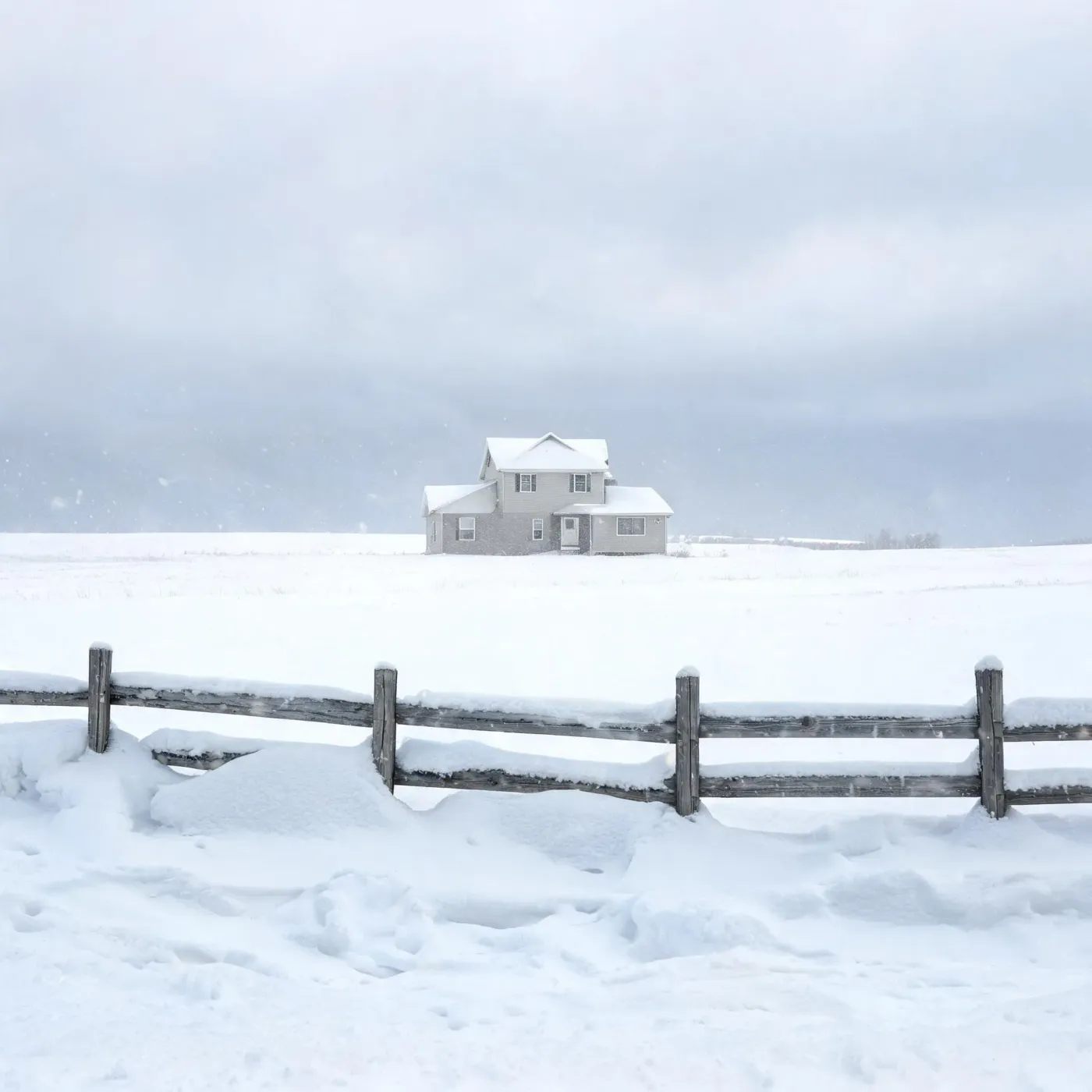
A two-story light-colored house stands alone in a snow-covered field under an overcast sky, with a snow-laden wooden rail fence crossing the foreground.

Winter nights here average 5°F, according to weather data for Richland County. At that temperature your furnace is running close to nonstop, cycling on again almost as soon as it shuts off to keep up with the heat loss through walls and windows. That kind of workload shows every weakness in the system fast. A flame sensor that's a little dirty, a pressure switch that's a little slow, either one trips far more easily on a night this cold than it would in October. If your furnace is shutting off on its own, this is the stretch of winter when that problem shows up, and when it matters most that it gets fixed.

NOAA nClimDiv 1991-2020

Short Cycling or Full Lockout

Short Cycling

  • The furnace fires, runs for a minute or two, then shuts off before the house feels any warmer.
  • A dirty flame sensor is a common cause, since it can't prove a flame and the board cuts gas as a precaution.
  • A clogged filter can also trigger this by starving the burners of return air and overheating the heat exchanger.
  • This pattern often shows up gradually, with cycles getting shorter over a few days rather than stopping all at once.
  • A contractor who checks this will usually test the flame sensor and limit switch before replacing any parts.

Shuts Off and Won't Restart

  • The furnace runs for a while, then shuts off completely and the thermostat can't get it going again.
  • This points to a safety lockout, often from a failed igniter or a blocked vent that the control board detects as unsafe.
  • A cracked heat exchanger can also cause a full shutdown, since the board will not run the furnace once it senses that risk.
  • At 5°F outside, a furnace stuck in lockout means the house starts losing heat fast with no backup cycle to catch up.
  • A local contractor who works on this equipment every winter can usually tell within minutes which failure caused the lockout.
A woman in a gray sweatshirt with her hair pinned up sits in a living room looking off to the side, with a pale sectional sofa, cushions, a potted plant, framed wall art and a large window behind her.
A woman with long wavy brown hair in a gray top and dark cardigan stands near a window, looking to the side, with a living room, fireplace and round mirror blurred behind her.
A woman with curly dark hair in a grey long-sleeved top sits on a grey couch with patterned cushions, looking off to the side in a softly lit living room.
A woman in a gray knit sweater with her hair in a bun sits on a couch indoors, smiling and looking off to the side, with a dining area and framed picture blurred in the background.

Hand off the search today

A furnace that keeps shutting off at 5 below isn't a problem that waits well. Every short cycle is the control board protecting itself from something, a dirty sensor, a cracked heat exchanger, a blower pulling bad readings, and sorting out which one takes someone who works on these furnaces all winter in Richland County and knows which failures show up first in weather like this. Send the request and it goes to one local contractor, not a handful competing for the job, so you're not fielding five calls while your house loses heat. That matters more here than almost anywhere, because a furnace that can't hold a cycle through a January night isn't going to fix itself by morning. Get it in front of someone who can look at the sensor, the pressure switch, the exchanger, and tell you which one is cutting the gas before the house gets cold enough to notice.

Why the Flame Sensor Fouls Fast

The flame sensor is a thin rod that sits in the burner flame and sends a signal back to the control board proving gas is actually burning. A furnace running close to nonstop through a Richland County winter builds carbon on that rod faster than one that cycles a few times a day. Once the coating is thick enough, the signal weakens and the board reads it as no flame at all, even though the burners are lit. It shuts off gas within seconds of ignition. This is why the shutting off often gets worse as the cold deepens rather than staying the same.

What the Limit Switch Is Doing

A furnace also carries a high limit switch that watches the temperature inside the cabinet, separate from the flame sensor. If airflow through the system is restricted, heat builds up around the heat exchanger faster than the blower can carry it into the ducts. The limit switch trips to keep that heat from damaging the exchanger, and the burners shut down even though nothing is actually broken. A furnace working hard against 5°F nights relies on full airflow to keep that switch from tripping, which is why a restricted filter shows up more at the coldest point of the season.

Winter nights average 5°F

At 5 below, your furnace can't afford to keep shutting off. It has to run long stretches just to hold the house at temperature, and every safety trip means a cold spell inside while it sits off. A furnace that short cycles in weather like this needs looking at before the next cold snap, not after.

NOAA nClimDiv 1991-2020

What a Short-Cycling Furnace Means

  • A furnace that shuts off early is almost always a safety switch doing its job, not a dead unit.
  • The flame sensor, the filter, and the blower's readings are the usual places the control board flags a problem.
  • A tech who works Richland County winters sees these same short-cycle calls every cold snap and knows where to look first.
  • Sorting the cause takes a furnace apart with a meter in hand, not another guess from the thermostat.
  • One licensed local contractor takes the call, so you're not fielding quotes from three different companies while the house cools down.
  • Once the furnace holds a flame and finishes a full cycle, it stops tripping and starts heating the house the way it should.

A furnace that shuts off before the house warms up is telling you something specific. The control board saw a reading it didn't like and cut gas to the burners rather than risk running blind. That's not the unit failing. It's the unit doing exactly what it was built to do when the flame sensor is dirty, the filter is clogged, or the blower is sending back bad numbers.

Finding which one of those it is means opening the furnace and testing it, not watching the thermostat and guessing. A flame sensor reads fine with the naked eye and still fails to prove a flame. A filter can look only half dirty and still choke airflow enough to trip a limit switch. The only way to know is a meter on the sensor and a look at the actual pressures and temperatures while the furnace runs.

That's the kind of work a contractor who services Richland County furnaces every winter does on a routine basis. Five below isn't a rare cold snap here, it's a Tuesday in January, and a tech working this area knows which part usually goes first and checks it before the rest. One licensed local contractor takes the call, so you get one visit and one diagnosis instead of three estimates and three different guesses.

Once the real cause is found and fixed, the furnace holds its flame through a full cycle and heats the house the way it's supposed to. No more shutting off twenty minutes in. No more cold spots while it sits tripped. Just a furnace running the way it did before the sensor fouled or the filter clogged, through whatever the rest of this winter brings.
A wooden sideboard with a paneled door holding a shallow wood bowl and a pale ceramic vase of leafy branches, beside a window with light falling on a wood floor and beige wall.
Corner of a cream upholstered sofa with a linen cushion on a wood floor, beside a beige wall with white baseboard and a window casting sunlight, with a woven rug at the lower left.
Sunlit corner of a room with a framed landscape print on a pale wall, a white-trimmed window with green foliage outside, a potted plant in a woven basket, and a light upholstered armchair with a cushion.
Interior corner with a tall double-hung window showing green trees outside, a wicker basket holding a fringed throw and cushion, a framed botanical print on the beige wall, and sunlight on a wood floor.
Corner of a room with a cream upholstered sofa draped with a rust-colored knit throw, a framed landscape photograph on the wall, a white-trimmed window at left, dark wood flooring and a woven jute rug.

Hand off the furnace problem

The pro who gets in touch is licensed in North Dakota and works in Richland County.

Get a licensed local pro

Sending the form costs nothing.