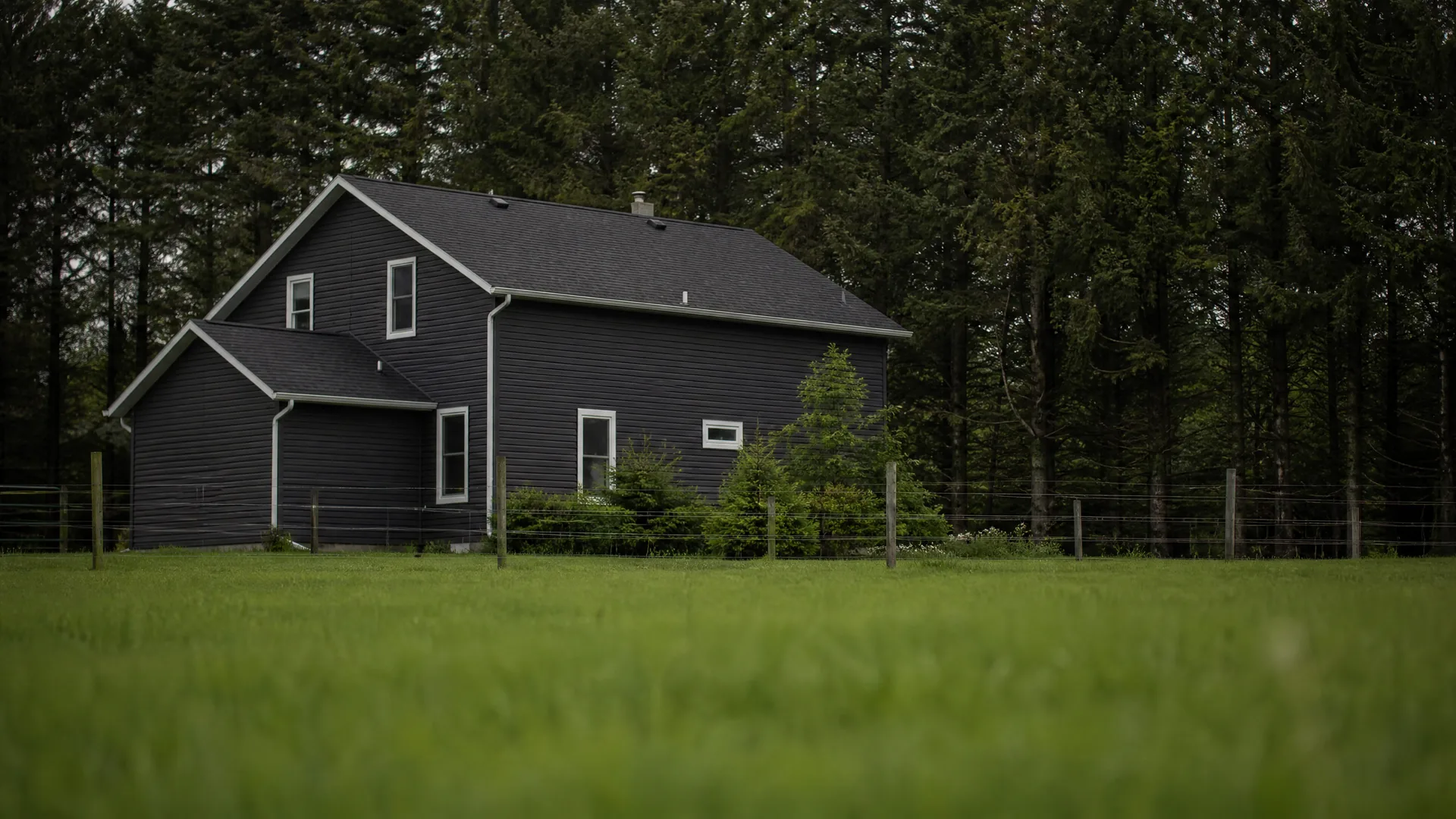






A dark-sided two-story house with white-trimmed windows and a gray shingled roof stands behind a wire fence in a green grass field, backed by a dense conifer forest.

Furnace Repair in Powers Lake, ND

Tell us about the job

Takes about a minute. No obligation.

RepairFurnace or heatingBurke County, ND
Step 1 of 2

What ZIP code is the job in?

Furnaces in Powers Lake run from September clear through June, about ten months of the year. That's most of the year spent cycling on and off, heating a house against overnight lows that average 2°F in December, January and February. A system working that many hours against that much cold wears sooner than one that gets a few months off every year. The igniter, the blower motor, the heat exchanger, all of it logs more hours here. When something starts acting up, it's rarely bad luck. It's usually a part that's simply done more work than it was built to do for this long.

10 months
September through June, your furnace is on duty
2°F
the average winter night it heats against
24 winter storms
in ten years, the nights a failure hurts most
Isometric line illustration of a cutaway building interior showing a furnace unit with a flue pipe and ductwork running along the ceiling, plus adjacent rooms with simplified furniture.
Your furnace works hardest from November through March.

NOAA nClimDiv, 1991–2020 normals

Electricity in North Dakota ran $33.73 per million Btu in 2024.

A furnace that's struggling to heat the house is burning more of that every day you wait.

Half the furnaces in Powers Lake are heating a house built in 1969 or earlier

Half the homes here were built by 1969
Heat runs September through June
Winter nights average 2°F
Furnaces start early in Burke CountyHeat goes on in September here, so trouble that's been building all summer shows up fast.

A furnace that's worn from this many hours on duty doesn't fix itself. The part that's slipping now, the igniter that's slow to catch, the blower that's making a new noise, got to that point from the work it's done, not from one bad day. Guessing at which part it is tends to mean more than one visit. A contractor who checks it properly can tell you if it's one tired part or a system that's past the point of patching. Get it looked at while it's still a repair and not a replacement.

Find out how much life is left before you pay for the repair

Get a repair call in before you spend on a part that won't buy the furnace much more time. A contractor who checks it properly can tell you whether it still has years in it or whether the next breakdown is the one worth planning around.

Find a contractor
A man seen from behind in a dark shirt and tan pants climbs concrete steps toward a navy blue front door, carrying a canvas tool tote in his right hand, with a large blue planter and shrub to the left.
A gas furnace with attached ductwork, gas piping, and condensate lines installed in a concrete-block basement.

What it sounds like, looks like, and feels like before it quits

A furnace that's starting to fail doesn't usually quit outright. It tells you first. The burner flame should burn blue and steady. Let it go yellow or flickering and it's not burning the gas clean, which can mean a cracked heat exchanger or a dirty burner. A blower that used to kick on quiet and now rattles or squeals is losing a motor bearing or working against a clogged filter it shouldn't have to fight. Short cycling, where the furnace fires up, runs a few minutes, and shuts off before the house warms, points to a flame sensor that's coated over or a thermostat that's lost its read on the room. Rooms that used to heat evenly and now run cold in the corners mean the system is losing the fight against the duct run, or it's losing power on the way. None of these fix themselves. Each one is a part on its way out, telling you before it quits for good.

The fault feeds itself while it runs

A flame sensor coated with a thin film makes the flame harder to detect, so the furnace shuts down and tries again. Each failed attempt adds another pass of combustion byproduct to the same sensor. A heat exchanger already cracked flexes with every cycle of heat and cooldown, and each cycle works the crack a little more. The condition causing the fault keeps acting on the part the whole time the furnace keeps firing.
One strained part changes what the others face

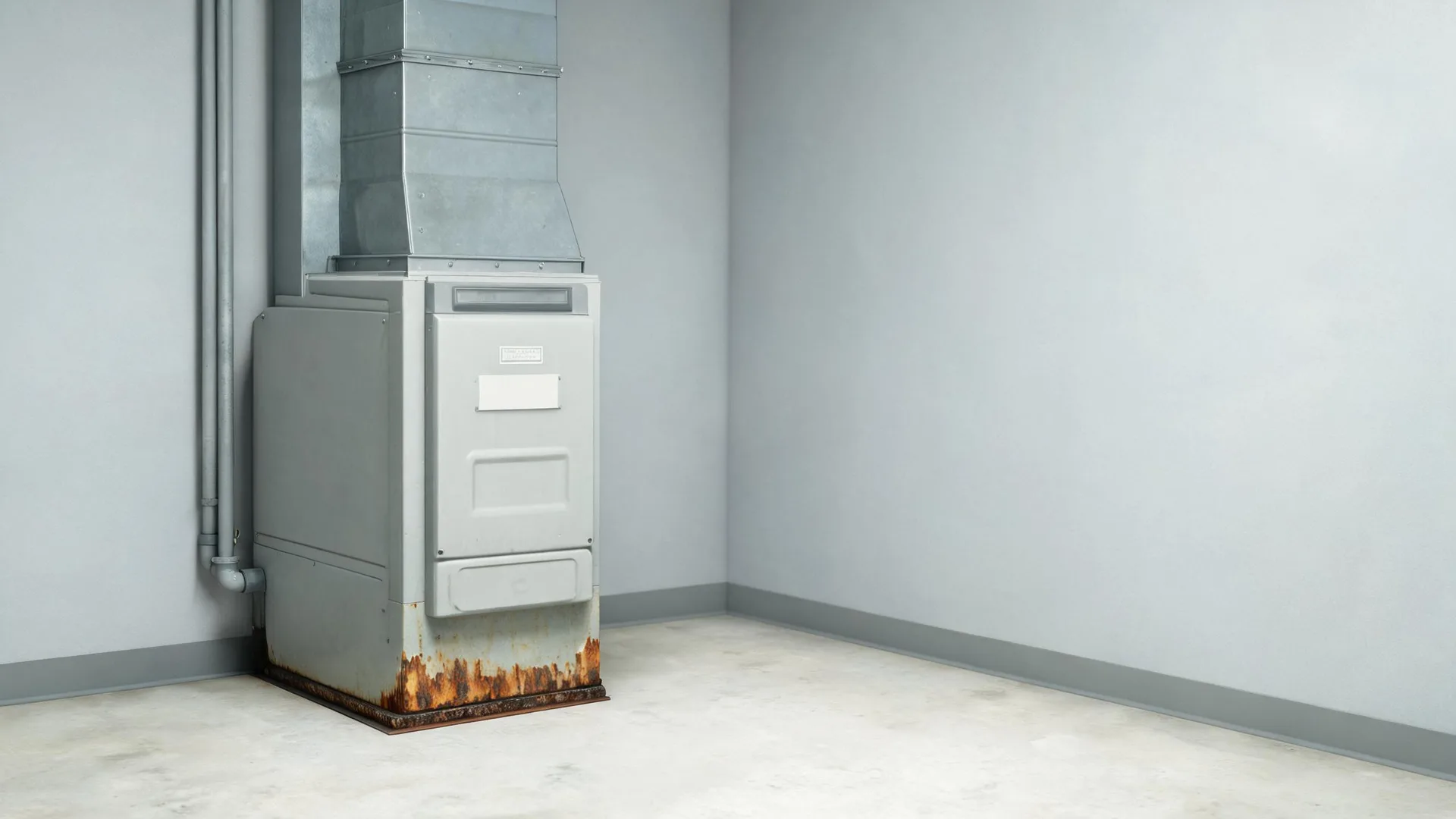
A blower pulling against a clogged filter draws harder on its motor than the motor was built for, and heat starts building where it shouldn't. A burner firing on a dirty flame puts soot into places clean combustion air is supposed to reach. The part that failed first rarely stays the only casualty. It changes the conditions for every part downstream of it.

There's a short list worth doing before anyone comes out. Check the thermostat first. A dead battery or a setting bumped to off explains a cold house more often than people expect. Go look at the filter. If you can't see light through it, it's choking the airflow, and swapping it might be all the furnace needed. Check the switch on the furnace itself, it looks like a light switch, and make sure nothing's propped against it. If the furnace has a standing pilot, see if the pilot light is actually lit. None of this takes tools or any real knowledge of the system. If the furnace still won't run right after all of that, the problem is inside it, and that's a job for someone who can get the panel off safely.

A diagnostic visit starts before any panel comes off. A contractor will ask what the furnace is doing, when it started, and whether it happens every cycle or only sometimes, because that narrows the search before a single tool comes out. Then it's gas pressure, flame color, and amp draw on the motor, checked against what the furnace is supposed to be pulling. The heat exchanger gets inspected for cracks, since that's a safety issue as much as a repair one. Flame sensor, igniter, limit switch, each gets tested on its own rather than assumed good because it looks fine. The point of the visit is to find the part actually causing the fault, not the first part that looks worn, because those aren't always the same one.