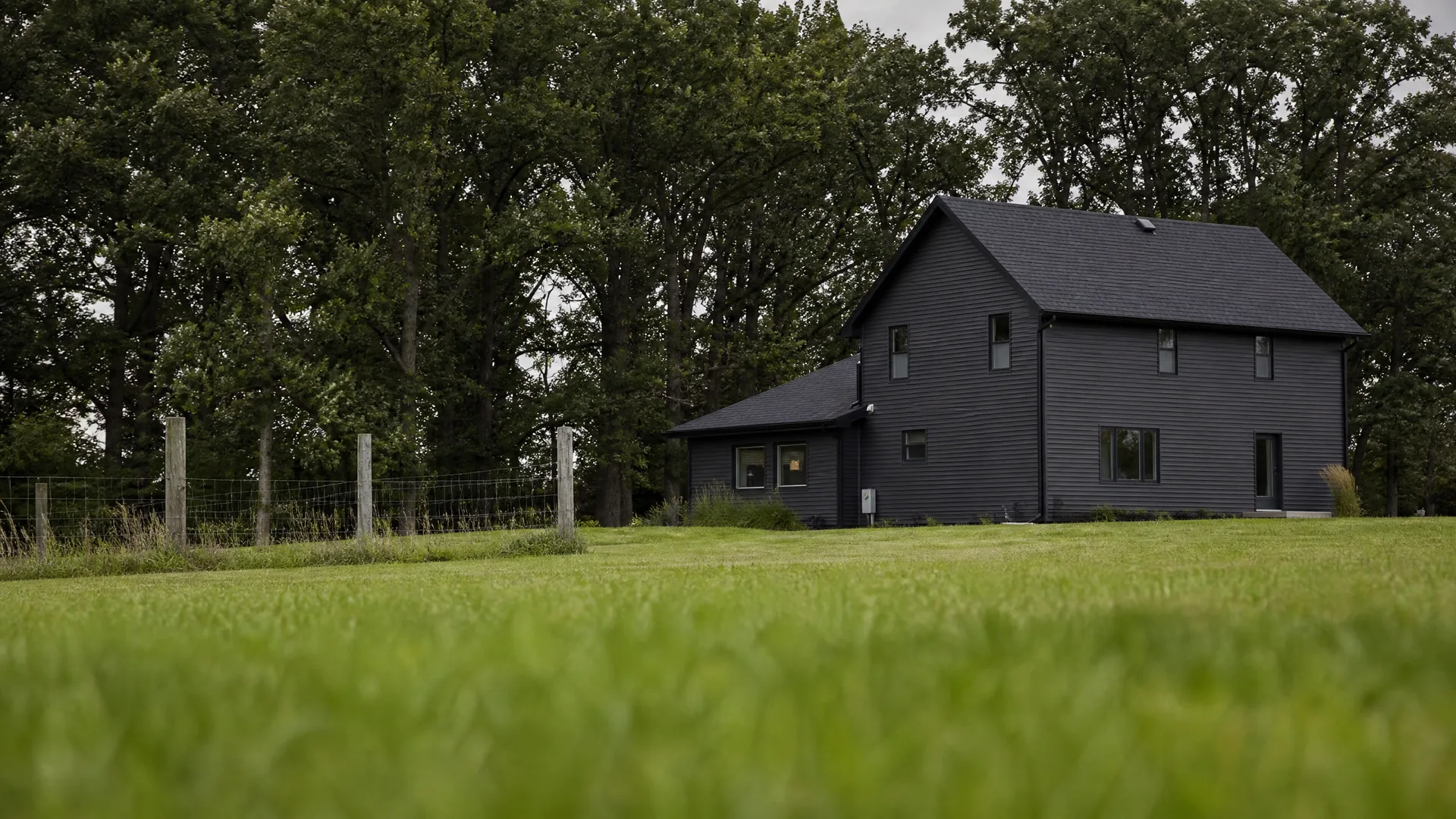



A black two-story house with a gabled roof and wood siding stands at the edge of a mown lawn, backed by tall deciduous trees, with a wire fence on posts at left.

Furnace Repair in Oakes, ND

Tell us about the job

Takes about a minute. No obligation.

RepairFurnace or heatingDickey County, ND
Step 1 of 2

What ZIP code is the job in?

Furnaces in Dickey County run from September through May, close to nine months of the year. Overnight lows average 6°F through December, January and February, and that's the stretch where a furnace can't let up. It's on most of the day and night, cycling over and over to hold the house against that cold. That kind of use wears on an igniter or a blower motor faster than it would somewhere with a shorter winter. If yours is acting up, it's worth finding out exactly what's worn or failing before anything gets fixed.

9 months
September through May, your furnace is on duty
6°F
the average winter night it heats against
42 winter storms
in ten years, the nights a failure hurts most
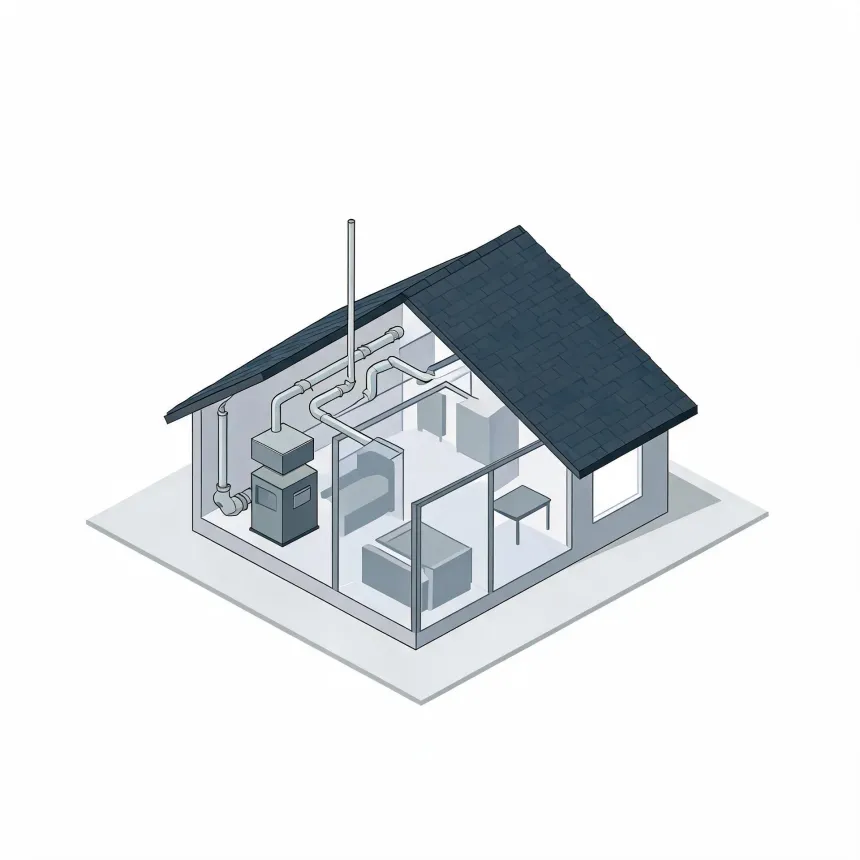
Isometric cutaway illustration of a small house with a dark shingled roof, showing an interior furnace unit, ductwork, and a flue pipe extending through the roof.
Your furnace works hardest from November through March.

NOAA nClimDiv, 1991–2020 normals

Half the homes in Dickey County were built in 1964 or earlier.

A furnace that came with a house that old has likely already had one replacement, maybe two.

September is when a weak furnace finds out it's weak

Heat runs September through May
Winter nights average 6°F
Climate zone 6A

Electricity here runs $33.73 per million Btu, among the higher rates in the country. A furnace that's short cycling or struggling to light isn't just annoying, it's pulling power it doesn't need to. That cost shows up on the bill every month the problem sits there. A furnace running the way it should costs you only for the heat you get. One that's limping along costs you for the heat and the struggle both.

Find out what's worn before it has to work all winter

Get the actual cause checked out before winter puts the full nine months of load back on it.

Find a contractor
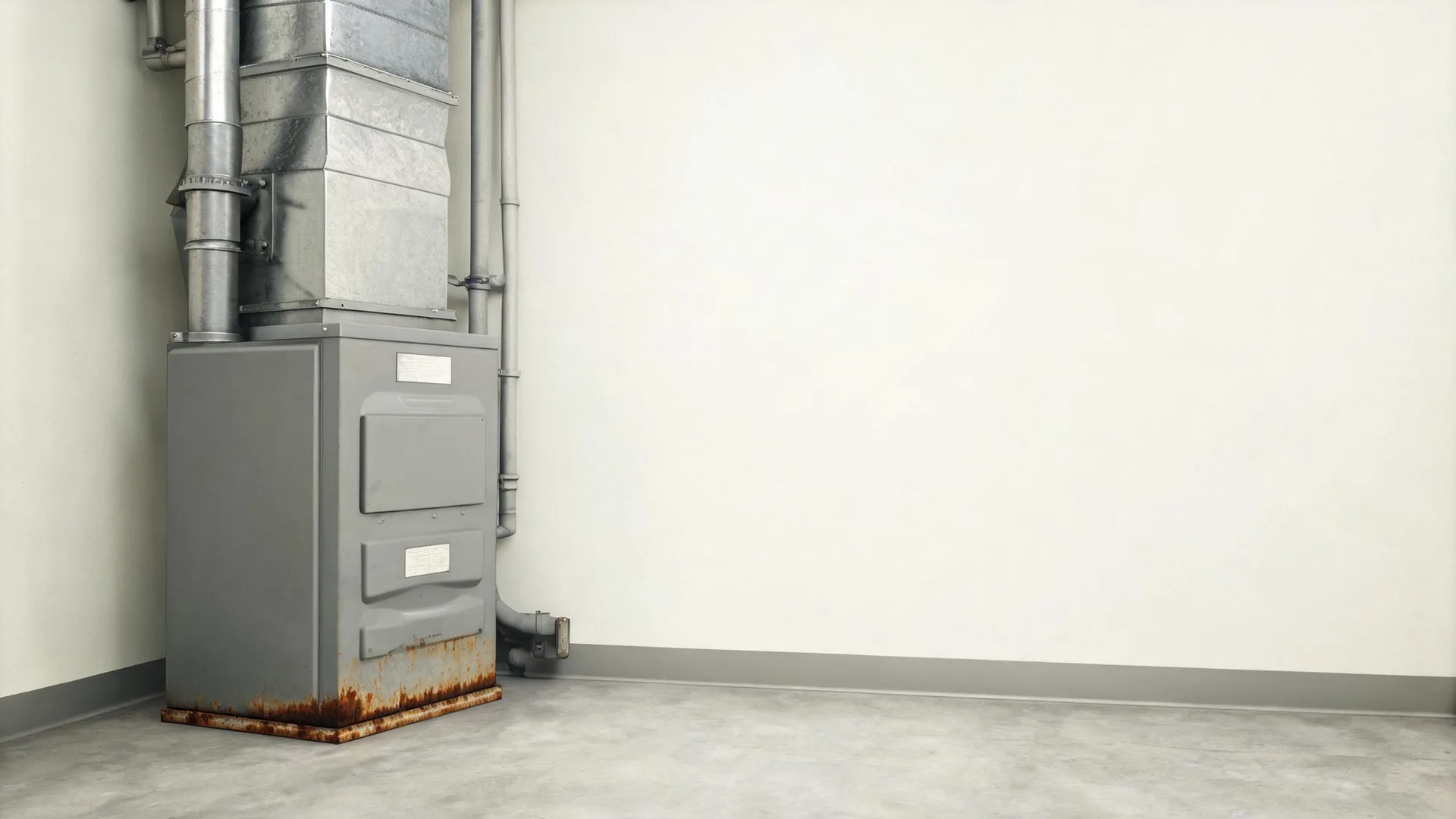
A gray residential gas furnace installed in an unfinished basement, connected to sheet-metal ductwork and PVC pipes.

Ask what you're actually paying for

If a repair tech finds your furnace is old enough to have come with the house, ask straight out how many years it's got left before you pay to fix it again. A furnace already past one replacement isn't a bet worth doubling down on without knowing the odds.

A small fault asks a part to do a bigger job

A cracked heat exchanger, a dirty flame sensor or a weak igniter doesn't stop the furnace from running, it just makes something else work harder to cover for it. A sensor that can't read the flame right makes the control board cycle the gas valve over and over. A clogged burner makes the blower push air across less heat than it should. The furnace keeps answering the thermostat. It just does it badly, and the part covering the gap wears faster than it was ever meant to.
Running it anyway can turn a repair into a replacement

An igniter that's cracking will eventually stop lighting the burner at all. A blower motor straining on a bad bearing will eventually seize. Both are repairs if caught early. Keep running the furnace past the point where it's struggling and the heat exchanger or control board can take the damage instead, and those aren't parts anyone replaces on their own.

Most furnace failures start small and in the same few places. The igniter is the part that usually goes first, since it heats up and cools down every single cycle and that stress eventually cracks it. The flame sensor fails quietly, it just gets a coating on it from normal combustion until it can't tell the control board a flame is there. Blower motors go a different way, usually a bearing wearing down until the motor is straining to turn at all. Pressure switches and inducer motors fail together often enough, since the inducer draws the exhaust and the pressure switch is just checking that it's doing its job. A dirty burner or clogged flue doesn't fail outright, it just makes the furnace run worse and worse until something downstream gives out from the extra load. None of these start as a no-heat call. They start as a longer cycle, a delayed light, a smell that wasn't there before.

A diagnostic visit starts before any panel comes off, with the tech asking what the furnace has been doing and when it started. Then the cover comes off and the burners get watched through a full cycle, since how it lights and how the flame looks says most of what a tech needs to know. A multimeter checks the igniter's resistance instead of guessing from a glance, because an igniter can look fine and still be on its way out. The flame sensor usually comes out for a look regardless of what the call was about, since a coated sensor sits behind so many different complaints. Pressure switches get checked against what the inducer is actually doing, not just whether the furnace runs. By the end the tech should be able to point to the one part causing it, not a list of things that might be it.