





An unfinished basement featuring exposed ceiling joists, a metal HVAC unit with round ductwork, a hanging light bulb, and scattered boxes and debris along the left wall.

Furnace Repair in Napoleon, ND

Tell us about the job

Takes about a minute. No obligation.

RepairFurnace or heatingLogan County, ND
Step 1 of 2

What ZIP code is the job in?

Your furnace in Napoleon runs about nine months a year, September through May. That's most of the year spent heating a house against overnight lows that average 5°F in December, January and February. A furnace built for occasional use somewhere warmer would wear out fast under that load. Here it's just the job. That kind of runtime means parts age sooner than you'd expect, and a noise or a short cycle that seems small now is worth having looked at before it isn't small anymore.

9 months
September through May, your furnace is on duty
5°F
the average winter night it heats against
35 winter storms
in ten years, the nights a failure hurts most
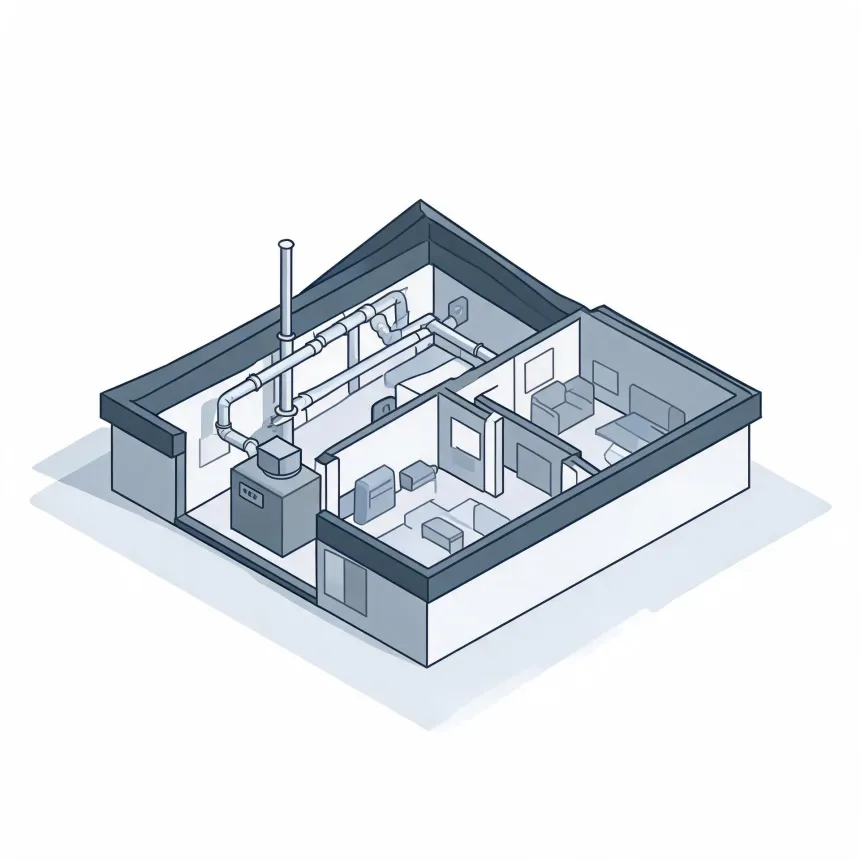
Isometric line illustration of a cutaway building interior showing a furnace unit with a flue pipe and ductwork running along the ceiling, plus adjacent rooms with simplified furniture.
Your furnace works hardest from November through March.

NOAA nClimDiv, 1991–2020 normals

Half the homes in Logan County were built in 1967 or earlier.

A furnace that came with a house that old has likely put in decades of work already.

Nine months of heat starts in September, and that's when a weak part gives out

Heat runs September through May
Winter nights average 5°F
Climate zone 6A

A furnace that runs this many months a year doesn't give you much warning before a small issue turns into no heat at all. If yours is cycling on and off faster than it used to, or the burner makes a noise it didn't make last winter, that's worth a look now rather than in January. A technician can check the flame sensor, the igniter and the pressure switch in one visit and tell you which one is wearing out. Catching it while the furnace is still running is a lot easier than diagnosing it after it stops.

Worth knowing before you fix it, how much life it has left

Before paying to fix what's wrong with it, find out how much is left in it. A technician can tell you in one visit whether the furnace is worth repairing or close to done.

Find a contractor
A man in a cap, dusty dark shirt and work pants walks up stone steps toward a dark navy front door, carrying a worn canvas tool bag, with a potted shrub beside the entry.
A gas furnace with attached ductwork, gas piping, and condensate lines installed in a concrete-block basement.

What to check before you call anyone out

Before anyone comes out, there are a few things worth checking yourself. Look at the thermostat first. Make sure it's set to heat, not just fan, and that the temperature is actually set above room temperature. A dead or low thermostat battery will shut the whole system down and look exactly like a broken furnace. Next, check the air filter. A filter clogged with dust chokes off airflow, and a lot of furnaces will shut themselves down or short cycle to protect themselves when that happens. Go to the breaker panel and check that the furnace's breaker hasn't tripped. If there's a power switch on or near the furnace itself, usually it looks like a regular light switch, make sure it hasn't been bumped off. If the furnace has a standing pilot, check whether the pilot light is actually lit. Last, look at the vent hood or exhaust pipe outside and make sure nothing is blocking it, no snow, no nest, nothing stuffed in the opening. None of this takes more than a few minutes, and it rules out the simple causes before anyone pays for a diagnosis.

Heat shutting off on its own is the furnace protecting itself

A furnace that senses a problem, overheating, poor airflow, a weak flame, will shut down mid-cycle rather than keep running. That shutdown isn't the failure. It's a limit switch or a flame sensor doing its job. Ignoring the restarts and just resetting it each time lets whatever triggered it keep happening, and the part doing the protecting wears out faster than the one actually causing the trouble.
A cracked heat exchanger doesn't stay a small crack

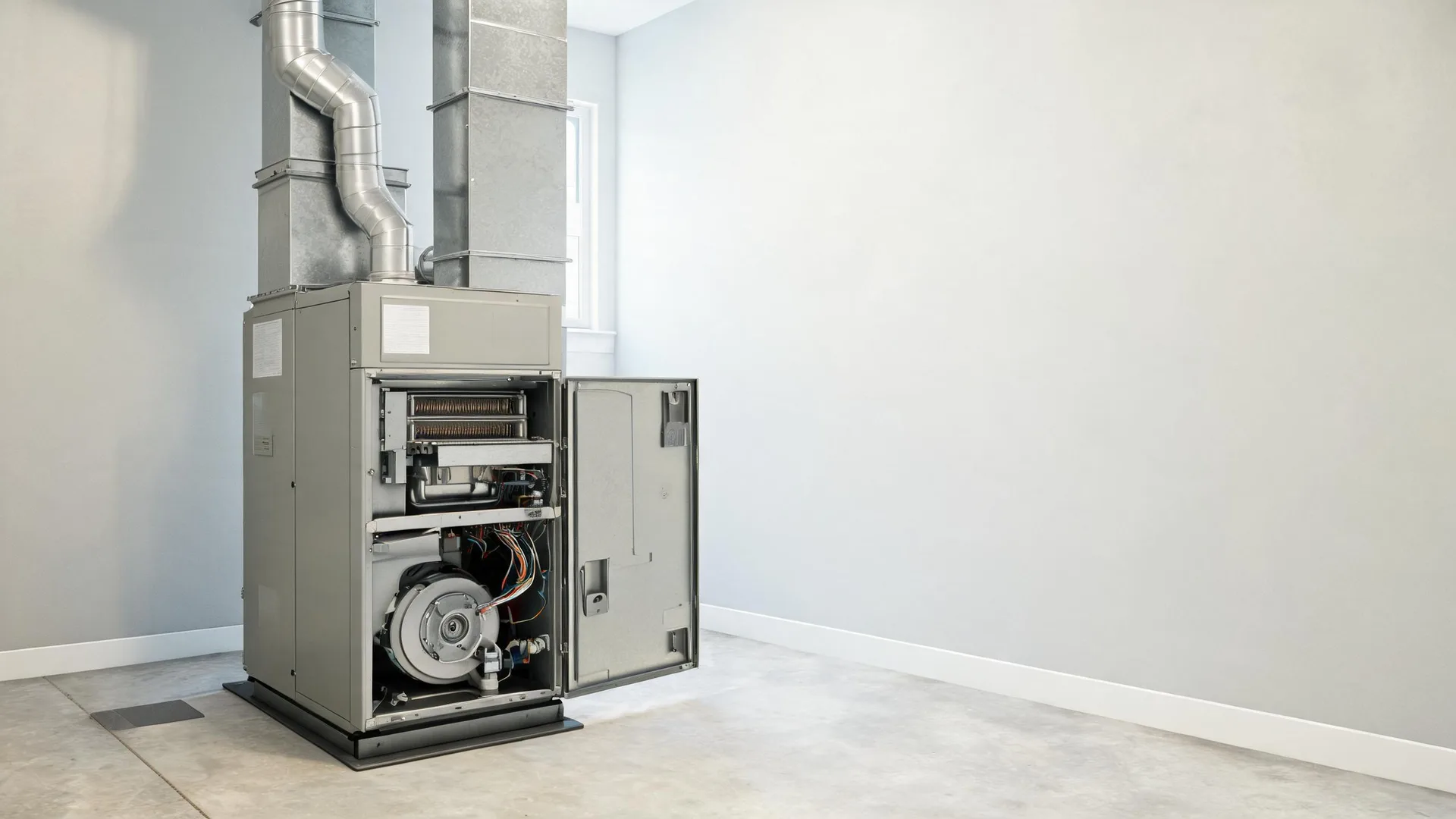
Heat exchangers expand and contract every time the burner fires and shuts off. A hairline crack gets a little wider with each cycle, and a furnace running daily goes through that stress far more often than one that only kicks on occasionally. Left alone, a small crack becomes a bigger one, and at that point the exchanger usually needs replacing instead of repairing.

Most furnace failures trace back to a handful of parts that simply wear out from use. The igniter glows hot every time the burner starts, and that repeated heating and cooling eventually cracks it. The flame sensor sits in the burner flame cycle after cycle, and over time soot and oxidation build up on it until it can't tell the furnace a flame is lit, so the system shuts down as a safety measure. The pressure switch and the draft inducer motor work together to clear exhaust before the burner's allowed to fire, and a motor that's losing strength or a switch that's sticking will stop the furnace before it starts. Capacitors that kick the blower motor into motion weaken gradually and eventually stop giving it enough of a push. None of these fail without reason. They fail because they've opened, closed, heated or spun more times than the one before it.

A repair makes sense when the failure is isolated to one part and the rest of the furnace is sound. A new igniter or flame sensor is a small job, and once it's in, there's no reason the furnace won't run the same as it did before. Replacement starts to make more sense when the damage shows up in parts that don't get swapped out on a service call, the heat exchanger or the cabinet itself, or when the same kind of breakdown keeps coming back even after it's been fixed. A technician can tell the difference by looking at what's actually failing and how the rest of the furnace is holding up, not just at what stopped working today. A furnace that keeps needing the same repair is telling you something a single fix won't answer.