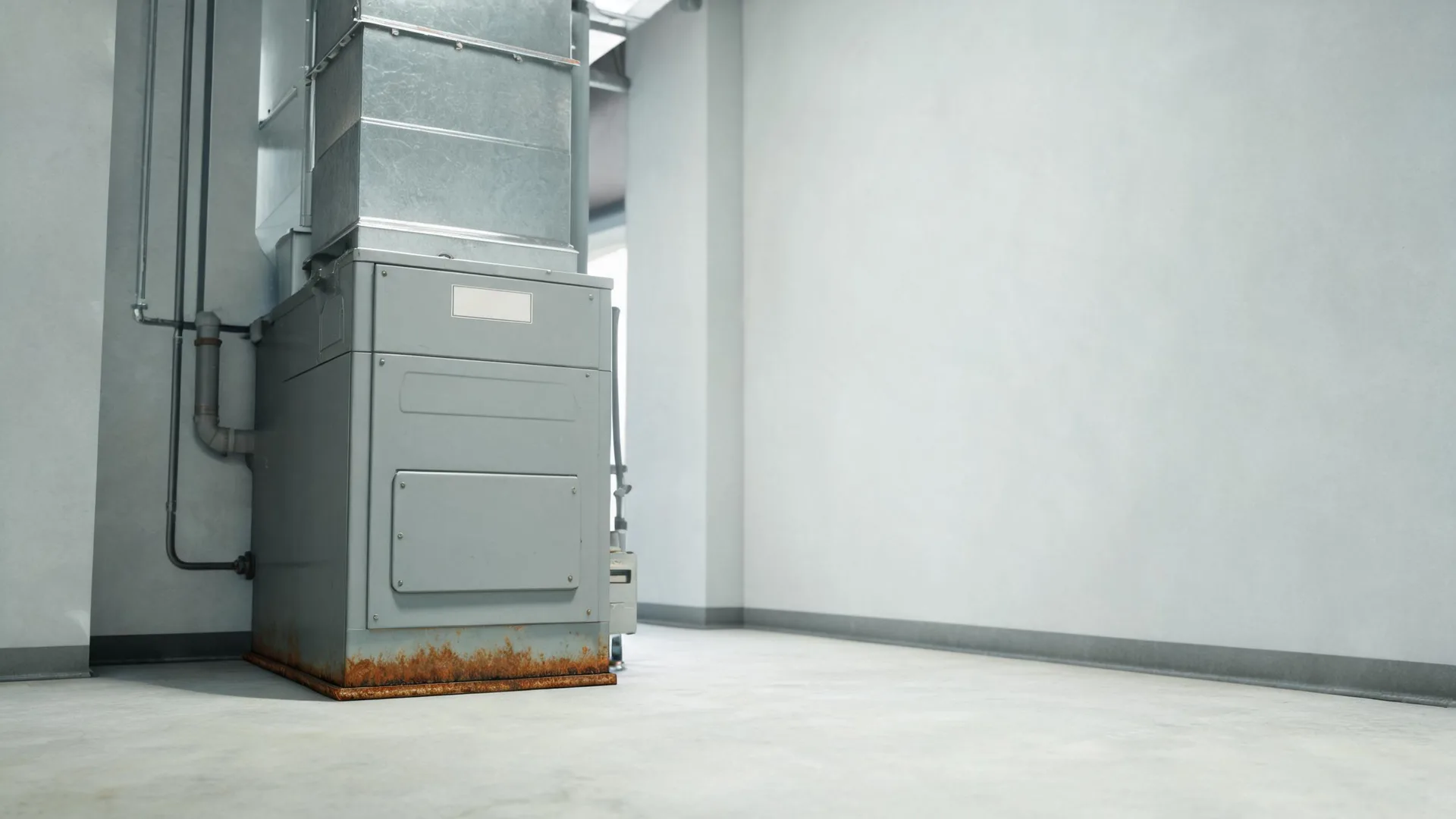
Nine months of heat a year
Furnaces around Mandan run from September through May. That's most of the year the burner, the blower and the igniter are all doing their job, not just a stretch of hard cold.
Takes about a minute. No obligation.
Furnaces around Mandan run from September through May. That's most of the year the burner, the blower and the igniter are all doing their job, not just a stretch of hard cold.
A furnace with that long a run time puts more cycles on its igniter and more hours on its blower motor than one that only runs a few months. When something starts acting up, it's usually the machine showing that wear, not a fluke.
NOAA nClimDiv, 1991–2020 normals
September is when furnaces around Mandan start carrying the full load again after a few months of light use.
A weak igniter or a tired blower motor tends to show itself that first week the furnace has to work hard.



Morton County gets hit by severe weather more than most places, 260 events logged between 2015 and 2024. A lot of that is wind and hail: 114 damaging wind events and 112 hail events over that same stretch. Hail and flying debris land on the outdoor unit, and a dented cabinet or a bent fan blade doesn't always stop a furnace from running that day. Power matters too. Statewide, 7% of North Dakota households were without power for 24 hours or more in 2024, and a furnace with no electricity doesn't push heat even if the gas is on. If your system took a hit from a storm this year, it's worth having someone look it over even if it still seems to be working fine.
Nine months of run time wears parts down faster than a short season would, and that's usually what shows up as the problem. A proper diagnosis finds the part that actually failed instead of guessing, and that's what makes the fix hold.
Find a contractorA cracked heat exchanger stays a lot safer sitting still than it does firing over and over. Each time the burner lights, the metal heats up and expands, and a crack that was tight gets a little wider. A blower motor with a bad bearing will keep turning, but the drag on it builds heat where it shouldn't be, and that's how a slow bearing failure turns into a seized motor. A flame sensor coated in a thin layer of oxidation can still sense the flame, just barely, and every cycle adds a little more coating until the day it can't. Even a clogged filter fits this pattern. Restricted airflow makes the heat exchanger run hotter than it's built for, and that heat has nowhere to go but back into the metal. None of these start out dangerous. They start out small, and running the furnace is what turns small into failed.
Make sure the thermostat is set to heat and the setpoint is above room temperature, and swap the batteries if it's gone blank. Check that the filter isn't packed with dust, since a blocked filter can starve the furnace of airflow and trip a safety switch. Look at the furnace door and make sure it's seated and latched all the way, because most furnaces have a switch that keeps the burner from firing if the panel is loose or off. Check the breaker it runs on, along with any switch that looks like a light switch near the unit or at the top of the basement stairs. If you've got a standing pilot, see if it's lit, and follow the lighting instructions printed right on the furnace if it's gone out.
If you smell gas, leave the house and call the gas utility from outside, not a repair line. If the furnace is running but blowing cold air, or it's short cycling, turning on and off every few minutes, those point to a failing part inside, not something a filter swap fixes. A furnace that won't stay lit, or that trips its breaker more than once, needs a tech before you try it again. Burn marks or soot around the burner compartment, or a yellow flame instead of blue, mean stop running it and get it looked at.
Estimates for a typical Morton County home, compared with an older unit built to the previous federal minimum, from EIA household energy data, North Dakota fuel prices and NOAA climate normals. Your home will differ.
Repair makes sense when one part has failed and the heat exchanger is sound.
Replacement makes sense when the heat exchanger is cracked or the furnace keeps needing parts.
A furnace that has to work harder to put out the same heat is burning more gas to do it. A dirty filter or a weak igniter means longer burner cycles, and at $8.44 per million Btu that shows up on the bill fast. The furnace won't correct that on its own. It keeps running the way it's running until someone opens it up and finds the part that's actually failing. Getting that looked at now costs less than paying to run a struggling furnace all winter.