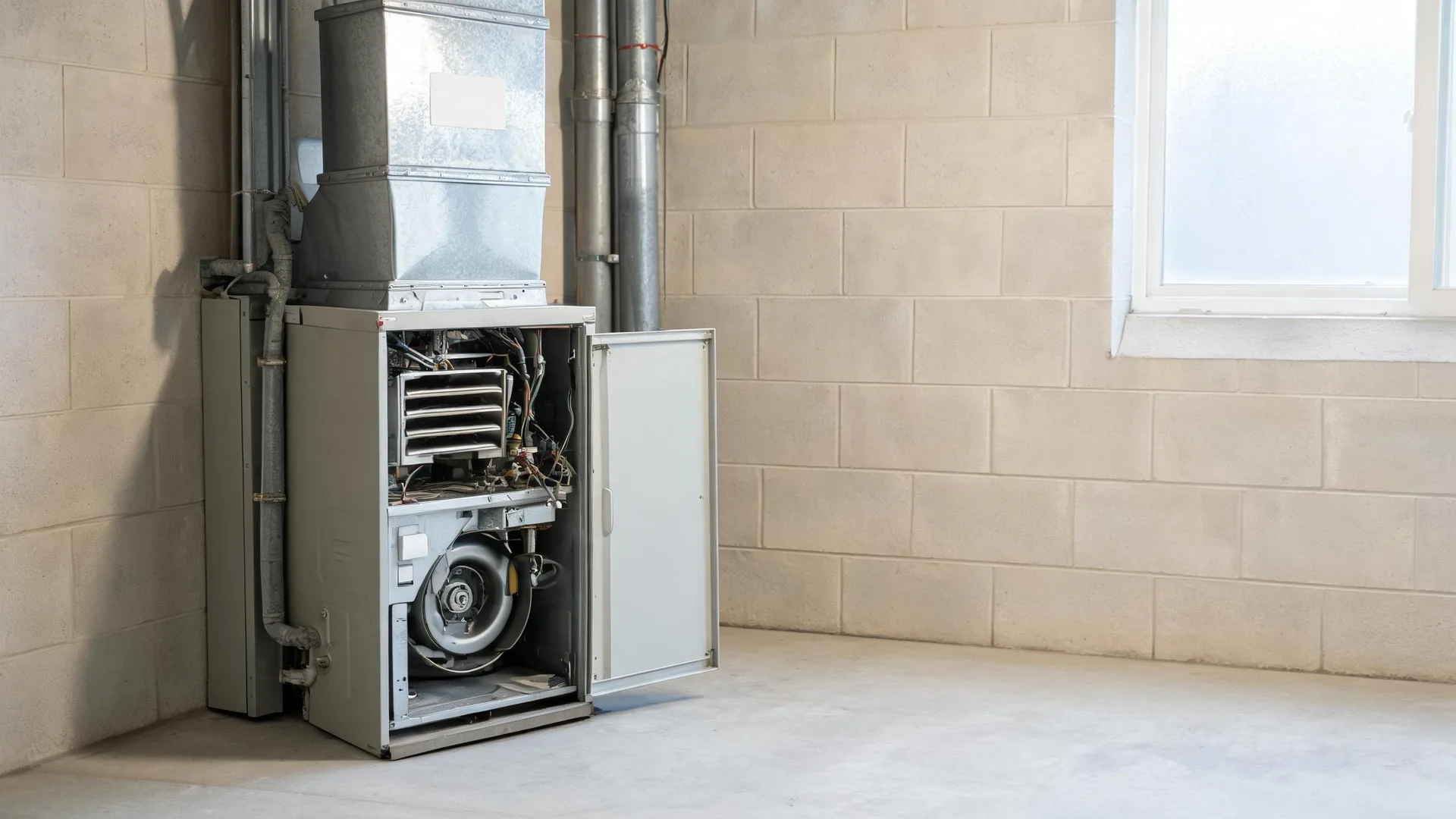
An unfinished basement featuring concrete block walls, exposed floor joists, and a metal forced-air furnace with ductwork near a central pillar.

Furnace Repair in LaMoure, ND

Tell us about the job

Takes about a minute. No obligation.

RepairFurnace or heatingLaMoure County, ND
Step 1 of 2

What ZIP code is the job in?

A cracked heat exchanger gets worse with every cycle

Heat makes metal expand, and a hairline crack opens wider each time the burner fires and closes again as it cools. A furnace that keeps running on a cracked exchanger is working that crack bigger, and it can start pushing exhaust where only heated air should go.

A weak igniter or dirty flame sensor rarely fails all at once

A cracked igniter or a flame sensor coated with residue will keep lighting the burner weaker each cycle until one night it just doesn't catch. Calling someone while the furnace is still limping along is easier than waiting for the night it quits.

9 months
September through May, your furnace is on duty
5°F
the average winter night it heats against
42 winter storms
in ten years, the nights a failure hurts most
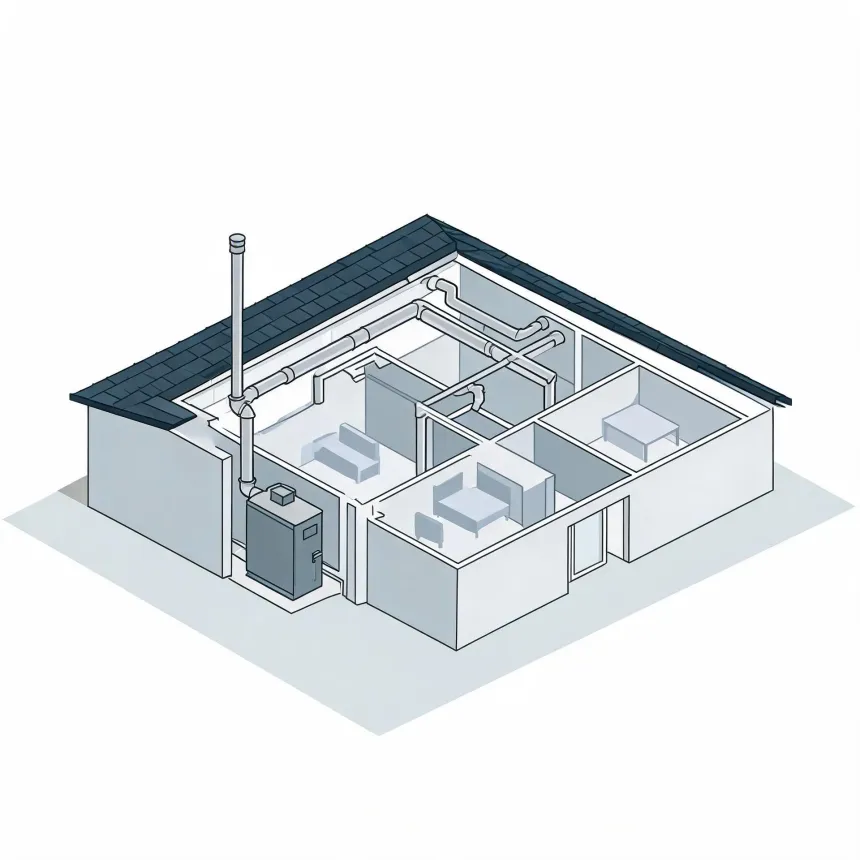
Isometric line illustration of a cutaway single-story house showing interior rooms with furniture, ceiling ductwork, and an exterior furnace unit with a tall flue pipe.
Your furnace works hardest from November through March.

NOAA nClimDiv, 1991–2020 normals

Furnaces in LaMoure County run from September through May.

Nine months of work a year wears parts down faster, so a repair here needs to hold up to a long season ahead.

Nine months of heat starts in September, and that's when weak parts give out

Heat runs September through May
Winter nights average 5°F
Climate zone 6A

Electricity in North Dakota ran $33.73 per million Btu in 2024, among the higher rates homeowners pay for it. A furnace that short cycles, struggles to reach temperature, or runs longer than it should is burning more of that expensive power every day it goes unfixed. That cost keeps adding up for as long as the problem sits. A furnace working harder than it should to keep the house warm is the kind of problem that gets more expensive the longer it waits.

A long season ahead is still ahead of you

Nine months of heat a year and nights down near 5°F don't leave much room for a furnace to limp along. Get it looked at now, while there's still a fix to make instead of just a replacement.

Find a contractor
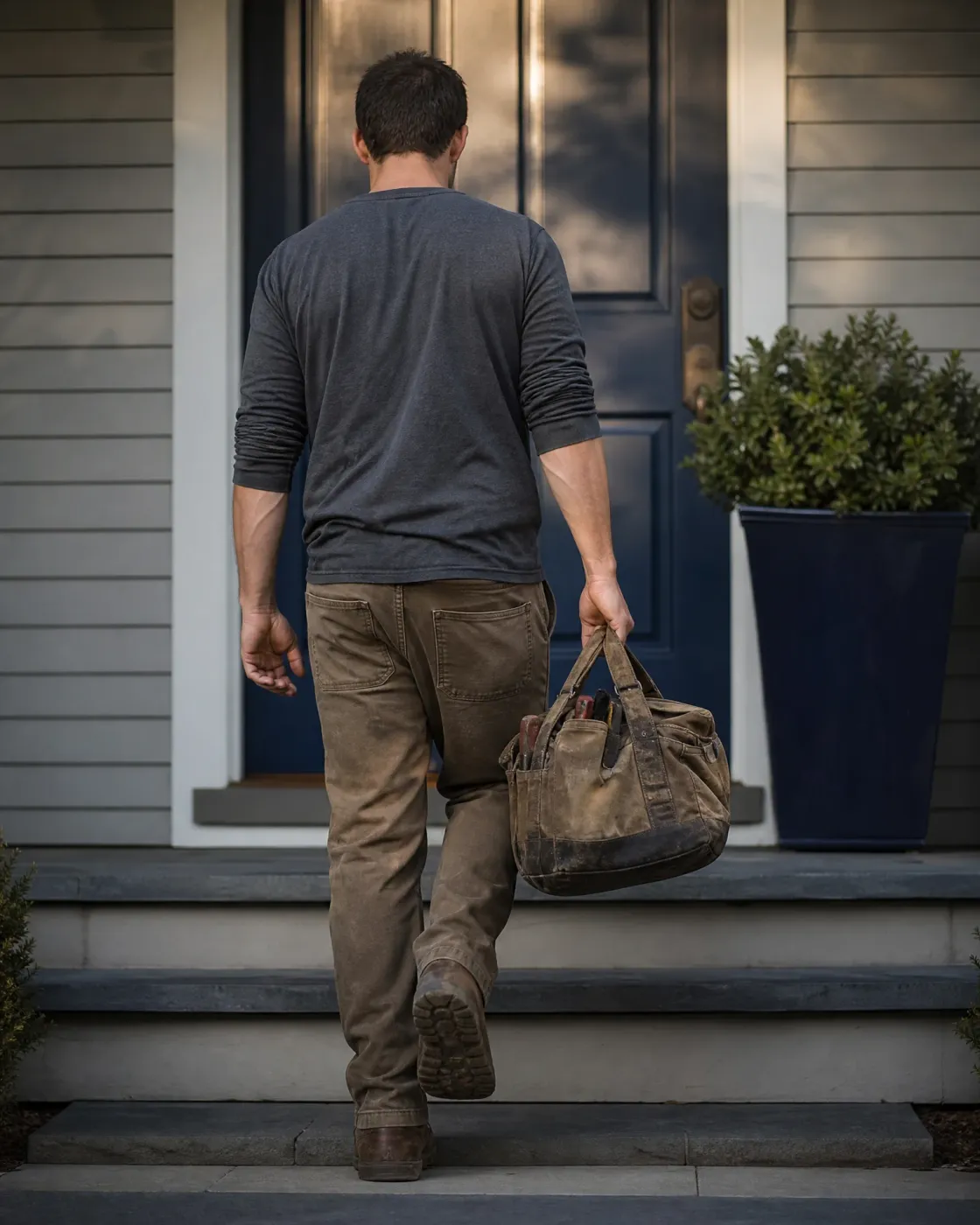
A man in a dark long-sleeve shirt and brown work pants, seen from behind, carries a worn canvas tool bag as he steps up porch stairs toward a navy blue front door of a light gray clapboard house, with a potted shrub beside the entry.
A gas furnace with attached ductwork, gas piping, and condensate lines installed in a concrete-block basement.

An old furnace in an old house is a bet against the clock

Half the homes in LaMoure County were built in 1965 or earlier. A furnace in one of those houses may not be the original, but if it came with the house, it's old enough that a repair is a stopgap, not a fix. Ask whoever looks at it how much life is left before you put more money into it.

Check the thermostat before the furnace

Make sure it's set to heat, not just fan, and the setpoint is actually above room temperature. A dead thermostat battery can shut the whole system down and look exactly like a furnace problem.

Go look at the filter

Pull it out and hold it up to a light. If you can't see through it, air can't get through it either, and a furnace starved for airflow will overheat and shut itself off as a safety measure.

Most furnace trouble gives you warning before it gives up completely. Short cycling is one of the clearest signs, where the burner fires, runs for a short while, then shuts off before the house warms up. That usually means a safety switch is tripping, often because of poor airflow or a sensor reading something wrong. Cold air blowing from the vents before the furnace has had time to warm up points to ignition trouble or a limit switch cutting things short. A burner that won't stay lit, a blower that won't shut off, or a smell of gas near the unit are not things to watch and wait on. Rattling, grinding or a boom when the burner lights is the furnace telling you a part is loose, worn, or about to fail.

A diagnostic call starts before any panel comes off. Whoever comes out will ask what you've noticed. When it happens, whether it's gotten worse, what the furnace sounds or smells like when it acts up. Then they'll pull the panel and watch it run through a full cycle, since some problems only show up partway through, not at startup. They'll check the flame itself, its color and shape, because a flame burning wrong points to different problems than one that won't stay lit at all. They'll test the safety switches, check the gas line pressure, and look at the heat exchanger for cracks or scorch marks. Most of this is watching the furnace do what it normally does and catching the point where it stops doing that.