



An unfinished basement featuring a grey forced-air furnace with metal ductwork, concrete block walls, exposed wooden joists, and a single hanging bare bulb.

Furnace Repair in Garrison, ND

Tell us about the job

Takes about a minute. No obligation.

RepairFurnace or heatingMcLean County, ND
Step 1 of 2

What ZIP code is the job in?

A furnace here runs from September through May. That's nine months of the year it has to come on, not just the worst weeks of winter. Nine months of cycling on and off wears down an igniter, a blower motor, a flame sensor, the same parts that get much lighter use somewhere milder. That's usually why something is going wrong now instead of later. A proper diagnosis finds which part gave out and why, so the repair holds instead of just getting you through the week.

9 months
September through May, your furnace is on duty
5°F
the average winter night it heats against
27 winter storms
in ten years, the nights a failure hurts most
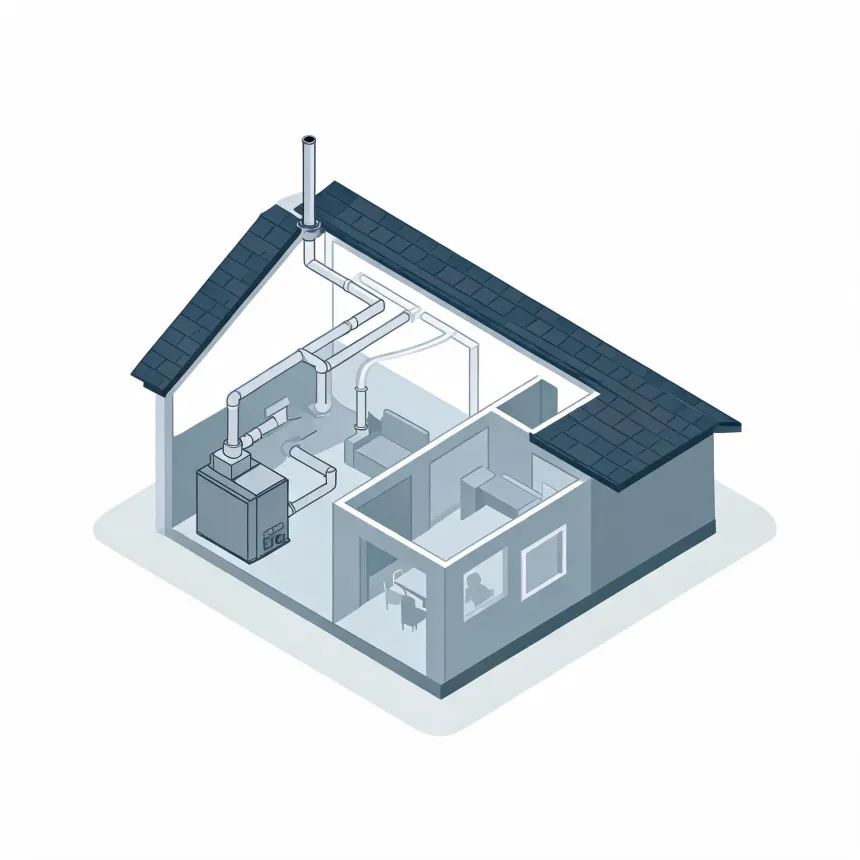
Isometric cutaway illustration of a single-story house showing interior rooms, a furnace unit with connected ductwork, and a flue pipe extending through the dark shingled roof.
Your furnace works hardest from November through March.

NOAA nClimDiv, 1991–2020 normals

August is the last quiet month before a furnace in McLean County switches on for the season.

The first real cold snap in September puts full load on a part that spent all summer sitting idle, and that's when a weak one gives out.

Gas here runs $8.44 per million Btu, and a struggling furnace burns more of it every month it goes unfixed

Heat runs September through May
Winter nights average 5°F
Climate zone 6A

A furnace that's short cycling, running constantly, or struggling to hold a set temperature is burning more gas than it should. At North Dakota's rates, that shows up on the bill fast. Waiting doesn't save money. It just means paying more for the same broken part while it keeps running. If the furnace has been off since spring and came on rough this fall, getting it looked at now costs less than running it that way all winter.

Get the real cause fixed before the cold sets in for good

Nine months of runtime wears a furnace down faster here than almost anywhere else. If something's already acting up, that wear is the reason. Get it diagnosed and fixed right instead of nursing it through winter.

Find a contractor
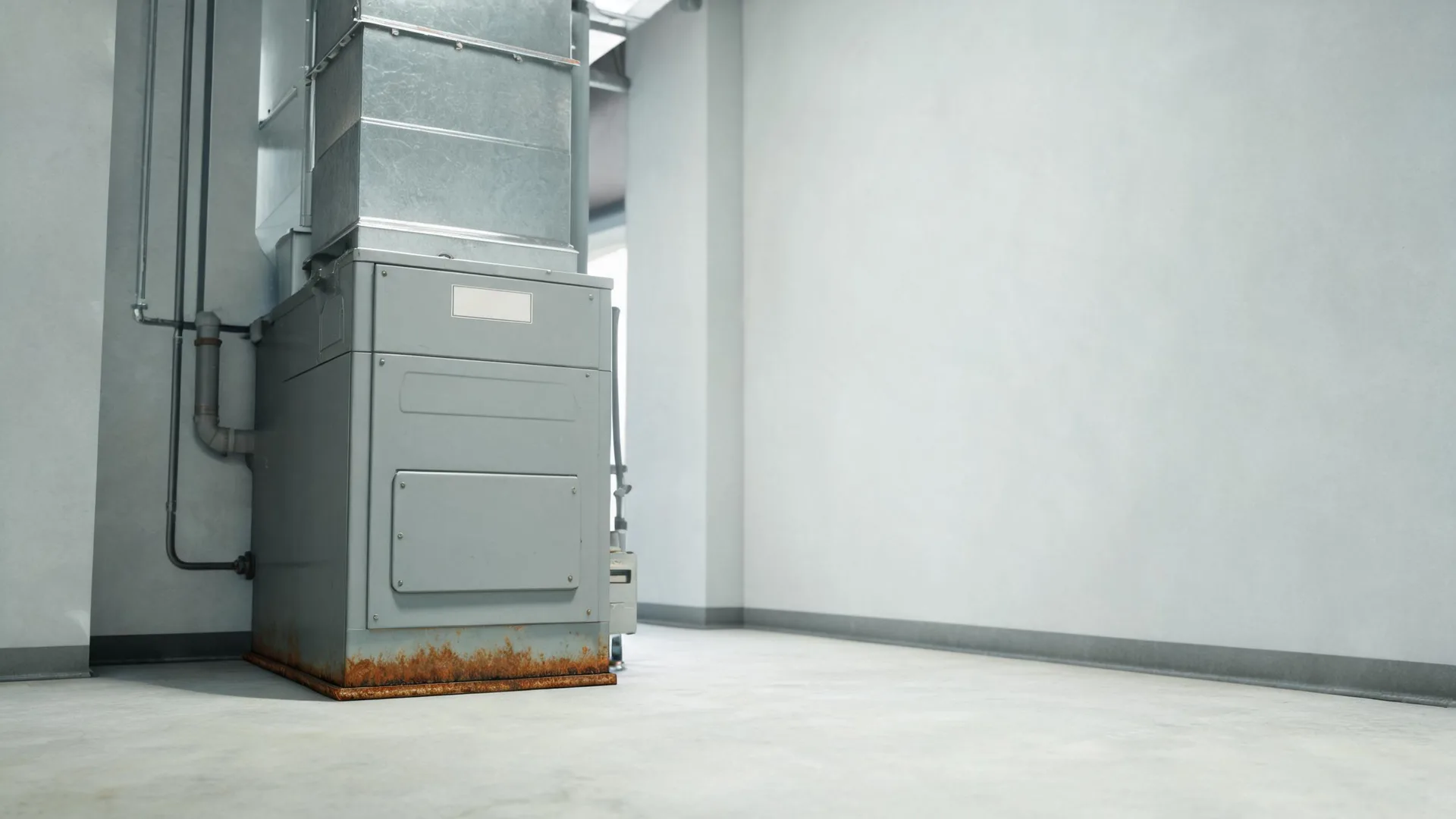
A gray residential gas furnace installed in an unfinished basement, surrounded by ductwork, a metal flue pipe, and a gas supply line.

What to check before you call

Before anyone comes out, there are a few things worth checking. Look at the thermostat first. Make sure it's set to heat, not cool, and the set temperature is actually above room temperature. Check the batteries if it uses them. Next, go to the furnace itself and look at the switch nearby that looks like a light switch. That's the power switch, and it gets bumped off by accident more than people expect. Check the filter. A filter clogged with dust chokes off airflow, and a lot of furnaces will shut themselves down rather than run with no air moving across the heat exchanger. If it's gray and packed solid, swap it. Check the furnace door. Most furnaces have a safety switch that keeps them from running unless the front panel is seated and latched right. If it was off for a filter change and not snapped back on all the way, the furnace won't fire. Go to the breaker panel and look for a tripped breaker. If the furnace uses a standing pilot, check whether the pilot light is actually lit. If it's gone out, there's usually a relight procedure printed right on the unit. None of this involves opening the burner compartment or touching gas lines. If the furnace still won't run after these checks, that's the point to stop and call someone.

A crack in the heat exchanger gets worse with every cycle

Metal that's already stressed flexes again each time the burners fire and shut off. A hairline crack doesn't heal between cycles, it spreads. Left alone, it can let exhaust mix into the air the blower pushes through the house.

A failing limit switch can take the blower motor with it

When a furnace overheats and keeps running anyway, the blower motor ends up pushing air against more resistance than it's built for, or running longer than it should. A problem that started as one worn part can end a repair as two.

An unfinished basement containing a metal furnace with ductwork, exposed wooden joists on the ceiling, cardboard boxes, a coiled cable, and a single hanging incandescent bulb.

A new furnace would cut about $110 a year off heating for a typical McLean County home.

  • A new high-efficiency furnace$470 a year
  • An older furnace$580 a year

Estimates for a typical McLean County home, compared with an older unit built to the previous federal minimum, from EIA household energy data, North Dakota fuel prices and NOAA climate normals. Your home will differ.

Repair makes sense when one part has failed and the heat exchanger is sound.

Replacement makes sense when the heat exchanger is cracked or the furnace keeps needing parts.

A diagnostic visit starts before any panel comes off. A tech runs the furnace through a full cycle, start to shutdown, and watches what it actually does versus what it should do. That means checking for proper ignition, watching flame color and shape, and confirming the blower kicks on and off at the right points in the cycle. Pressure readings on the gas valve, temperature rise across the heat exchanger, amp draw on the blower motor, these numbers get checked against what the furnace is rated for, not just whether it seems to be running fine. A furnace can sound normal and still be pulling bad numbers somewhere in that sequence. Finding which reading is off is what points to the actual failing part instead of guessing at it.