




An unfinished basement featuring concrete block walls, exposed floor joists, and a metal forced-air furnace with ductwork near a central pillar.

Furnace Repair in Cando, ND

Tell us about the job

Takes about a minute. No obligation.

RepairFurnace or heatingTowner County, ND
Step 1 of 2

What ZIP code is the job in?

Your furnace in Cando runs nine months a year, September through May. That's most of the calendar, not just a cold snap in January. And when it runs, it's working against overnight lows that average 1 below zero across December, January and February. A furnace built for a milder climate gets long stretches of rest. Yours doesn't get much. That kind of use wears out igniters, blower motors and heat exchangers sooner than you'd expect from a machine's age alone. So if something's acting up, it's rarely random. It's usually a part that's been carrying more than its share for years.

9 months
September through May, your furnace is on duty
-1°F
the average winter night it heats against
37 winter storms
in ten years, the nights a failure hurts most
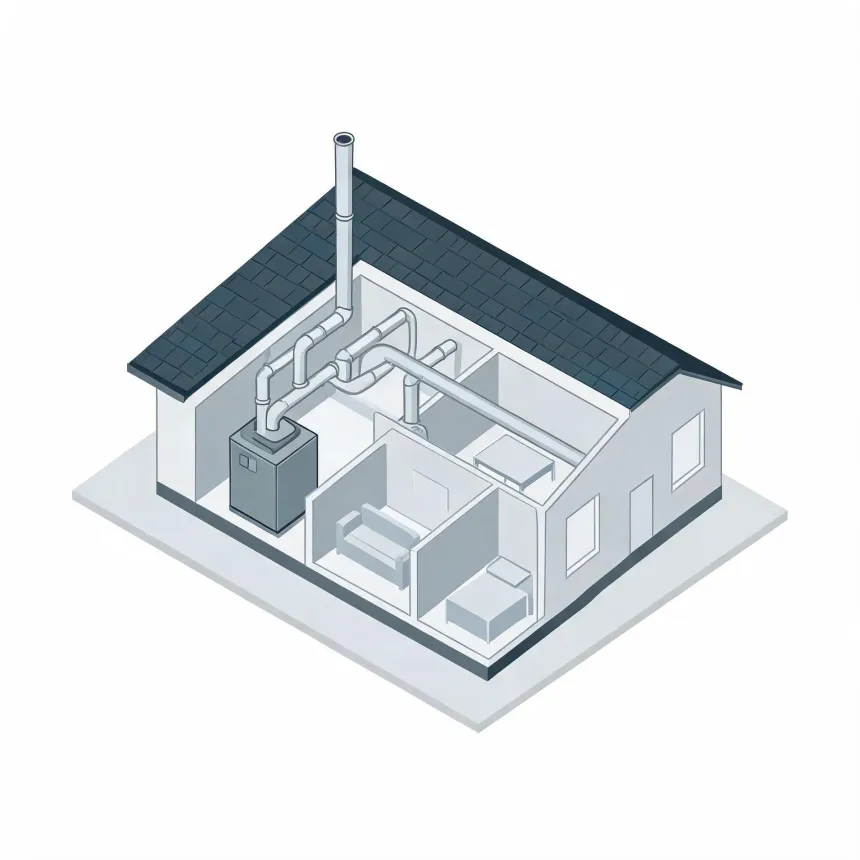
Isometric cutaway illustration of a single-story house showing a gray furnace connected to white ductwork and a flue pipe extending through the shingled roof, with simplified furniture in the interior rooms.
Your furnace works hardest from November through March.

NOAA nClimDiv, 1991–2020 normals

Half the homes in Towner County were built in 1969 or earlier.

A furnace that came with a house that old is likely near the end of its life, maybe past it.

September is when a weak furnace gets found

Heat runs September through May
Winter nights average -1°F
Climate zone 7

Electricity in North Dakota ran $33.73 per million Btu in 2024, among the higher rates in the country. A furnace that's struggling doesn't usually shut off. A cracked heat exchanger, a dirty flame sensor, a blower motor losing strength, they all just make it work harder to push out the same heat. At that price per Btu, a furnace running rough costs you something every single day it's left that way. Fixing the part now is cheaper than paying to run a bad one all winter.

Get the real problem found before the cold sets in

A part that's been overworked for years doesn't fix itself. Have it looked at and diagnosed properly, so whatever's wearing out gets found now, not in January.

Find a contractor
A man in a cap, dark jacket and tan work pants walks up porch steps toward a dark blue paneled door, carrying a canvas tool bag with tools in its outer pockets, beside a potted shrub.
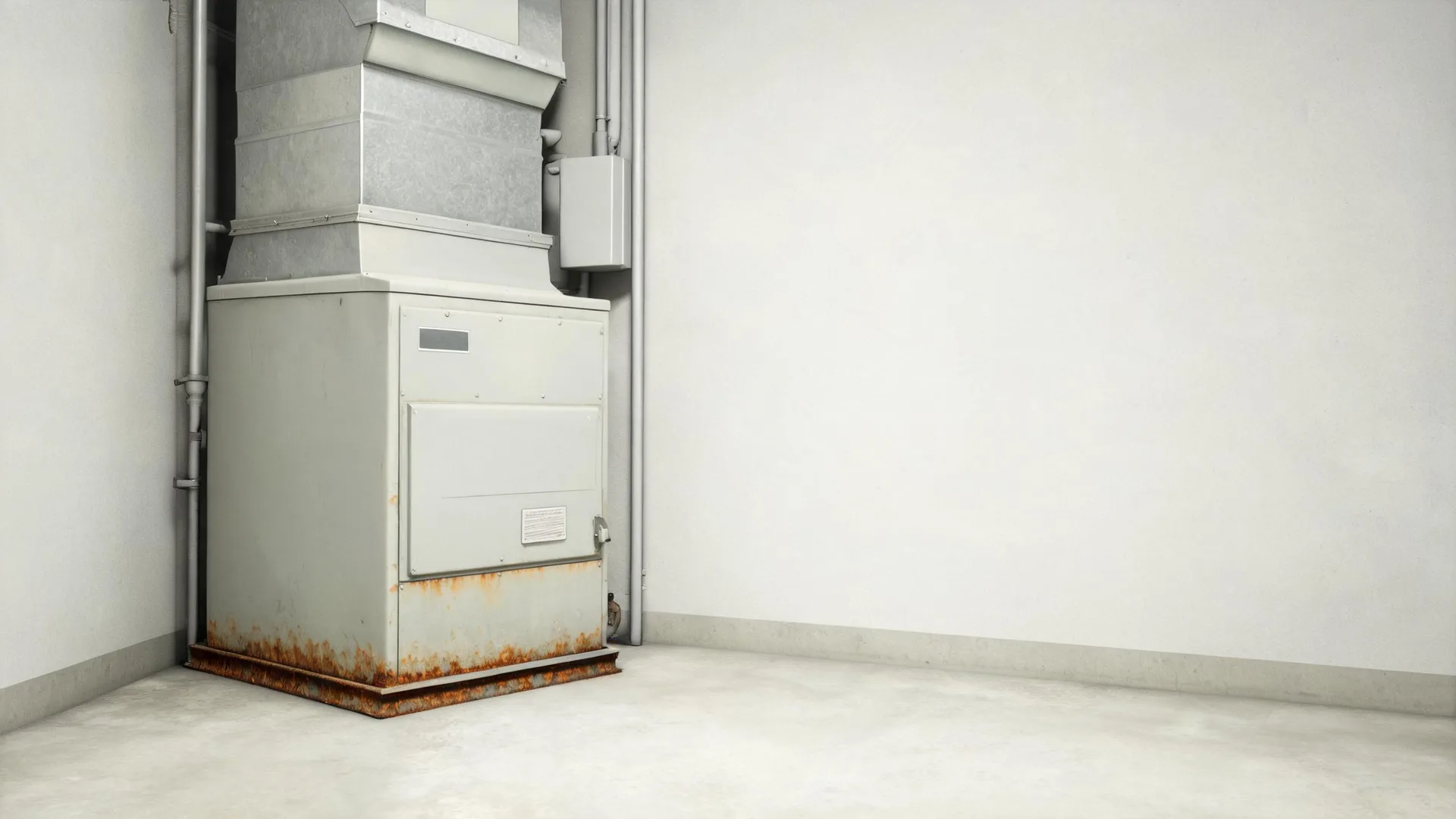
A gray gas furnace with attached ductwork and piping installed in an unfinished concrete basement.

How much life is left in it

If your furnace came with the house, ask the contractor straight out how much life it has left before you agree to a repair. A new igniter or blower motor is worth putting in on a furnace with years left. It's not worth putting in on one that's already near the end. Get that answer before you decide what to fix.

A small problem doesn't stay small

A flame sensor coated in residue makes the furnace misfire and shut down early in the cycle. Left alone, the furnace just tries again, and each attempt puts more strain on the igniter and the control board. What started as one dirty part ends up taking other parts down with it.
Heat exchangers don't heal

A crack in the heat exchanger only widens with more heat cycles. Running the furnace while it's cracked pushes exhaust where it shouldn't go and stresses the metal further. This is the one failure where shutting the furnace off and calling for service, rather than waiting, is the right call.

Most furnace failures trace back to a handful of parts, and they tend to go in the same order. The igniter goes first, usually, since it heats up and cools down every single cycle and that stress adds up. A flame sensor coated in residue is next, and it makes the furnace shut off early or refuse to stay lit. The blower motor wears from just running so many hours, and when its bearings go you'll hear it before anything stops working. Capacitors weaken with age and heat, and a weak one makes the blower motor strain to start. The heat exchanger is the one worth knowing about separately, because it doesn't wear evenly like the others. It cracks from repeated expansion and contraction, heating up and cooling down, cycle after cycle, year after year. None of these are random. They're the parts that work hardest, failing in the order you'd expect.

Repair or replace isn't about which part failed. It's about what that part is attached to. An igniter or a blower motor can be swapped into a furnace that's otherwise sound, and the furnace goes back to work like nothing happened. A cracked heat exchanger is different. The exchanger is the core of the furnace, and when it's cracked, you're really asking whether the whole unit still makes sense to keep running. The other thing worth asking is whether this is the first repair or one of several, spaced close together. A part failing on its own is just a part failing. Parts failing again and again, one after another, is a furnace that's used up most of what it had. A contractor who's looked at it can tell you which one you're dealing with.