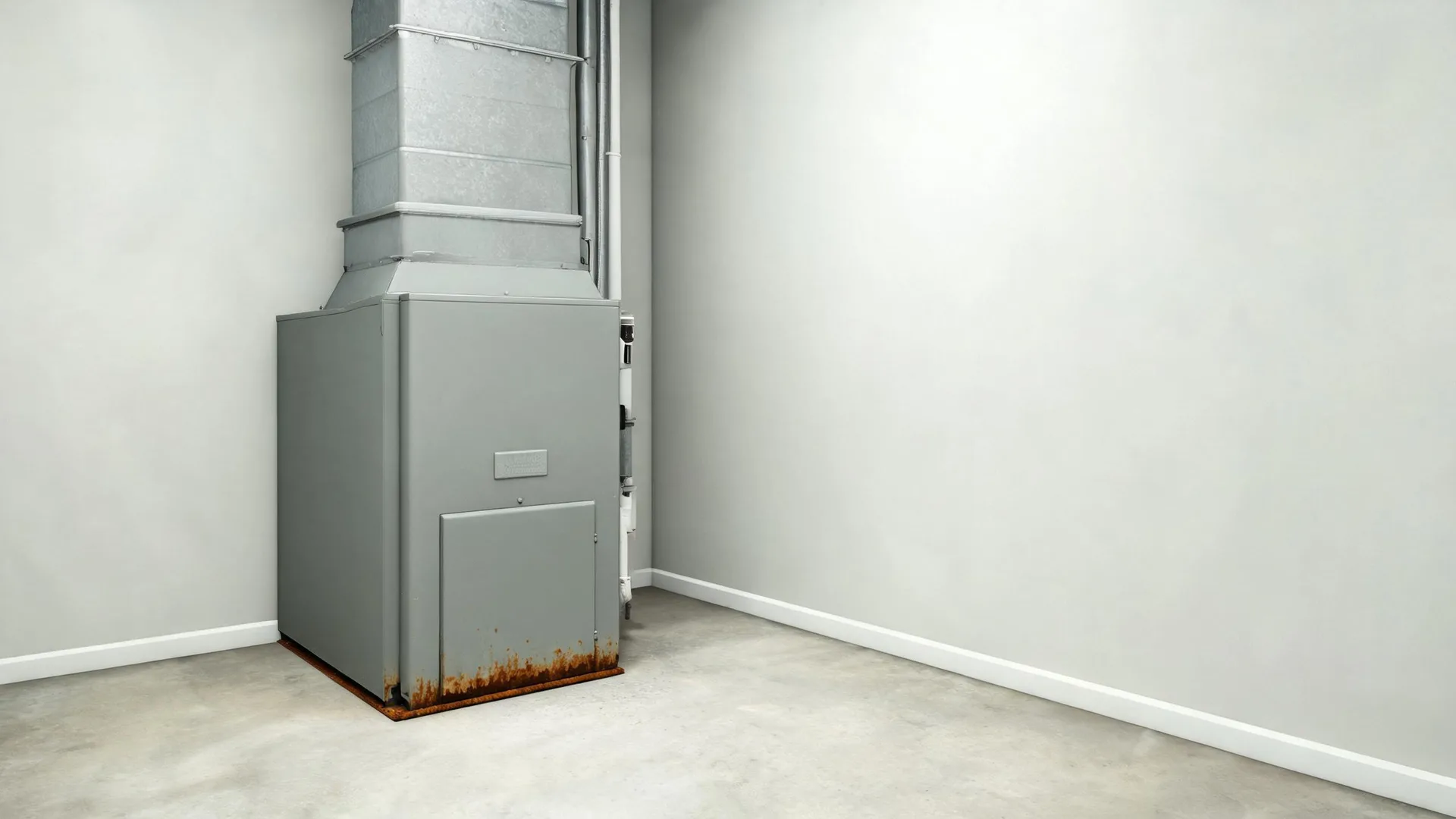
Ten months of run time
Furnaces in Bowman County run from September through June. That leaves the burner and blower only a couple of months of rest a year, not the few weeks a milder state gets.
Takes about a minute. No obligation.
Furnaces in Bowman County run from September through June. That leaves the burner and blower only a couple of months of rest a year, not the few weeks a milder state gets.
A furnace running this much wears its parts sooner, and whatever is going wrong now had less time to build up before it showed itself. Have it diagnosed properly so the repair holds instead of coming back in a month.
NOAA nClimDiv, 1991–2020 normals
Gas in North Dakota ran $8.44 per million Btu in 2024.
A furnace that's short-cycling or running longer than it should burns through that every month it stays broken.



Half the homes in Bowman County went up in 1972 or earlier. A furnace that age has been replaced at least once, maybe twice, and the one running now could be on borrowed time. Age alone does not mean a breakdown. But paired with a repair call, it changes the question worth asking. A cracked heat exchanger or a blower motor on its way out costs real money to fix on a furnace that only has a few winters left in it anyway. Before paying for a major repair, it is worth finding out how much life the unit actually has.
A furnace running ten months a year doesn't have much time to show you something's wrong before it's really wrong. Get it looked at by someone who'll find the actual cause, so the fix holds through the winter instead of calling you back in a month.
Find a contractor
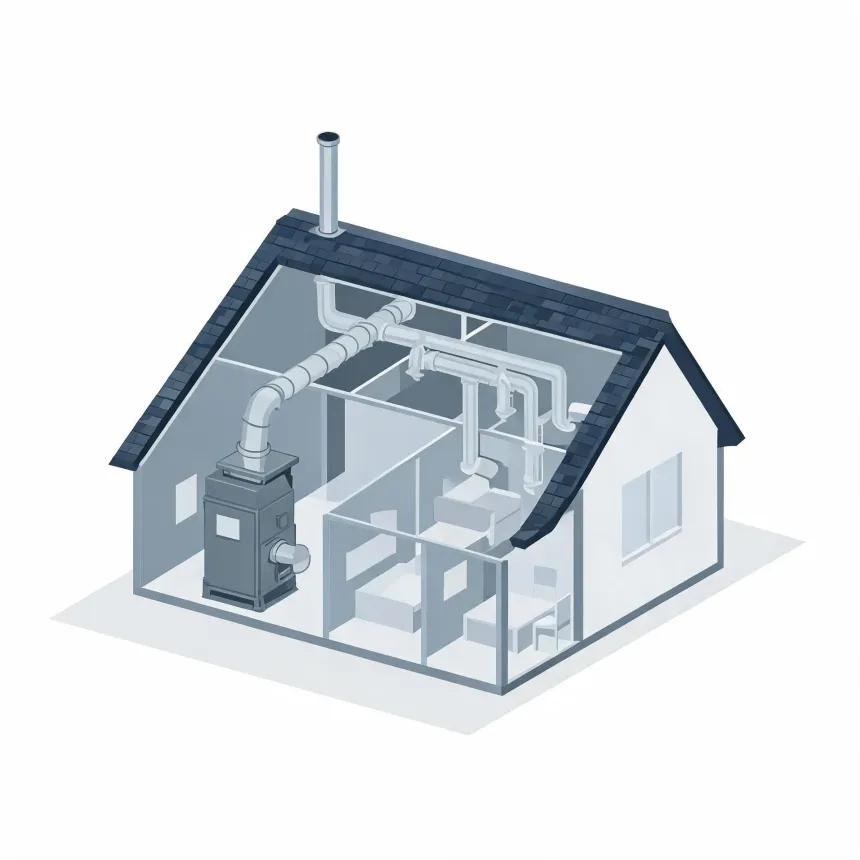
If your furnace came with the house, ask the contractor its age before agreeing to a major repair. A technician can tell you what shape the heat exchanger and blower are in, not just what failed today. That tells you whether this repair is worth paying for, or whether the money is better put toward a new furnace.
Check that the thermostat is set to heat and the setting is above room temperature. Look at the furnace switch, the one that looks like a light switch near the unit, and make sure it's on. Check the breaker it runs on. If the furnace uses a standing pilot, see if the pilot light is lit. None of this takes tools, and it rules out the simplest causes first.
Leave the burner assembly, the gas valve and the wiring alone. If you smell gas, don't flip switches or light anything, just shut off the gas supply at the valve and get out. A dirty flame sensor or a cracked heat exchanger needs a meter and training to check safely. Taking the furnace apart to look can turn a simple repair into a bigger one.
Estimates for a typical Bowman County home, compared with an older unit built to the previous federal minimum, from EIA household energy data, North Dakota fuel prices and NOAA climate normals. Your home will differ.
Repair makes sense when one part has failed and the heat exchanger is sound.
Replacement makes sense when the heat exchanger is cracked or the furnace keeps needing parts.
A repair is worth it when the problem is isolated to one part and the rest of the furnace is sound. A flame sensor, an igniter, a draft inducer motor, a blower capacitor, these fail on their own and swapping the part fixes the furnace. The question gets harder when the failing part points to something bigger behind it. A heat exchanger that's cracked or scorched tells you the furnace has been stressed for a while, and patching the one symptom won't stop the next one. The same goes for a blower motor that's burned out from years of strain rather than a single bad bearing. A technician who opens the furnace up can tell the difference between a part that failed on its own and a part that failed because the unit around it is wearing out.