A snow-covered small-town street at dusk, with lit white clapboard houses, bare trees, and a grain elevator silhouetted against an orange and blue twilight sky.

Furnace Repair in Bottineau, ND

Tell us about the job

Takes about a minute. No obligation.

RepairFurnace or heatingBottineau County, ND
Step 1 of 2

What ZIP code is the job in?

Nine months of runtime

A furnace in Bottineau County works from September through May. That's most of the year asking the same igniter, blower and heat exchanger to keep up. Nine months of cycling on and off wears parts down faster than a furnace that gets to rest half the year.


What that means for the repair

A furnace with this much runtime on it tends to show small problems before they become big ones. A short cycle, a cold room, a strange smell. Getting the actual cause diagnosed, not just patched, matters more here because the furnace is about to go right back to work.

9 months
September through May, your furnace is on duty
1°F
the average winter night it heats against
30 winter storms
in ten years, the nights a failure hurts most
Isometric cutaway illustration of a small house showing a furnace unit connected to ductwork and a vertical flue pipe extending through the dark shingled roof, with sparse furniture in the rooms.
Your furnace works hardest from November through March.

NOAA nClimDiv, 1991–2020 normals

A thermostat set wrong or a dead battery in it can look exactly like a dead furnace.

Check the thermostat first. Set it below room temperature and listen for the furnace to click on before you call anyone.

Electricity here runs $33.73 per million Btu, and a struggling furnace burns more of it every day it's not fixed

Climate zone 7
Heat runs September through May
Winter nights average 1°F
September Starts the Season HereFurnace repair calls in Bottineau County climb in the first weeks of September, when heat gets asked to run again after sitting idle since spring.

A furnace that's short cycling or running long still pulls power the whole time, and at $33.73 per million Btu that adds up faster here than somewhere with cheaper electricity. Most homes around Bottineau heat with electricity, so this isn't a cost running in the background. It's the main one. A cracked heat exchanger, a dirty blower wheel, a failing igniter that makes the furnace try twice to light, all of them make the system work harder to put out the same heat. Waiting a month to get it looked at is a month of paying for that extra work. Getting a contractor out while the problem is small costs less than letting it run that way through the rest of winter.

A Furnace That Runs Nine Months a Year Needs a Real Diagnosis, Not a Patch

Nine months of runtime a year doesn't leave much time for a furnace to rest, and it shows up as wear on the parts doing the work. Have it looked at now, while the fix is still small.

Find a contractor
A man in a cap, dark shirt and tan work pants walks up stone steps toward a dark blue front door, carrying a canvas tool bag, with a potted shrub beside the entry.
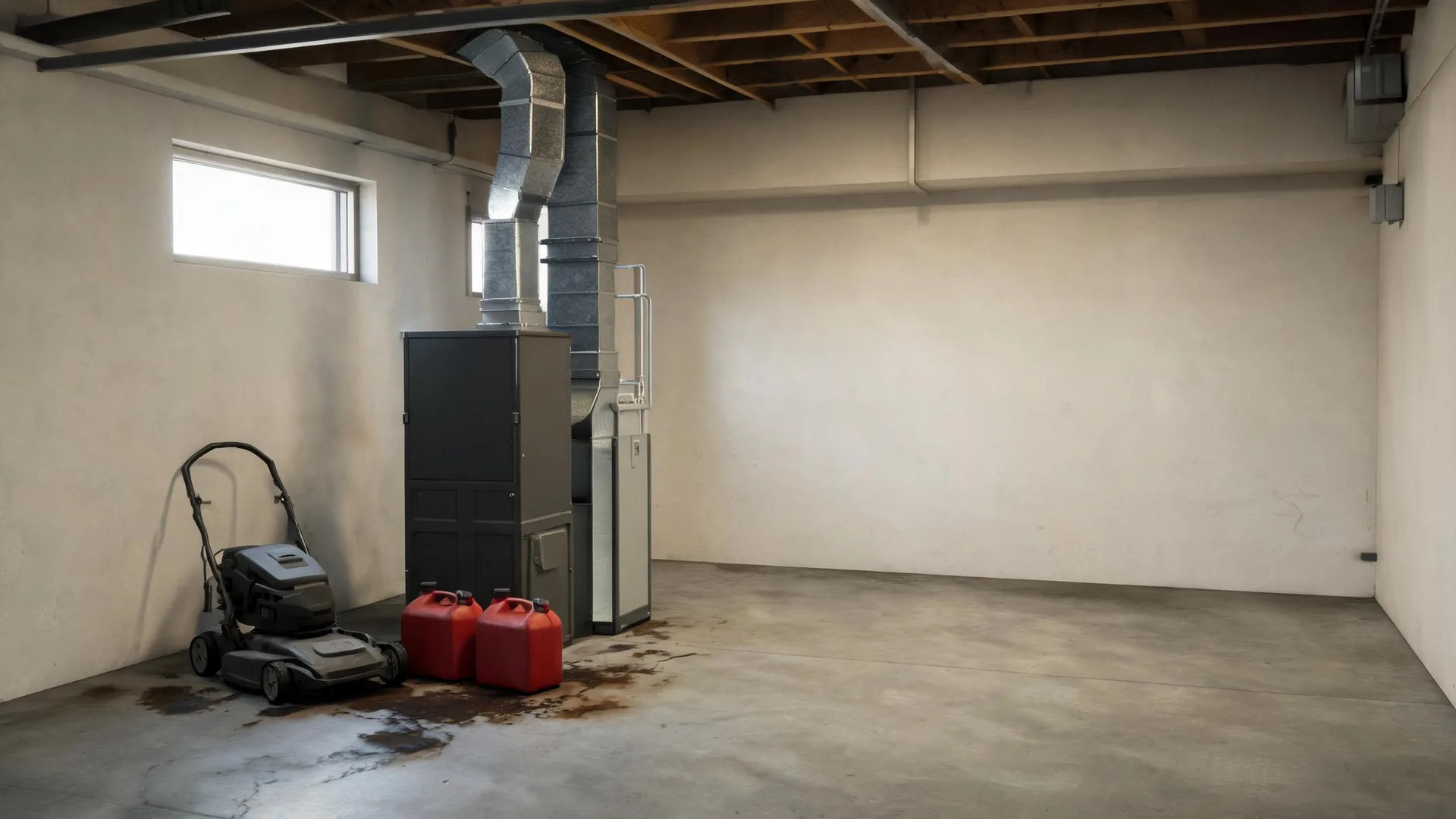
A gray residential gas furnace installed in an unfinished basement, connected to sheet-metal ductwork and PVC pipes.

What Actually Breaks

An igniter is the part most likely to leave you in the cold. It glows hot enough to light the gas, and that glowing wears it down a little more every cycle until it cracks or stops drawing enough current to do its job. A flame sensor fails in a quieter way. It gets a film of residue on it over time, stops sensing the flame, and the furnace shuts itself off a few seconds after startup as a safety measure. A blower motor can wear out in its bearings and start making a grinding or whining noise before it quits. Behind the scenes, a heat exchanger can crack from the stress of heating and cooling over and over, and that one is not optional to fix since it's how combustion gases stay out of the air in the house. Clogged filters do not break anything by themselves, but they make the furnace pull harder through a blocked path, and that strain is what pushes a weak part the rest of the way to failing.

A Furnace That Won't Stay Lit

A furnace that fires up and then shuts off a few seconds later is usually protecting itself, not failing outright. The flame sensor isn't seeing a flame, or the igniter isn't getting hot enough to start one. Either way, the furnace is telling you it tried and stopped on purpose.

A Furnace That Runs but Doesn't Keep Up

Rooms that stay cold, a cycle that runs longer than it used to, warm air that doesn't feel as warm as it should. These point to something working harder to do less, whether that's a blower losing strength or a burner not getting enough air to burn clean. The furnace is still running. It's just losing the fight.

A furnace that's struggling doesn't fail cleanly. It fails a little more each time it runs. A cracked heat exchanger gets worse under heat and cools back down when the cycle ends, so it can run for a while before it fails outright, and every cycle in between flexes that crack a bit further. A dirty flame sensor builds up residue faster once ignition is already rough, because a weak or dirty burn leaves more residue behind than a clean one. A blower motor with worn bearings heats up as it runs, and heat is hard on bearings that are already going. None of this is a reason to shut the furnace off and wait. It's a reason to get the actual cause found before the part that's struggling now becomes the part that quits.

A single repair doesn't mean the furnace is on its way out. An igniter, a flame sensor, a blower motor, each one can fail on its own and get replaced on its own, and that's a normal part of owning a furnace this old or older. What changes the picture is a crack in the heat exchanger. That part isn't something a contractor replaces by itself, so a crack there means the furnace is done, not just a piece of it. Short of that, pay attention to how often the repairs come. One repair is just a repair. Three or four in as many years, especially if they're different parts each time, means the furnace as a whole is wearing out even though no single piece has taken the others down with it.