





A snow-covered suburban street at dusk with lit houses and bare trees under a twilight sky.

Furnace Repair in Beulah, ND

Tell us about the job

Takes about a minute. No obligation.

RepairFurnace or heatingMercer County, ND
Step 1 of 2

What ZIP code is the job in?

Furnaces in Mercer County run about nine months a year, September through May. That's most of the calendar spent cycling on and off, heating a house against overnight lows that average 6°F in December and January. A system working that many months, against that kind of cold, wears down faster than one that gets a real break every summer. The igniter, the blower motor, the heat exchanger, all of it logs more hours here than it would somewhere milder. That's usually what's behind a furnace acting up in Beulah. It's not bad luck, it's mileage.

9 months
September through May, your furnace is on duty
6°F
the average winter night it heats against
24 winter storms
in ten years, the nights a failure hurts most
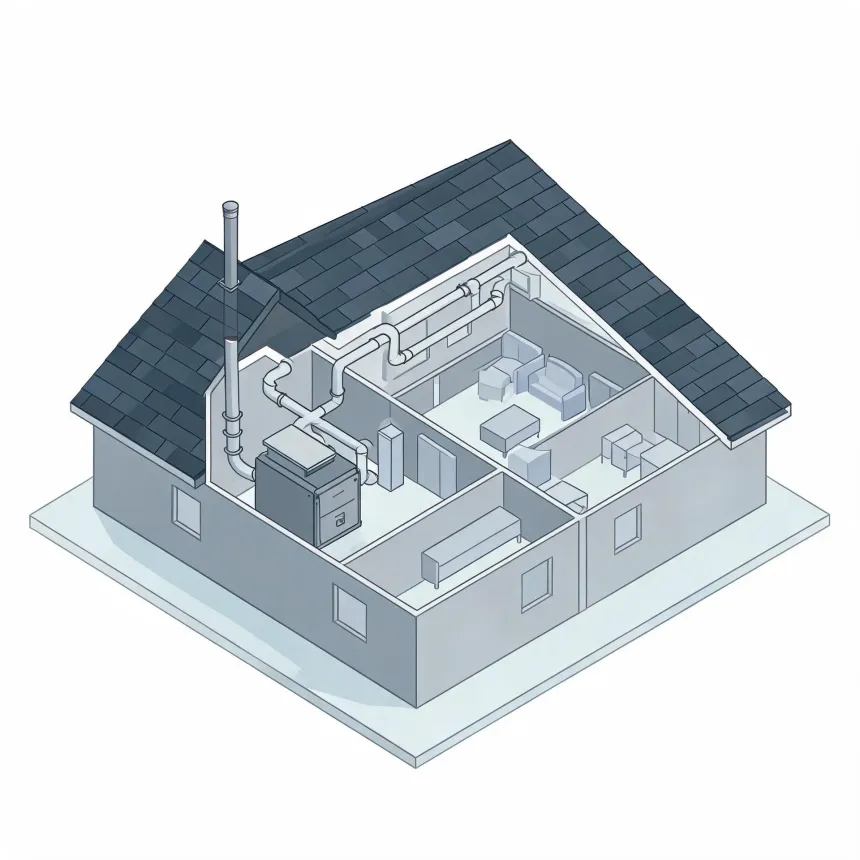
Isometric cutaway illustration of a single-story house with a dark shingled roof, showing interior rooms with furniture, ductwork, a flue pipe, and a furnace unit.
Your furnace works hardest from November through March.

NOAA nClimDiv, 1991–2020 normals

Furnaces in Mercer County start their season in September.

August is the month to get a weak part replaced, before the first cold week finds it.

Propane runs $17.33 per million Btu here, so a furnace running poorly burns money every month it's not fixed

Heat runs September through May
Winter nights average 6°F
Climate zone 6A

A diagnostic visit starts before any panel comes off. A technician asks what the furnace is doing, when it started, whether it's a smell, a sound, or just cold air coming out of the vents. Then the cover comes off and the burners get watched through a full cycle, since a lot of problems only show up at ignition or at shutoff, not in between. A meter checks the igniter's resistance, because one can look fine and still be too weak to light the gas reliably. The flame itself gets read too, since the color and shape tell a technician whether it's burning clean or struggling for air. Only after watching it run does the technician say which part is causing it, rather than guessing from the symptom alone.

Get the real cause found, not just the symptom silenced

A furnace running nine months a year against lows near 6°F doesn't fail for no reason. Something specific is worn or stressed, and a proper diagnosis finds which part it is instead of guessing. That's what makes a repair last through the rest of the season.

Find a contractor
A man in a dark long-sleeved shirt and tan work pants, seen from behind, climbs porch steps toward a navy front door while carrying a canvas tool bag.
A gray residential gas furnace installed in an unfinished basement, surrounded by ductwork, a metal flue pipe, and a gas supply line.

Check the install date before you write off the furnace

Find out when the furnace was put in before deciding it's done. A system installed in the last few years is usually worth repairing without a second thought, and even the diagnosis changes once the age is known. Ask whoever comes out to check the install date, not just what's making it act up. That one fact tells a technician how far to go with a repair, and whether it's worth going that far at all.

A small crack doesn't stay small

A heat exchanger that's cracked runs hot right at that crack every time the burners fire. The metal flexes there, the crack spreads a little more each cycle, and what started as something a technician could catch early turns into a reason to replace the whole exchanger instead of patching it.

A struggling furnace pushes its other parts harder

When one part is failing, the furnace often tries to compensate. The blower runs longer to move enough heat, the burners cycle more times an hour to keep up. That extra strain lands on whatever part is next weakest, which is why a furnace left running rough tends to take down a second part before anyone gets to the first one.

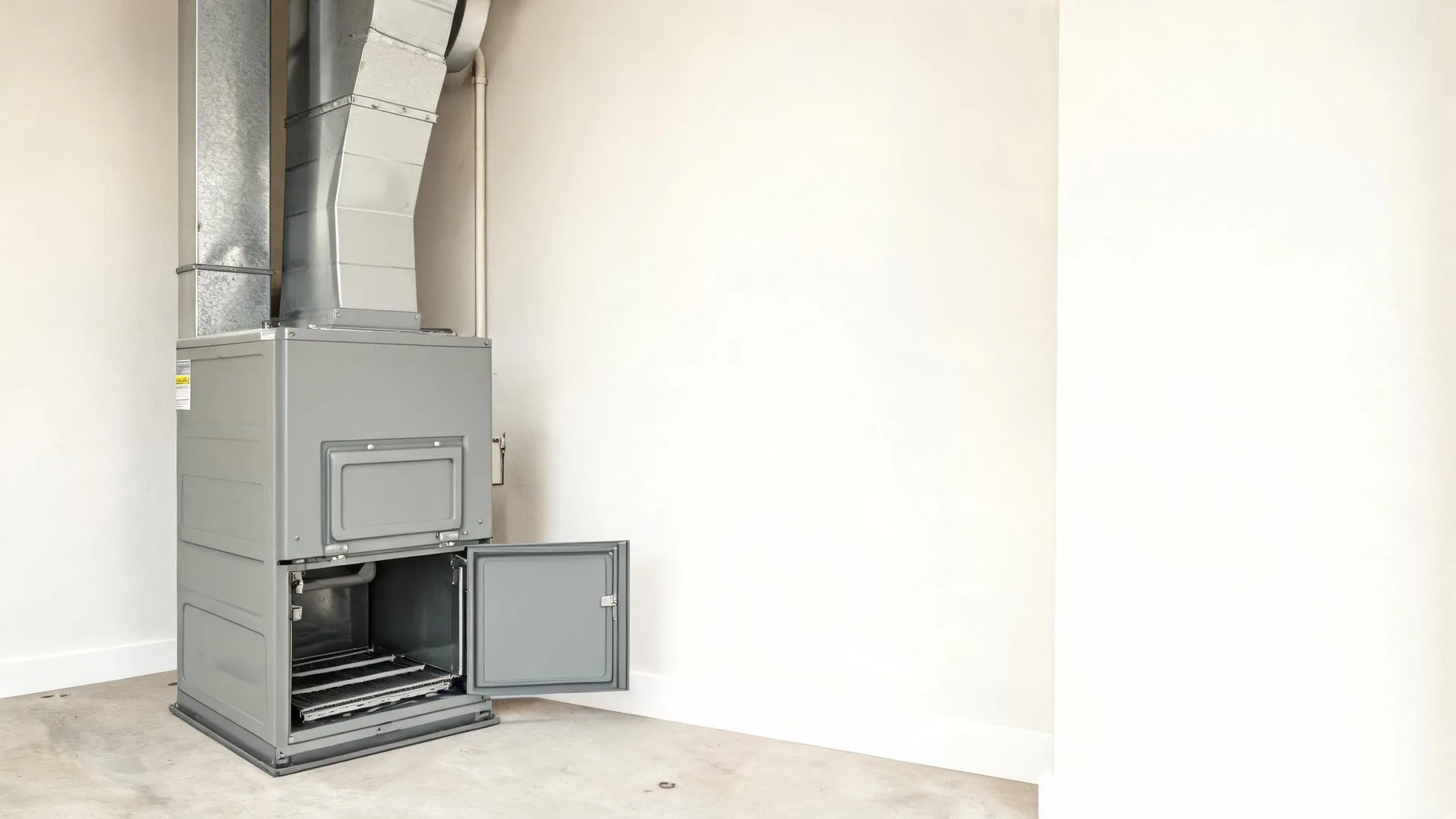
A gas furnace and sheet-metal air handler unit installed in an unfinished concrete basement.

A new furnace would cut about $210 a year off heating for a typical Mercer County home.

  • A new high-efficiency furnace$880 a year
  • An older furnace$1,090 a year

Estimates for a typical Mercer County home, compared with an older unit built to the previous federal minimum, from EIA household energy data, North Dakota fuel prices and NOAA climate normals. Your home will differ.

Repair makes sense when one part has failed and the heat exchanger is sound.

Replacement makes sense when the heat exchanger is cracked or the furnace keeps needing parts.

Age isn't the only thing that decides this. A furnace with a cracked heat exchanger is done, no matter how new it looks, because that part can't be patched safely and replacing it usually costs close to a new system anyway. A bad igniter or a failed blower motor is a different story. Those are parts a technician swaps out, the furnace runs like normal again, and there's no reason to think about replacement at all. The real question isn't how old the furnace is, it's which part failed and whether that part can be replaced on its own or takes the whole system down with it.