Gas here runs $8.44 per million Btu
North Dakota gas cost $8.44 per million Btu in 2024. A furnace that has to work harder to put out the same heat burns through more of it, and that difference shows up on the meter all winter long.
Takes about a minute. No obligation.
North Dakota gas cost $8.44 per million Btu in 2024. A furnace that has to work harder to put out the same heat burns through more of it, and that difference shows up on the meter all winter long.
A clogged filter or a dirty burner makes your furnace run longer to reach the same temperature on the thermostat. Longer runtime means more gas used for the same heat in the house.
Furnaces in Stark County start running in September and keep going through June.
Book the tune-up in August, before the season puts any load on the furnace.




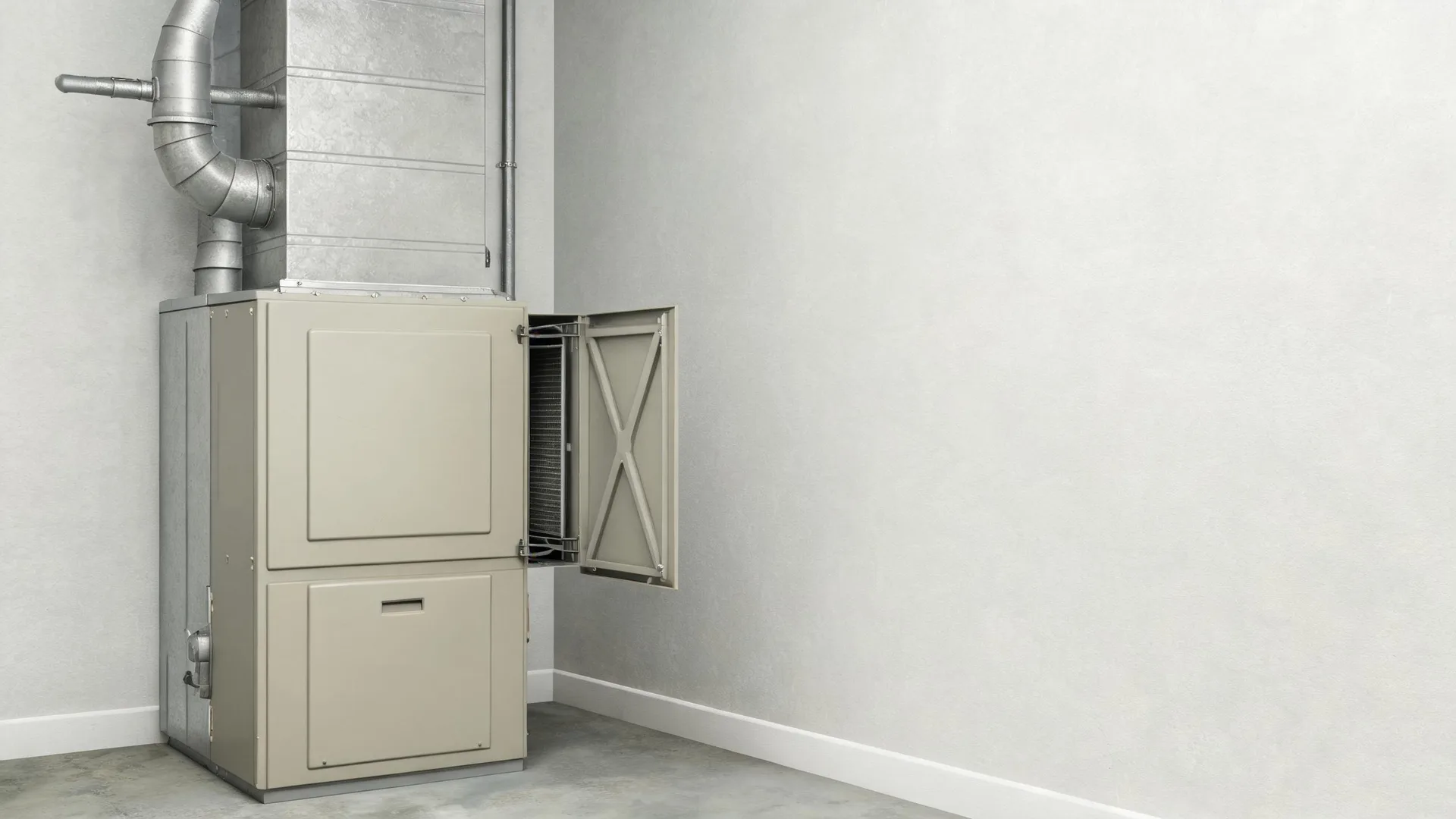
A tune-up starts with the burners. A tech pulls them and cleans off any rust or scale, because a burner that isn't firing clean puts out a weak, uneven flame that makes the heat exchanger work harder than it should. The flame sensor gets cleaned too. It's a small rod that tells the control board a flame is actually present, and once it's coated with residue it can't sense the flame reliably, which leads to a furnace that shuts off on its own. The igniter gets checked for cracks or weak spots, since that's the part that lights the gas in the first place. A tech also checks the heat exchanger for cracks, because a cracked one can let exhaust mix into the air moving through your ducts. Belts and bearings get inspected if the blower has them, and the motor gets lubricated if it takes oil. Last comes the filter and the airflow through the system, since a furnace starved for air runs longer and wears out sooner than one that breathes freely.
A tune-up gets the burners firing clean and the airflow where it should be, so your furnace isn't burning more gas than it needs to for the same heat. At $8.44 per million Btu, that difference shows up on the meter all winter. Have it looked at while the furnace is still sitting idle.
Find a contractorA furnace usually tells you before it quits. The burner flame is one sign worth watching. It should burn blue and steady. A flame that's yellow, flickering, or leaning to one side means it isn't burning clean, and that puts more work on the heat exchanger behind it. Short cycling is another. If the furnace fires up, runs a few minutes, then shuts off before the house warms up, something is telling the control board to stop early, often a flame sensor that can't see the flame anymore or a filter so clogged the system thinks it's overheating. Listen for odd sounds too. A squeal usually points to a belt or bearing, a bang on startup can mean gas is building before it lights, and a rattle may just be a loose panel but it can also be a cracked part working itself apart. Rooms that used to heat evenly and now don't can mean the blower or the ductwork isn't moving air the way it used to. And if the air coming from the vents smells off, that's not something to wait on. A furnace that's overdue for a look doesn't always announce it loudly. Sometimes it just runs a little longer than it used to, and that's the quiet sign most people miss until the loud one shows up.
A cracked heat exchanger can run for a while before it causes trouble you'd notice. Same with a flame sensor losing its coating or a blower wheel building up dust. The furnace keeps heating the house, so there's nothing pushing you to call anyone. A tune-up checks these parts on purpose, before they get bad enough to cause a shutdown or a safety problem.
You can hear a bad bearing and you can see a yellow flame, but a lot of what matters is inside the cabinet. Whether the burners are firing evenly, whether the heat exchanger has a crack starting, whether the blower motor still has grease where it needs it. A tech pulls the panels and looks at the actual parts instead of guessing from how the furnace sounds.
Between visits, the filter is the main thing worth your attention. Check it monthly during the heating months and swap it when it's gray and matted instead of waiting for a set schedule, since how fast it loads up depends on the filter and the house, not the calendar. Keep the area around the furnace clear too. It needs room to pull in air, and boxes or stored items blocking the return can starve it the same way a dirty filter does. Walk past the vents and registers now and then and make sure none are blocked by furniture or rugs. If you have a standing pilot, you can look at the flame yourself. It should be blue with maybe a small tip of yellow, steady, not flickering or leaning. Past that, leave the cabinet closed. The igniter, the flame sensor, the heat exchanger, those need a tech with the panels off, not a homeowner with a flashlight.
Ten months of runtime a year puts more hours on a furnace than most owners realize, and those hours land hardest on a handful of parts. The igniter cycles on every single start. The flame sensor sits in the burner flame for months without a break. A blower motor built with ten months of duty in mind still logs more wear in Stark County than the same model would somewhere it only ran half the year. None of that means trouble is coming on a set date. It means a worn igniter or a sensor losing its coating has less idle time to get caught before the furnace needs it again. A short window before September is the stretch to find that out, not the first cold week when the furnace is already carrying the load.