A row of similar light-colored two-story houses behind a mown lawn, with a chain-link fence running along the foreground and overhanging tree branches at the top of the frame.

Furnace Installation in Rugby, ND

Tell us about the job

Takes about a minute. No obligation.

New system or replacementFurnace or heatingPierce County, ND
Step 1 of 2

What ZIP code is the job in?

Bigger isn't better

A furnace that's too big for the house heats the air fast, shuts off, and starts again a few minutes later. That short cycling wears out the igniter and the blower motor sooner, and it leaves rooms farther from the furnace never quite warm. The right size runs longer, steadier cycles and holds a more even heat through the house.

The size comes from a load calculation

A contractor works out furnace size with a room by room load calculation, not by matching the old unit or guessing from square footage alone. It accounts for the windows, the insulation, the ceiling height, and how the rooms connect. Skipping this step is how a house ends up with a furnace that's wrong for it from day one.

9 months
September through May, your furnace is on duty
1°F
the average winter night it heats against
80% AFUE
the federal minimum any new unit must meet
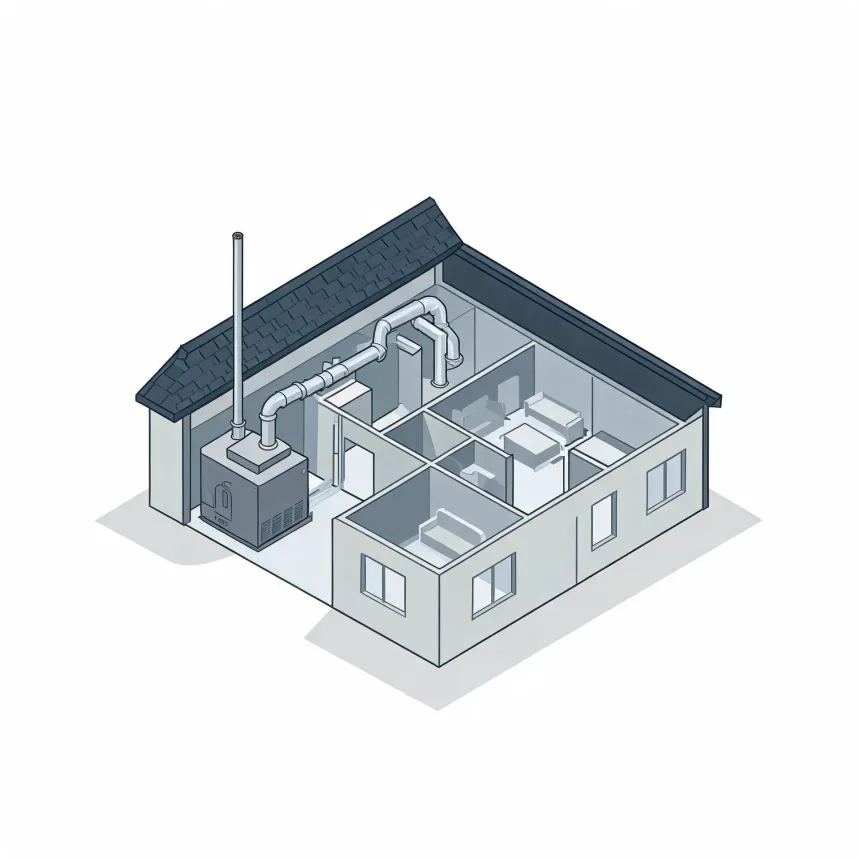
Isometric grayscale illustration of a cutaway single-story house showing interior rooms with furniture, plus an exterior furnace unit with a tall flue pipe and ducting running into the attic space.
Your furnace works hardest from November through March.

NOAA nClimDiv, 1991–2020 normals

Furnaces in Pierce County start running in September.

Put in the new one during August, before the first cold morning asks something of it.

Almost half of Pierce County heats with electricity, and a straight swap keeps it that way

48.9% of homes heat with electricity
Heat runs September through May
Winter nights average 1°F
An older home needs a furnace sized for itHalf the homes in Pierce County were built in 1972 or earlier

Electricity ran $33.73 per million Btu across North Dakota in 2024, on the high side for the country. A furnace that wastes heat burns through more of that every month it runs. Efficiency rating matters more on an expensive fuel than a cheap one, since every point of it is working against a higher number. Ask what AFUE rating comes with the unit before it goes in, not after.

A furnace installed here has to meet zone 7's efficiency floor

Pierce County sits in zone 7, the coldest tier in the energy code, and any furnace installed here has to clear 80.0 percent AFUE at minimum. That floor rises to 95.0 percent for units manufactured a few years from now, so what qualifies today may not later. A federal tax credit is available for high-efficiency equipment, worth asking a contractor about when comparing units.

Find a contractor
A man in a dark long-sleeve shirt and tan work pants carries a canvas tool bag up porch steps toward a navy blue front door, with a potted shrub beside the entry.
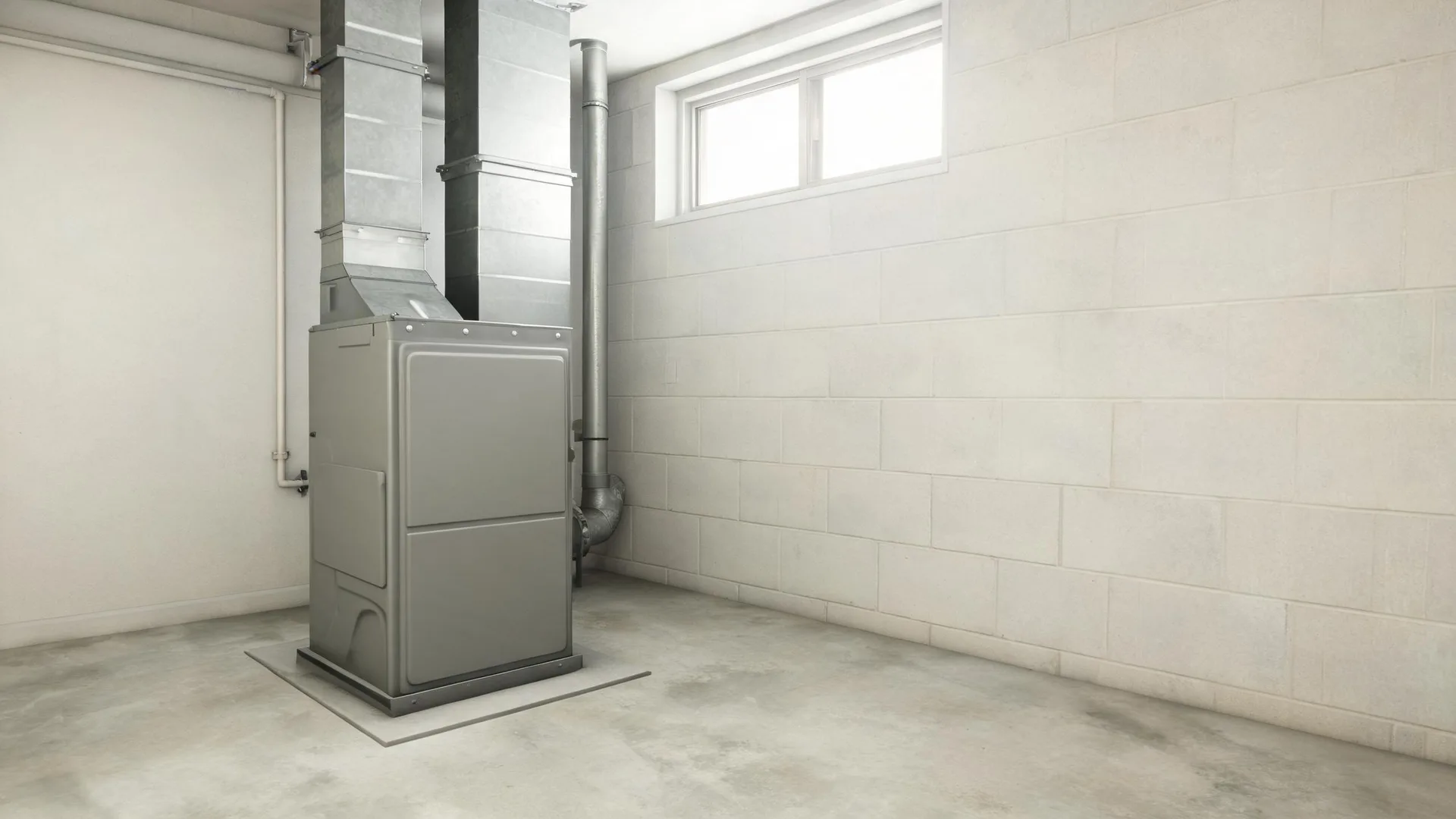
A gray residential gas furnace installed in an unfinished basement, connected to sheet-metal ductwork and PVC pipes.

Nine months of heat, and nights at 1 degree

Heat runs here from September through May, nine months of the year. During December, January and February, the overnight low averages 1 degree. A furnace sized for that has to recover fast after every cold night, and keep doing it most months of the year, not just a few weeks of deep winter. That kind of run time catches up with a unit that's undersized or poorly matched to the house well before it would somewhere milder. Parts wear sooner, and a weak igniter or a short-cycling blower shows up earlier than it would on a lighter schedule.

AFUE is what the furnace keeps, not what it burns

The AFUE number is the share of fuel the furnace actually turns into heat for the house. The rest goes out the flue. A furnace with a higher AFUE pulls more heat out of the same fuel, cycle after cycle, for as long as it runs.

The rating only holds if the installation matches it

A furnace reaches its rated efficiency when the venting, the gas line, and the ductwork are all sized to match it. A high-efficiency furnace forced onto the wrong vent or an undersized duct run will not deliver the number on its label. The install decides whether the rating is real or just printed.

Price moves with how much has to change, not just the furnace itself. Swapping one unit for the same type in the same spot is the simple case. Same venting, same gas line, same duct connections. Everything gets more involved when the venting has to change, especially moving to a high-efficiency furnace that vents through a wall instead of a chimney. That means new pipe, a new termination point, and sometimes a condensate line to drain the moisture that kind of furnace produces. Ductwork is the other big variable. If the new furnace moves more air than the old one, or the duct run was never right for the house, modifications add to the job. The furnace is one line item. The venting, the gas line, the ductwork, and the electrical connection are what turn a straightforward swap into a bigger project.

The old furnace comes out first, along with the vent pipe, the gas line connection, the duct collar, and the electrical whip. A contractor checks the gas line and the electrical before the new unit ever gets set in place. Both have to match what the new furnace needs. The furnace gets set, leveled, and connected to the ducts, the gas line, the vent, and the power. The vent pipe gets sealed last, since that connection has to stay airtight all the way to where it terminates outside. Once everything is connected, the furnace gets fired up and run through its cycles. The contractor checks gas pressure, airflow, and the temperature rise across the heat exchanger. Combustion testing comes last, to confirm the furnace is burning clean and venting properly before anyone calls the job done.