A mowed grass lawn bordered on the left by a chain-link fence, with a row of two-story light-colored houses with gabled roofs and porches beyond large leafy trees.

Furnace Installation in Oakes, ND

Tell us about the job

Takes about a minute. No obligation.

New system or replacementFurnace or heatingDickey County, ND
Step 1 of 2

What ZIP code is the job in?

Electricity here runs $33.73 per million Btu

North Dakota power costs more than in most states, and a furnace burning through a long winter will show it on the bill. The efficiency rating on the unit you pick matters more here than it would somewhere cheaper to heat.


Sizing and installation set that cost for years

A furnace sized right for the house, with the ducts sealed tight at every joint, burns less fuel to keep the place warm. Get the sizing wrong or leave the connections loose and you pay the difference on every bill that follows, at North Dakota's rates.

9 months
September through May, your furnace is on duty
6°F
the average winter night it heats against
80% AFUE
the federal minimum any new unit must meet
Isometric line illustration of a cutaway single-story house with a shingled roof, showing an interior furnace connected to ductwork and a tall vertical flue pipe, plus simple furniture in the adjacent room.
Your furnace works hardest from November through March.

NOAA nClimDiv, 1991–2020 normals

Furnaces here start running in September, with August the last month before that.

A furnace put in during August is already proven out and warm before the first cold night asks anything of it.

Nine months of heat and nights near 6 below mean this furnace earns its keep

Heat runs September through May
Winter nights average 6°F
Climate zone 6A
Half these homes were built in 1964 or earlierA furnace going into a house that old has to match the house, not a catalog average.

Electricity heats 46.1% of homes in Dickey County, more than any other fuel. Bottled or LP gas comes in at 37.9%, and fuel oil or kerosene heats another 7.6%. If your current furnace runs on gas or oil, staying with that fuel is usually the simpler path, since the line or tank is already in place. Switching fuels means new venting, a new gas line or a new tank, work that goes well beyond swapping one furnace for another. Matching what's already there keeps the installation to the furnace itself.

Efficiency pays here

Power costs more here, so an efficient system pays you back on every bill.

Find a contractor
A man in a dark cap, navy long-sleeve shirt and brown work pants, seen from behind, carries a worn canvas tool bag up steps toward a navy front door on a gray clapboard porch with a potted shrub.
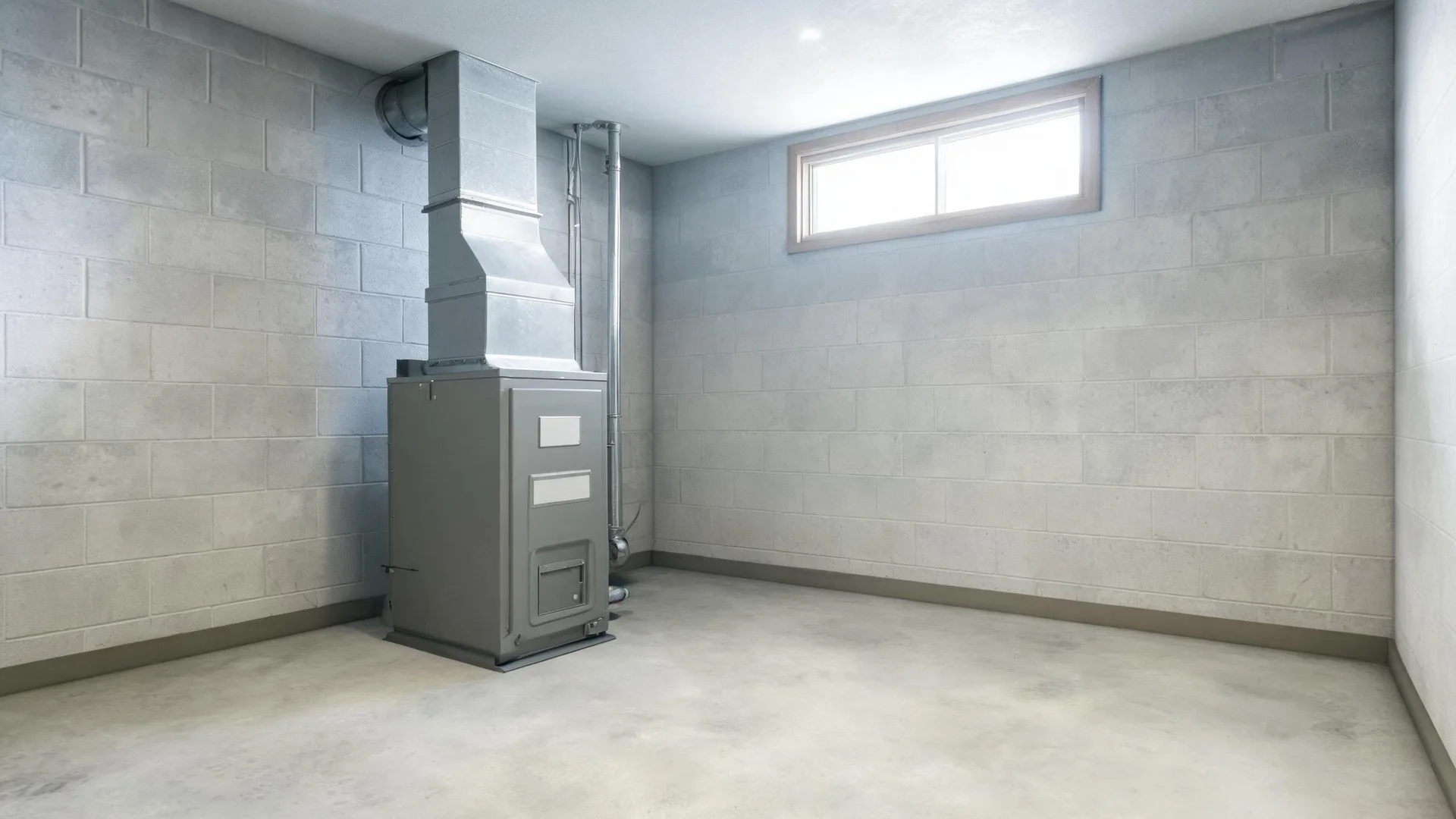
A gas furnace with attached ductwork, gas piping, and condensate lines installed in a concrete-block basement.

Size it to the house, not the other way around

That means a load calculation for your house, not a number pulled from what the last job needed. The contractor measures the square footage, the windows, the insulation you have, and sizes the furnace to that. Go in blind and you end up with a unit too big for the place, short cycling and wearing out its parts faster, or one too small that runs flat out all winter and still can't keep up on the coldest nights.

The old furnace gets disconnected and removed

The gas line or oil line gets capped, the vent connection comes apart, and the furnace gets taken out of the house in pieces if it has to be. The old ductwork stays unless it was sized for a different furnace and needs changes to match the new one.

What's inside it doesn't go in your trash

A furnace has a heat exchanger and other metal parts that get scrapped, and older units may have insulation or components that need to be handled a certain way. A contractor hauls it off rather than leaving it for the homeowner to deal with.

The furnace itself is only part of what you're paying for. Venting is the other big piece, and it depends on what kind of furnace goes in. A high efficiency furnace vents through PVC pipe out a sidewall, which sometimes means new penetrations through the house and a condensate line to drain the moisture it produces. A standard efficiency furnace vents through metal pipe into a chimney, which has to be sized right or relined to work with the new unit instead of the old one. Ductwork is the other variable. If the new furnace moves a different amount of air than the one it replaces, the supply and return ducts may need adjusting to match, not just a straight swap at the cabinet. None of this shows up on a price tag for the furnace alone, but it's where an installation job gets bigger or stays simple.

The old furnace usually keeps running right up until the new one takes its place, so the house doesn't sit cold while the work gets done. Before anything comes apart, the gas or oil line and the power to the unit get shut off. Setting the new cabinet in place and getting it level is the easy part. What takes the time is marrying up the gas or oil line, the vent, the ductwork and the thermostat wiring to a furnace that's a different size and shape than the one it replaced. Before the contractor leaves, the furnace gets fired up and run through a full cycle. Gas pressure gets checked. Temperature rise gets checked. Airflow gets checked at the registers. A furnace that's sitting in the house and a furnace that's actually commissioned are not the same thing, and the second one is what you're paying for.