




A dark-sided two-story house with a gabled roof and white-trimmed windows stands in front of dense green trees, behind a wire fence and a tall grass field in the foreground.

Furnace Installation in New Town, ND

Tell us about the job

Takes about a minute. No obligation.

New system or replacementFurnace or heatingMountrail County, ND
Step 1 of 2

What ZIP code is the job in?

Electricity in North Dakota ran $33.73 per million Btu in 2024, and if your new furnace runs on electric heat strips or backs up a heat pump, that rate applies to every degree it makes. A furnace that converts fuel to heat more efficiently costs less to run at that rate than one that wastes a chunk of it out the flue. Ask what AFUE rating a unit carries before you settle on it. The difference shows up on the meter for as long as you own the system.

10 months
September through June, your furnace is on duty
4°F
the average winter night it heats against
80% AFUE
the federal minimum any new unit must meet
Isometric line illustration of a cutaway single-story house showing interior rooms with furniture, ceiling ductwork, a chimney flue, and a furnace unit outside the exterior wall.
Your furnace works hardest from November through March.

NOAA nClimDiv, 1991–2020 normals

Furnaces here start running in September.

Install in August and the new furnace is broken in before it has to earn its keep.

Most homes here run on electric heat

43.9% of homes heat with electricity
Heat runs September through June
Winter nights average 4°F

A contractor can pull the AFUE number off the spec sheet before you buy, right next to the price. Two furnaces can look the same size and run the same ductwork, and still cost different amounts every month once the rate is $33.73 per million Btu. If gas isn't run to your house, that rating matters even more, since electric heat strips convert at closer to a fixed rate no matter the brand. Ask to see the number in writing, not just hear it quoted.

Ten months of heat a year means sizing matters more here

Furnaces in Mountrail County run ten months of the year, September through June, with overnight lows averaging 4°F through December, January and February. A furnace sized for that kind of stretch works harder than one sized for a milder place. Get the sizing right at install, and weigh more than the sticker on the unit.

Find a contractor
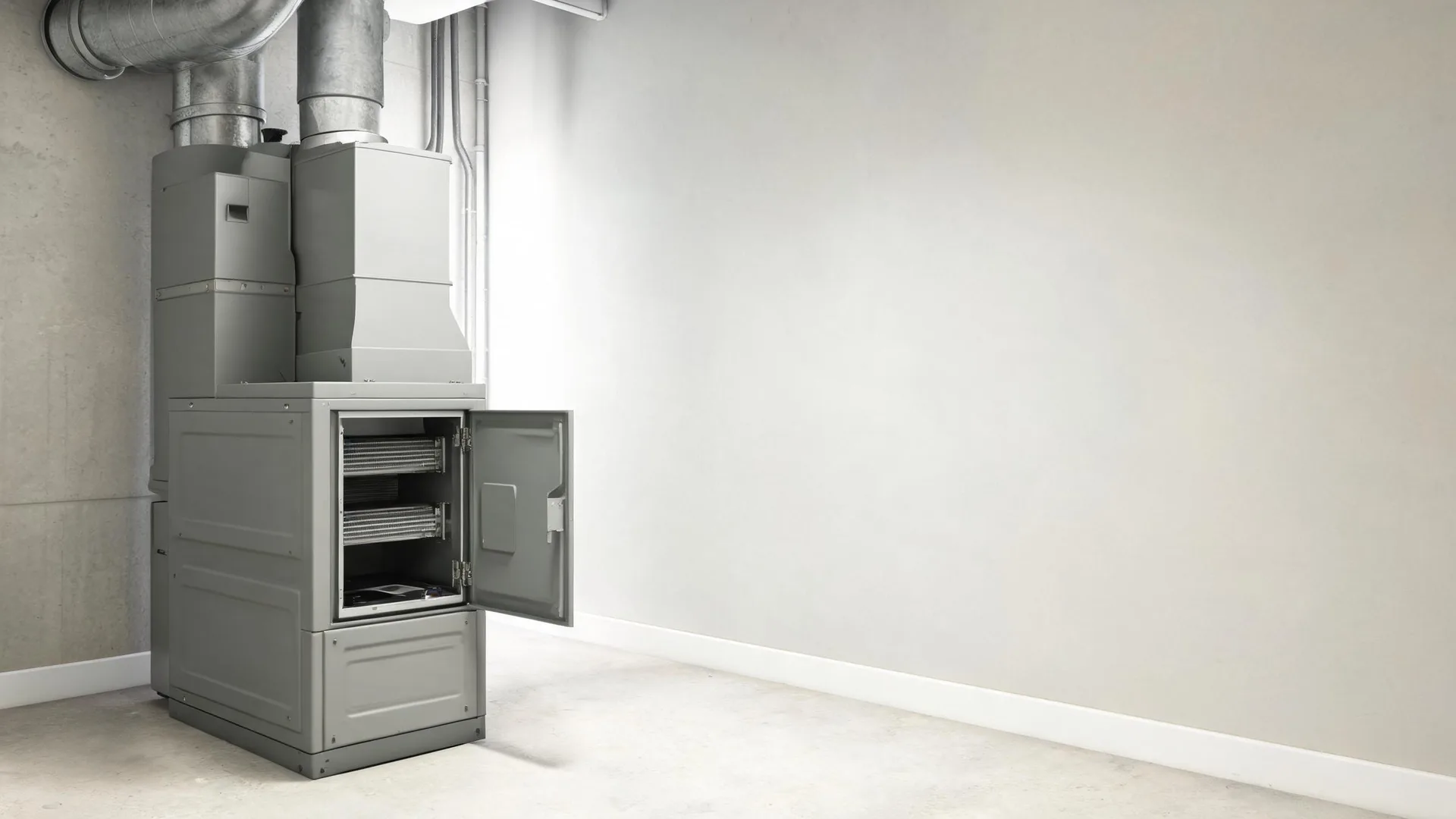
A gray gas furnace with attached ductwork and piping installed in an unfinished concrete basement.

Sized for the house, not the old unit

A furnace that's too big for the house doesn't heat it faster. It fires, blasts the place up to temperature, and shuts off again before it's pulled the chill out of the walls and floors. That start-stop cycle is hard on the ignitor and the heat exchanger, and it leaves rooms feeling uneven even though the thermostat reads fine. Too small, and the furnace runs long stretches without ever catching up on the coldest days, which wears it just as hard from the other direction. The right size comes from a load calculation, not a guess based on the old unit or the square footage alone. A contractor works out how fast the house loses heat. The windows, the insulation, the ceiling height, how much wall faces outside, all of it factors in. That number sets the size, not the other way around. A furnace sized to the house cycles in full, steady runs instead of short bursts, and that's what keeps the parts inside it from wearing out early.

AFUE measures waste, not performance

AFUE tells you how much of the fuel a furnace burns actually turns into heat in the house, versus what goes out the flue. A furnace rated in the high nineties loses less of what it burns. One rated lower loses more of it every single cycle, all season, for as long as the unit runs.
The rating doesn't change what size you need

A high AFUE furnace still has to match the house. An efficient furnace that's too big short-cycles just like an inefficient one does, and an efficient furnace that's too small still won't keep up on the coldest nights. The rating tells you what it costs to run. The load calculation tells you what size to buy. Both matter, and neither substitutes for the other.

Sizing and AFUE cover running cost and comfort, but a few other questions separate a good install from a bad one. Ask what stage the burner runs, since a furnace that only fires at full blast every cycle wears differently than one that eases into a lower flame on milder days. Ask whether the ductwork gets tested or adjusted as part of the job, not just reconnected as it was, because ducts sized for the old furnace can choke a new one even when the new one is sized right. Ask who pulls the permit and checks the venting, since a flue that doesn't match the new unit's output is a safety problem, not a comfort one. And ask what the warranty covers if the installer never registers it, because that paperwork is sometimes the difference between a covered heat exchanger and one you pay for out of pocket.

A load calculation and an AFUE rating only get you to the unit itself. What drives the final number is everything around it. A furnace that vents straight up through an existing flue costs less to connect than one that needs new pipe run because the old flue is the wrong size for it. A duct system that's leaking air or choked down from the old unit may need work before the new furnace can move air the way it's supposed to, and that work isn't part of the furnace price, it's separate. The stage of the burner matters too. A single-stage furnace is simpler to install than a variable-stage one, which carries more wiring and a more involved control board. Electric strip heat as backup adds its own wiring and breaker work on top of the furnace itself. None of this shows up on the unit's price tag, but all of it shows up on the invoice.