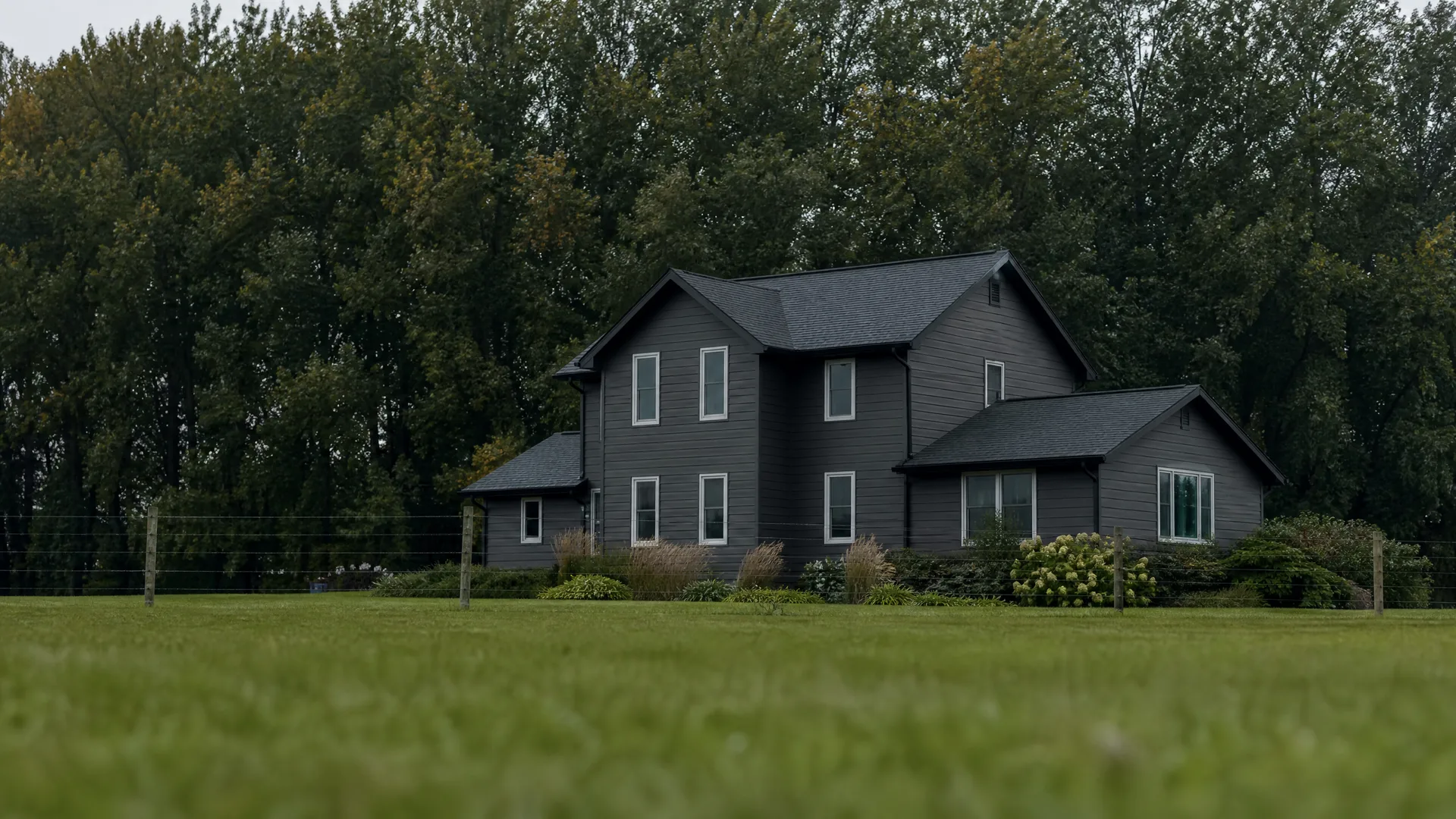





A two-story black-clad house with white-trimmed windows and a dark shingled roof stands behind a mowed lawn and low shrubs, backed by dense deciduous trees under an overcast sky.

Furnace Installation in New England, ND

Tell us about the job

Takes about a minute. No obligation.

New system or replacementFurnace or heatingHettinger County, ND
Step 1 of 2

What ZIP code is the job in?

Natural gas ran $8.44 per million Btu across North Dakota homes in 2024. A furnace here is not a once-in-a-while appliance, and that price applies to every therm it burns through a long heating season. Two furnaces rated for the same house can end up with very different gas bills depending on how much of that fuel actually turns into heat versus how much goes out the flue. At this price per unit, that difference compounds month after month. How a furnace is sized and installed in your house decides how much of that $8.44 you're paying for heat you actually get.

9 months
September through May, your furnace is on duty
8°F
the average winter night it heats against
80% AFUE
the federal minimum any new unit must meet
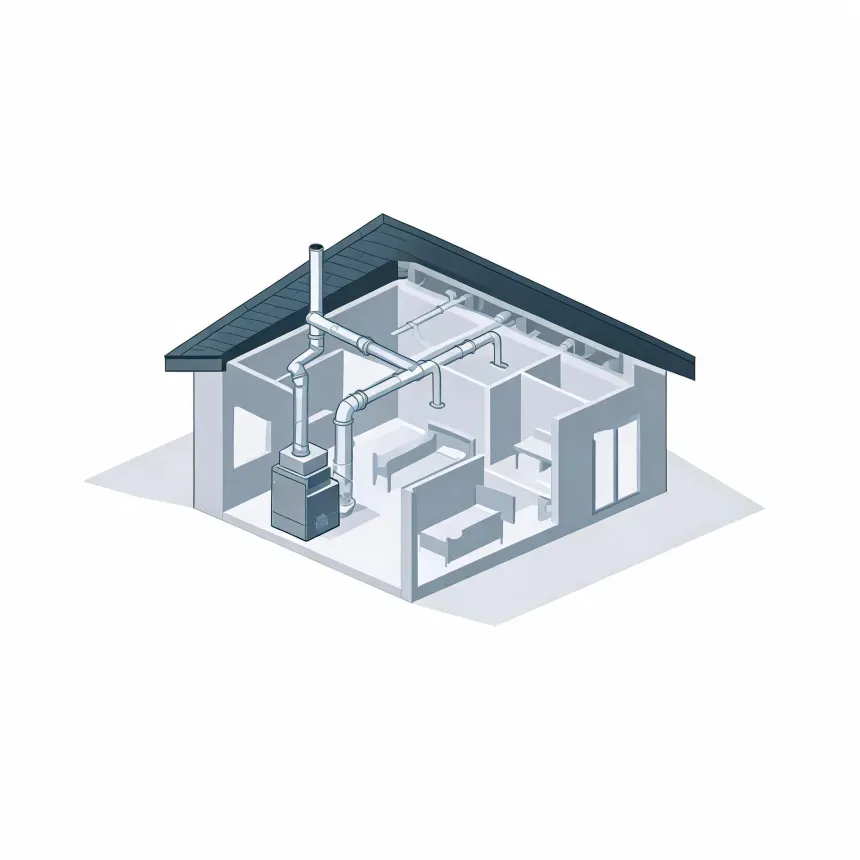
Isometric cutaway illustration of a small single-story house showing interior rooms, a furnace unit with a flue, and connected ductwork running below the dark gabled roof.
Your furnace works hardest from November through March.

NOAA nClimDiv, 1991–2020 normals

Gas heats close to half the homes in Hettinger County.

Most furnaces going into this job are replacing another gas furnace, not switching fuels.

Nine months of heat a year means timing the install right

Heat runs September through May
Winter nights average 8°F
Climate zone 6A
An older house changes what the furnace has to fitHalf the homes in Hettinger County were built in 1964 or earlier.

Hettinger County falls under zone 6A in the 2021 energy code, the cold end of the scale, and that's what sets the floor for any furnace installed here. Any indoor gas furnace made on or after November 19, 2015 has to turn at least 80 percent of the gas it burns into heat over the winter. That's the minimum, not a target to aim for, and it's already built into what manufacturers can legally sell. The next jump comes December 18, 2028, when new units have to hit 95 percent. A furnace bought before that date can still be rated at 80. One bought after has to clear the higher bar.

The furnace you choose decides what each winter costs

Picking the more efficient furnace is the one decision that keeps paying off, winter after winter, at $8.44 per million Btu.

Find a contractor
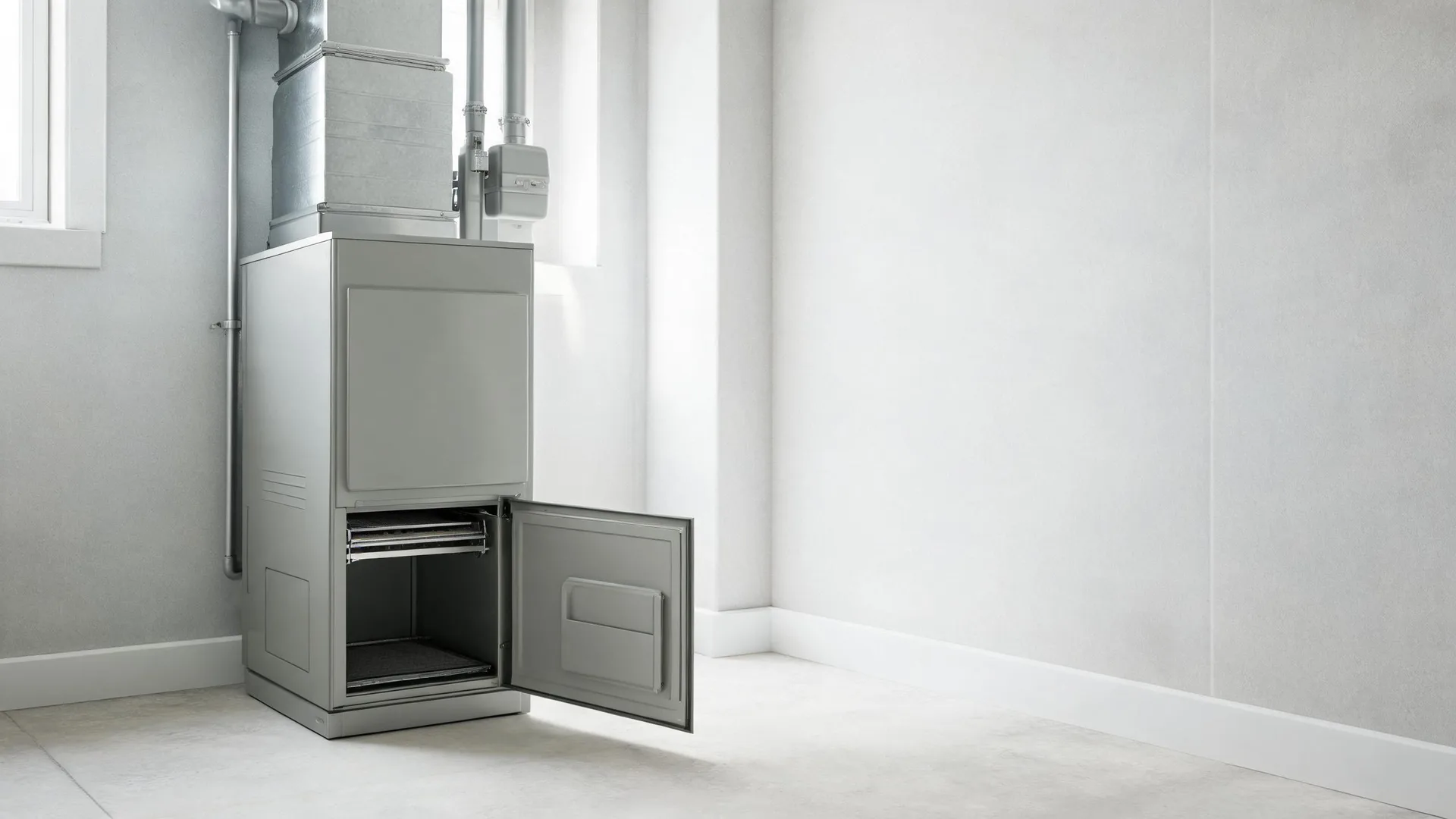
A gas furnace with attached ductwork, gas piping, and condensate lines installed in a concrete-block basement.

Nine months a year wears on a furnace that most places never see

Nine months of heat a year is a long work shift for one machine. Most places in the country ask a lot less of a furnace than that. From September through May here, the burner is cycling on, the blower is pushing air, and the heat exchanger is going through the same expansion and contraction day after day. That's what wears a heat exchanger and burner assembly down over time, and it's also what turns a poorly sized unit into a bigger bill than it needed to be. A furnace that's too big for the house short cycles, kicking on and off more than it should, and each start puts its own wear on the igniter and the blower motor. One that's sized right runs longer, steadier stretches and does less damage to itself doing the same job.

The old furnace has to come out whole

A furnace isn't just unbolted and hauled off. The gas line gets capped and pressure tested before anyone disconnects it. The vent or flue connection comes apart next, and if that furnace shared a chimney with a water heater, the chimney often needs a new liner sized for the water heater alone once the furnace load is gone. The electrical disconnect and the condensate line, if there is one, come last. Skip a step here and the house is left with a gas leak or a flue that doesn't draft right.

What stays behind matters as much as what leaves

The ductwork, the thermostat wiring and the vent path usually stay and get reused or adapted for the new furnace. A mismatch here undoes what a new furnace is supposed to gain. Ducts sized for the old unit can starve a newer, more efficient furnace of the airflow it needs to run right, and a vent built for one kind of furnace won't always work for another that exhausts differently. Whoever pulls the old furnace has to look hard at what's staying, not just what's going out the door.

An unfinished basement featuring concrete block walls, exposed floor joists, and a metal forced-air furnace with ductwork near a central pillar.

A high-efficiency gas furnace would save about $100 a year to run in Hettinger County compared with a gas furnace.

  • A high-efficiency gas furnace$440 a year
  • A gas furnace$540 a year

Estimates for a typical Hettinger County home, from EIA household energy data, North Dakota fuel prices and NOAA climate normals. Your home will differ.

A furnace install starts with a load calculation, not the truck pulling up. The tech works out how much heat the house actually needs, room by room, before anything gets disconnected. Once the old unit is out, setting the new one means squaring it up on its base, connecting the supply and return plenums, and sealing every seam in that transition with mastic, not just tape. The gas line gets connected and the joints get checked with a pressure test, no exceptions, because a leak found later is a much bigger problem than one found that day. The vent pipe gets pitched and connected so it drafts the way that furnace needs, which depends on whether it's a standard furnace or a high efficiency one. Then comes startup: checking gas pressure at the manifold, checking the temperature rise across the heat exchanger, and confirming the blower is moving the right amount of air. A furnace that's never had its airflow checked against the manufacturer's spec can run hotter or cooler than it should for years without anyone knowing why.