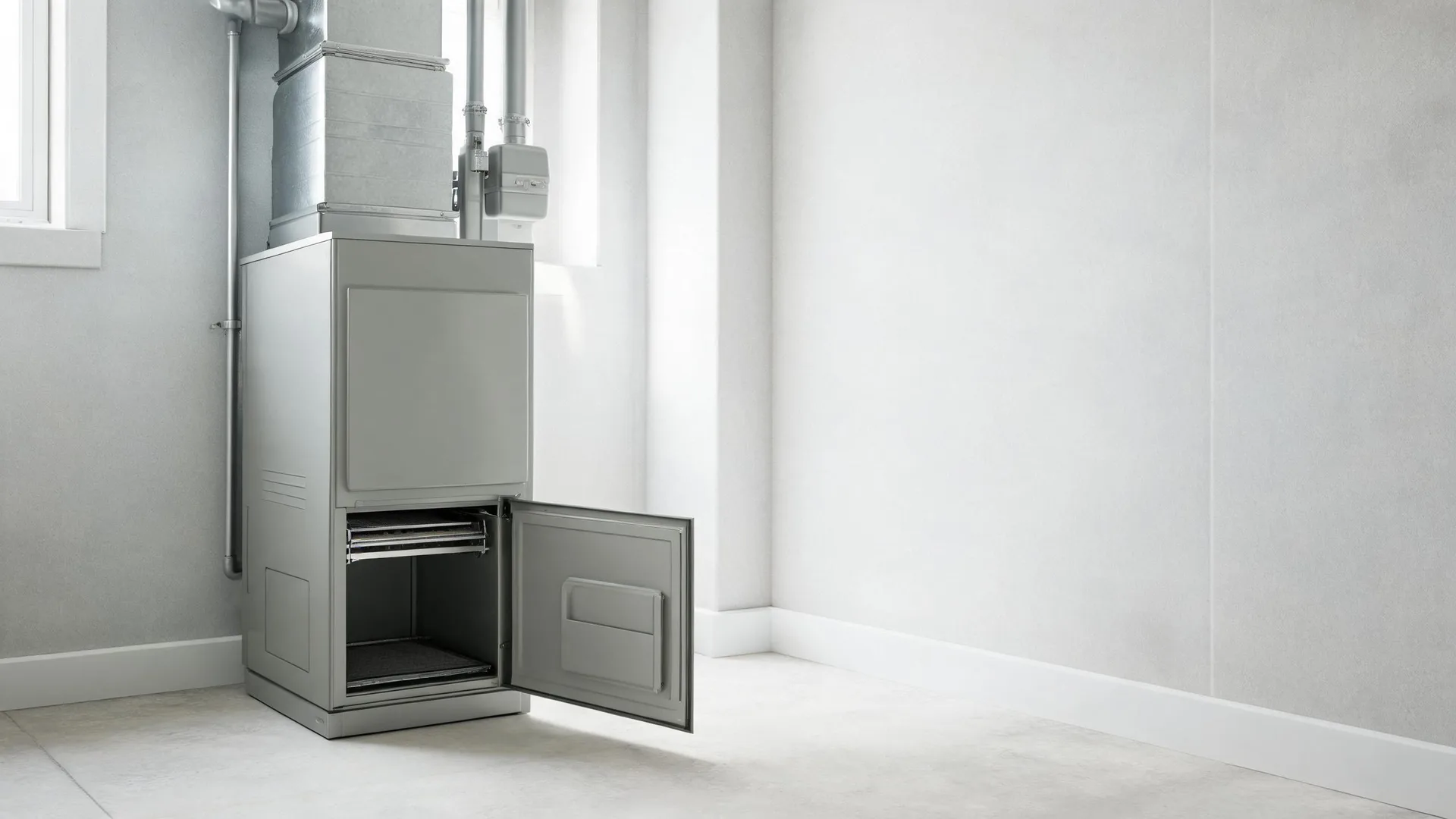
Nine months of heat
Furnaces in Renville County run from September through May. That's most of the year the burner is cycling, not just the cold snap most places get.
Takes about a minute. No obligation.
Furnaces in Renville County run from September through May. That's most of the year the burner is cycling, not just the cold snap most places get.
Overnight lows average 3°F through December, January and February. A new furnace has to hold a steady temperature against that cold, night after night, so it needs to be sized for what this county actually sees, not a mild-winter number.
NOAA nClimDiv, 1991–2020 normals
Furnaces in Renville County run from September through May.
Get your new furnace in before August ends, so you aren't picking one out in a cold house.




The AFUE number on the label tells you how much of the fuel turns into heat for your house. The rest goes out the flue. A higher number means less waste. That rating only holds up if airflow across the heat exchanger matches what the furnace was built for. Put it in a house with ductwork that's too small or too restrictive, and the furnace won't deliver the number on the label, no matter how well it was made. It also runs harder and shorter than it should. That wears the blower motor and the heat exchanger faster than if the ducts were sized right. The rating is a ceiling. What the contractor does with your ductwork decides how close you get to it.
Nine months of heat and nights at 3 below wear a furnace faster than a mild climate ever would. Get the size and the install right the first time, and get it done before you need it.
Find a contractorA furnace too big for the house will still heat it, just badly. It fires, blasts the room to temperature, and shuts off before it's pulled moisture out of the air or finished circulating heat to the rooms farthest from the thermostat. Then it sits cold for a while and fires again. That start-stop cycle is harder on the igniter and the blower motor than a long, steady burn, and it's why an oversized furnace can fail sooner than one sized right. Too small, and it runs flat out trying to keep up, never cycling off, which wears the same parts from the other direction. Sizing a furnace right means working out how much heat the house loses on the coldest nights, through the walls, the windows, the roof, and matching the furnace's output to that number. A contractor works this out room by room, not by matching whatever was in there before. The old furnace might have been wrong too.
A contractor shuts off the gas line, disconnects the vent or flue, and pulls the old unit out before setting the new one in place. The cabinet, the heat exchanger, the blower, all of it goes. None of it carries over to the new system, even if parts still looked fine.
Furnaces vary in how they vent and how much gas they draw. A contractor checks that the existing flue and gas line work for the new unit before the install, not after. If they don't match what the new furnace needs, that gets corrected as part of the job, not left for later.
What drives the cost of an install is almost never the furnace sitting in the showroom. It's everything around it. A straightforward swap, same fuel type, same vent, same spot in the house, is the cheapest kind of job because the contractor isn't changing anything but the box. Once the vent needs upsizing, the gas line needs rerouting, or the ductwork needs modifying to handle the new unit's airflow, the labor and material add up fast. The cabinet's size matters too. A furnace too big for the closet or crawlspace it's going into can mean cutting a bigger opening or reworking the space around it. None of this shows up until a contractor actually looks at what's there, which is why a quote before that walkthrough is only ever a guess.
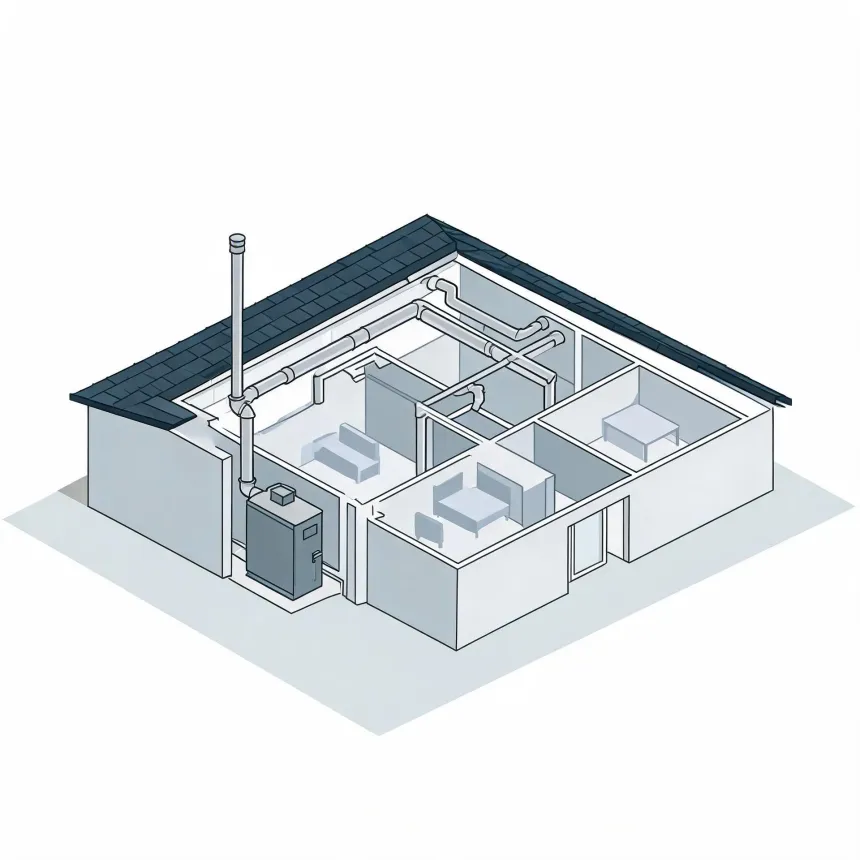
The old furnace gets disconnected first, gas off and vent pulled, before the new one ever comes through the door. Setting the furnace in place is the easy part of the day. What takes longer is connecting the gas line, the vent, the ductwork and the thermostat wiring, then checking that each one is actually right rather than just hooked up. Once it's running, the contractor lets it go through a full cycle, heating up and shutting off on its own, instead of calling the job done the moment it fires. The flame gets checked. The flue draft gets checked. The temperature rise through the furnace gets checked against what the manufacturer built it to do. A furnace can light on the first try and still be wrong for the house if the gas pressure or airflow isn't set to match it, so that last round of checks is what the day is really for.