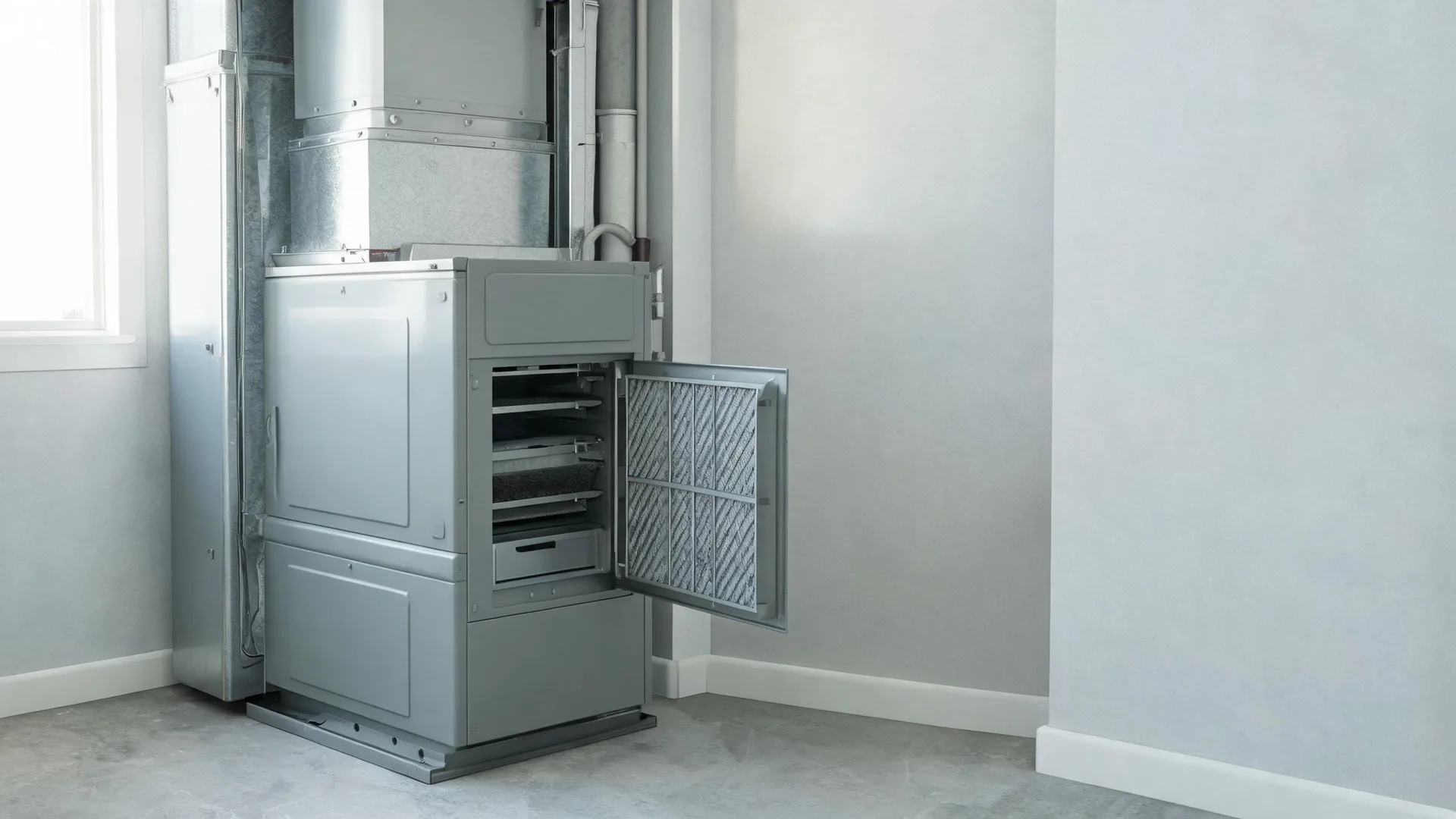
Electricity here runs $33.73 per million Btu
North Dakota power costs more than in most states. A furnace that wastes less of what it burns, or in an electric system what it draws, shows up on every bill you get.
Takes about a minute. No obligation.
North Dakota power costs more than in most states. A furnace that wastes less of what it burns, or in an electric system what it draws, shows up on every bill you get.
When you're pricing furnaces for this house, look at the AFUE number on each one. A few points higher means less fuel burned for the same heat, and at these rates that difference doesn't go away after the first winter.

NOAA nClimDiv, 1991–2020 normals
Half the homes in LaMoure County were built in 1965 or earlier.
A furnace going into one of them has to match the layout that's already there, not the other way around.



Heat starts here in September, so August is the month to get a new furnace in, before the first cold night makes the decision for you. Replacing it ahead of the season means there's time to size the unit right and compare AFUE ratings, instead of taking whatever is available because the old one quit. A furnace put in under pressure is rarely the one you'd have chosen with time to look. Heat runs here nine months a year, September through May, so whatever gets installed has a long season ahead of it right from the start.
Nine months of heat a year, and overnight lows averaging 5°F through December, January and February. That's what a new furnace in LaMoure County has to stand up to. Size it for this house, not just the one that was here before, and compare AFUE ratings before you decide.
Find a contractor
A correctly sized furnace runs long steady cycles all winter instead of short bursts, and at 5 below that's the difference between even heat and a house that never quite catches up. An oversized unit short cycles instead, and that wears the igniter and blower motor sooner. Get a load calculation done for this house rather than matching the old unit's size, and weigh AFUE ratings against each other once you have that number.
The AFUE number tells you how much of the fuel burned turns into heat for the house, and how much goes out the flue. A furnace rated higher leaves less behind. That number says nothing about how much heat the house needs, so a high AFUE unit that's the wrong size still won't heat the place evenly.
AFUE doesn't drift down the way a furnace's output can as it ages and parts wear. The number on the label stays close to what the furnace delivers for as long as it runs, provided it's kept maintained. That makes AFUE one of the few numbers on the spec sheet worth trusting at face value when comparing furnaces side by side.
Taking out the old furnace is part of the job, not an extra step tacked on. Whoever installs the new one disconnects the gas line or power, the vent, and the ductwork connections, then hauls the old unit out. If it's a gas furnace, the flue gets checked too, because a smaller or more efficient replacement can change what that venting needs to look like. None of this is something to plan around separately. It gets scheduled and priced as one job alongside putting the new furnace in.
Installation day starts with the old furnace coming out. The crew disconnects the gas line or wiring, pulls the vent connection, and gets the unit out of the way before the new one goes in. Setting the new furnace means connecting it to the existing ductwork, running gas or power to it, and attaching the vent. On a gas furnace that vent connection matters, because a more efficient unit can need different venting than the one it's replacing. Once it's in place, the installer checks gas pressure or electrical draw, runs the blower, and cycles the furnace a few times to see that it starts and shuts off the way it should. A combustion test on a gas furnace shows whether it's burning the way the AFUE rating assumes. Skipping that step is how a furnace ends up getting a callback on the first cold night.