A mowed grass field bordered by a chain-link fence, with a row of two-story houses and mature trees behind it under an overcast sky.

Furnace Installation in Dickinson, ND

Tell us about the job

Takes about a minute. No obligation.

New system or replacementFurnace or heatingStark County, ND
Step 1 of 2

What ZIP code is the job in?

Gas is the common fuel here

Utility gas heats 51.4% of occupied homes in Stark County. Electricity heats most of the rest, at 37.9%, with a small share on bottled or LP gas. If your house came with a gas furnace, that's the setup most contractors in Dickinson see and install.


Matching what you have keeps the job simple

Swapping a gas furnace for another gas furnace means the gas line, the vent and the ductwork already fit. Switching fuel types means changing more than the furnace, so it's worth asking a contractor to walk through what that adds to the job.

10 months
September through June, your furnace is on duty
7°F
the average winter night it heats against
51%
of homes here heat with gas, so most furnaces here burn gas
80% AFUE
the federal minimum any new unit must meet
Isometric cutaway illustration of a single-story house in gray tones, showing interior rooms with furniture, ceiling ductwork, and an exterior furnace unit with a tall flue pipe.
Your furnace works hardest from November through March.

NOAA nClimDiv, 1991–2020 normals

Furnaces in Stark County run from September through June, with overnight lows averaging 7°F in December, January and February.

A new furnace here spends ten months a year working against real cold, so sizing it right matters more than it would somewhere milder.

Dickinson doesn't need an oversized furnace, it needs the right one

Heat runs September through June
Winter nights average 7°F
Climate zone 6A

The furnace itself is only part of what you're paying for. Size matters most. A contractor should run a load calculation on your house, checking square footage, window count, insulation and ceiling height, rather than just matching the old unit's output. Get the size wrong and you either pay for capacity you don't use or install something that can't keep up on the coldest mornings. Ductwork is the other big variable. If the existing ducts are sized right and sealed well, the new furnace can connect to what's there. If they're leaky, undersized or routed poorly, bringing them up to par adds real work before the furnace ever gets set. Venting matters too. A higher-efficiency furnace vents differently than an older one, sometimes through a side wall instead of a chimney, and that can mean new venting materials and a different path through the house. The last piece is the gas line and electrical hookup. Both need to match what the new furnace calls for, and if they don't, that gets sorted out before the furnace goes in, not after.

Get it installed in August, before the heat has to run

Heat here starts in September and runs through June, ten months straight. Get the furnace installed in August and the job happens on your schedule, with time to size it right and sort out venting or ductwork before the furnace has to carry the house through winter.

Find a contractor
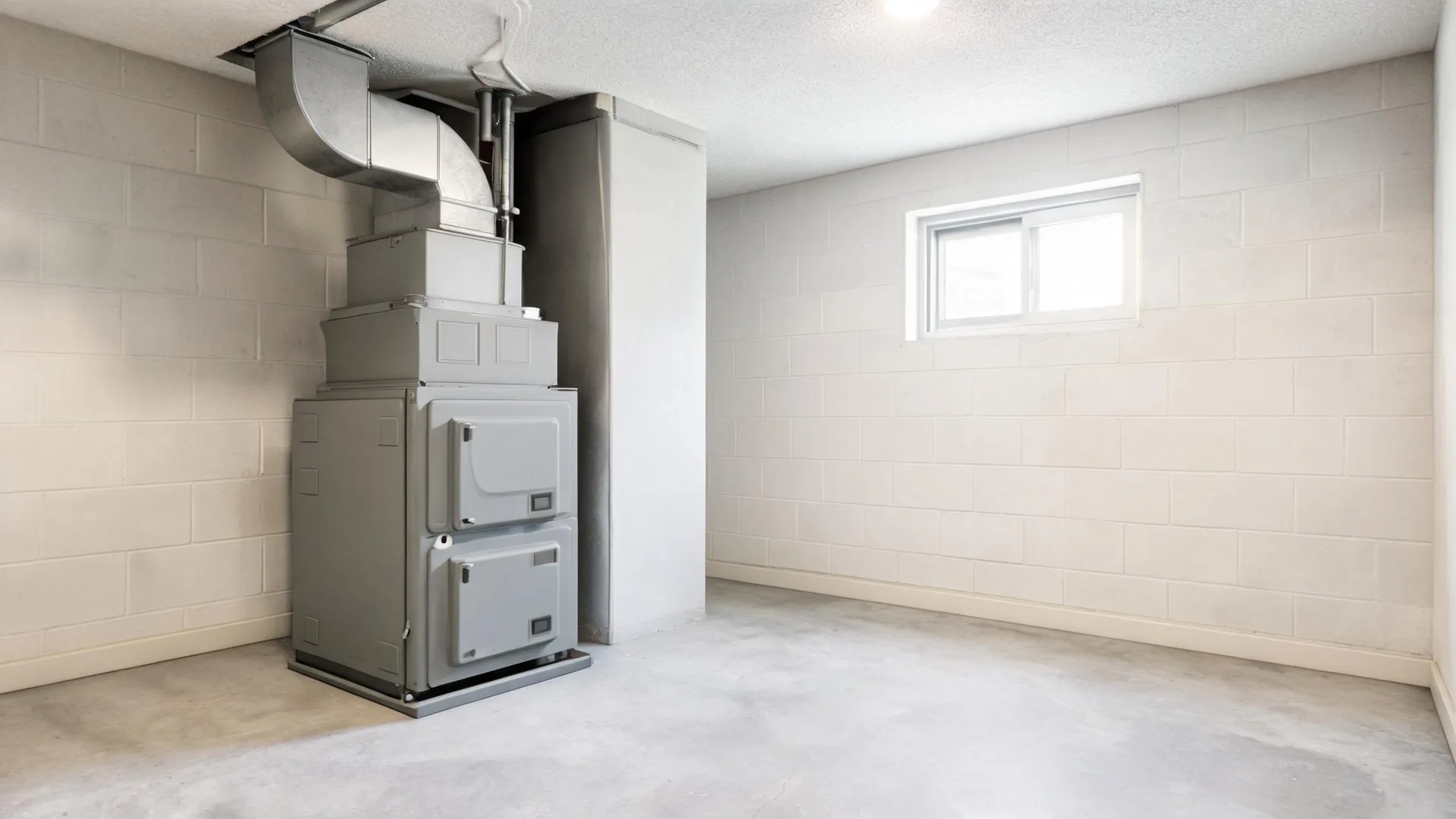
A gray gas furnace with attached ductwork and piping installed in an unfinished concrete basement.

Ten months of runtime, so get the size right the first time

That ten month stretch is why sizing shouldn't get rushed. A load calculation takes longer than eyeballing the old unit's output, but it's what tells a contractor the furnace will keep up when it's 7 below outside, not just on a mild September morning. Ask what numbers they used to size it, square footage, windows, insulation, and expect a real answer.

Bigger isn't safer

An oversized furnace heats the house fast, then shuts off, then kicks back on again soon after. That short cycling wears on the igniter and the blower motor. It also leaves rooms farther from the furnace feeling uneven, because the air never runs long enough to spread evenly.

The math behind the number

A load calculation adds up how fast the house loses heat. It accounts for the square footage, how many windows and what kind, how much insulation is in the attic and walls, even the ceiling height. That total is what the furnace's output needs to match, not the output of whatever unit is already out there.

An unfinished basement containing a metal furnace with ductwork, exposed wooden joists on the ceiling, cardboard boxes, a coiled cable, and a single hanging incandescent bulb.

A high-efficiency gas furnace would save about $90 a year to run in Stark County compared with a gas furnace.

  • A high-efficiency gas furnace$450 a year
  • A gas furnace$540 a year

Estimates for a typical Stark County home, from EIA household energy data, North Dakota fuel prices and NOAA climate normals. Your home will differ.

Installation day starts with the old furnace coming out, and that's when a contractor finds out whether the gas line, vent and ducts really matched what was written down beforehand. The new furnace gets set in place, leveled, and connected to the ductwork, the gas line and the vent. Electrical hookup comes next, the thermostat wire and power connection tied in. Once it's all connected, a contractor runs the furnace through a full cycle, checking the flame, the airflow and the vent draft before signing off. Gas pressure gets tested and the system gets checked for leaks, because that's not something to guess about. The whole thing gets inspected while it's running, not just switched on and left.