A snow-covered suburban street at dusk with lit houses and bare trees under a twilight sky.

Furnace Installation in Cando, ND

Tell us about the job

Takes about a minute. No obligation.

New system or replacementFurnace or heatingTowner County, ND
Step 1 of 2

What ZIP code is the job in?

The old furnace gets disconnected and hauled out

The installer shuts off the gas and power to the old furnace, disconnects the ductwork and venting, and removes it from the house along with the flue pipe if the new furnace doesn't use it. None of that gets left behind for you to deal with.

The new furnace may need a different vent

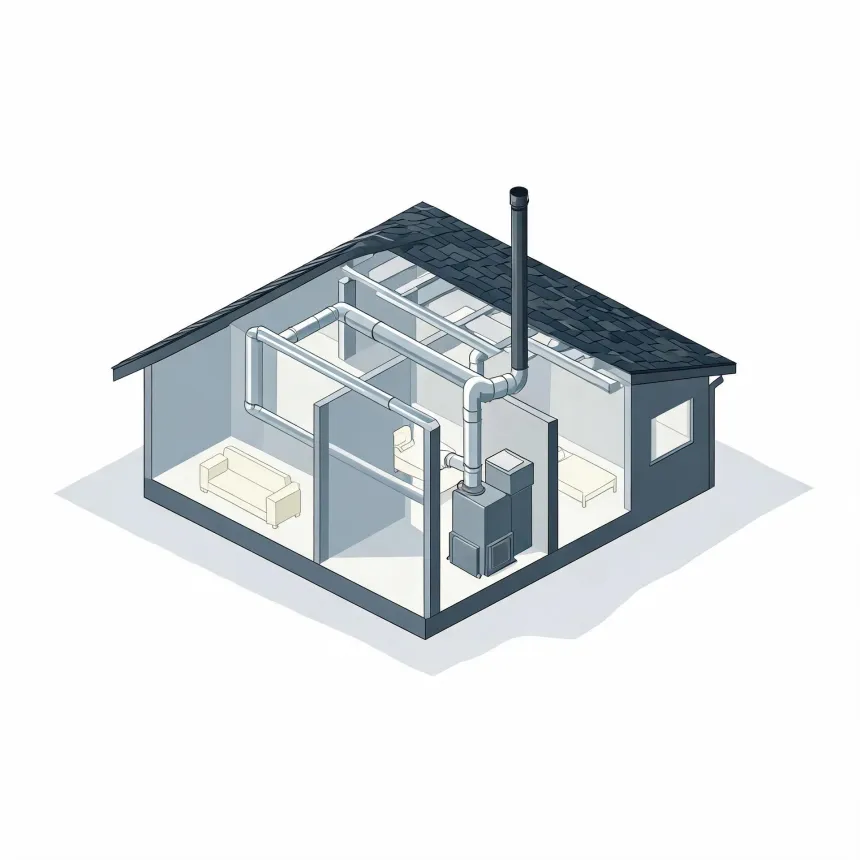
A high-efficiency furnace vents through PVC pipe out a sidewall instead of up a chimney flue. If the old one used a flue, that flue may need to be capped or removed, and the installer accounts for that before the new furnace goes in, not after.

9 months
September through May, your furnace is on duty
-1°F
the average winter night it heats against
80% AFUE
the federal minimum any new unit must meet
Isometric cutaway illustration of a small single-story house showing a furnace with a flue pipe through the roof and ducting running to rooms containing a sofa, chair and bed.
Your furnace works hardest from November through March.

NOAA nClimDiv, 1991–2020 normals

Furnaces in Cando start running in September and go through May.

Have the new furnace in before August ends, so the install happens on your schedule instead of on a cold morning.

57.9% of Towner County heats with electricity, and most of the rest run on LP gas

57.9% of homes heat with electricity
Heat runs September through May
Winter nights average -1°F

Ask what size furnace they're proposing and how they got that number. It should come from a load calculation that looks at the square footage, the windows and how the place is insulated, not just a match to the unit coming out. A furnace that's too big cycles on and off fast, which wears out parts sooner and leaves rooms uneven. Ask about the venting too, since a high-efficiency furnace needs PVC intake and exhaust pipe run to the outside, and where that falls on the wall matters. Ask what happens to the gas line and whether the existing ductwork can handle the new unit's airflow, because a furnace sized or vented wrong will cost you in comfort long before anything breaks.

Nine months of heat a year means this furnace needs to be sized right

Heat runs nine months a year here, September through May, with overnight lows averaging below zero in December, January and February. That's a long stretch for a furnace to carry, and a wrong-sized one shows it fast, short cycling or struggling to keep rooms even. Get the load calculation right so the furnace matches this house, not just the one it's replacing.

Find a contractor
A man in a cap, dark jacket and tan pants carries a worn duffel bag as he climbs porch steps toward a dark blue front door beside a potted shrub.
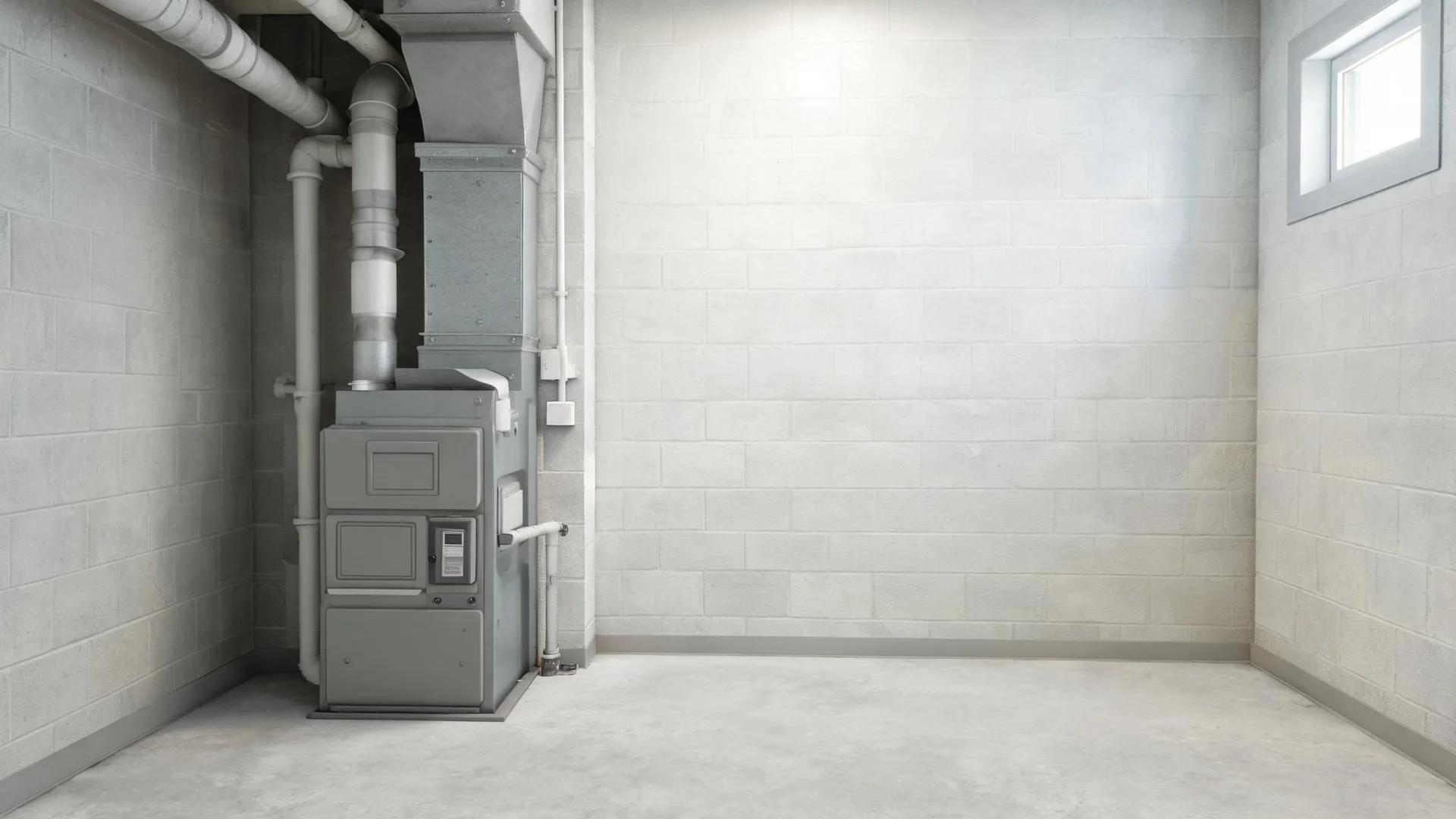
A gray residential gas furnace installed in an unfinished basement, surrounded by ductwork, a metal flue pipe, and a gas supply line.

This furnace is going into a house built decades before it

Half the homes in Towner County were built in 1969 or earlier. A furnace going into a house that old is going into ductwork and a layout it didn't design. The load calculation has to look at what this house is now, insulation, windows, additions, not just the size of the unit coming out. Get that number right and the new furnace will match the house instead of the house it was built for.

The math behind the size

A load calculation adds up how fast the house loses heat. It looks at the square footage, the ceiling height, how many windows and what direction they face, how much insulation is in the attic and walls. Houses that look alike from the street can come out needing different furnaces once that math is done. The nameplate on the old furnace has no part in it.

What the wrong size does to the house

A furnace too big for the house heats the air fast, shuts off, and leaves the rooms furthest from the return cold. A furnace too small runs long stretches trying to catch up and still falls behind on the coldest days. Either way the thermostat reads fine while the rooms don't feel it.

The AFUE number on a furnace tells you what share of the gas it burns actually turns into heat in the house, the rest goes out the vent. A furnace rated in the nineties is sending almost all of it into the ductwork and losing very little. The jump from an old furnace to a new one is usually the biggest change you will see on paper, because older furnaces lost a lot more out the flue than the ones sold today. That rating has nothing to do with the size question though. A high-efficiency furnace that is too big for the house still short cycles, still leaves rooms uneven, it just does it while burning less gas per cycle. Ask for the AFUE rating and ask about the load calculation separately, since one tells you how the furnace burns fuel and the other tells you whether it fits the house at all.

Installation day starts with the house still warm from the old furnace, because that one runs until the new one is ready to take over. The installer clears the area, sets the new furnace, and runs the gas line, venting, and ductwork connections to it before anything gets fired up. Once it's connected, the furnace gets tested through a full cycle, checking the gas pressure, the temperature rise across the heat exchanger, and the airflow at the registers. A combustion analyzer checks what's actually coming out of the flue, not just whether the burners light. The thermostat gets wired and set up last, after the installer knows the furnace is running the way it should. None of that gets rushed, because a furnace that tests fine on paper but was never checked running will show its problems the first cold night.