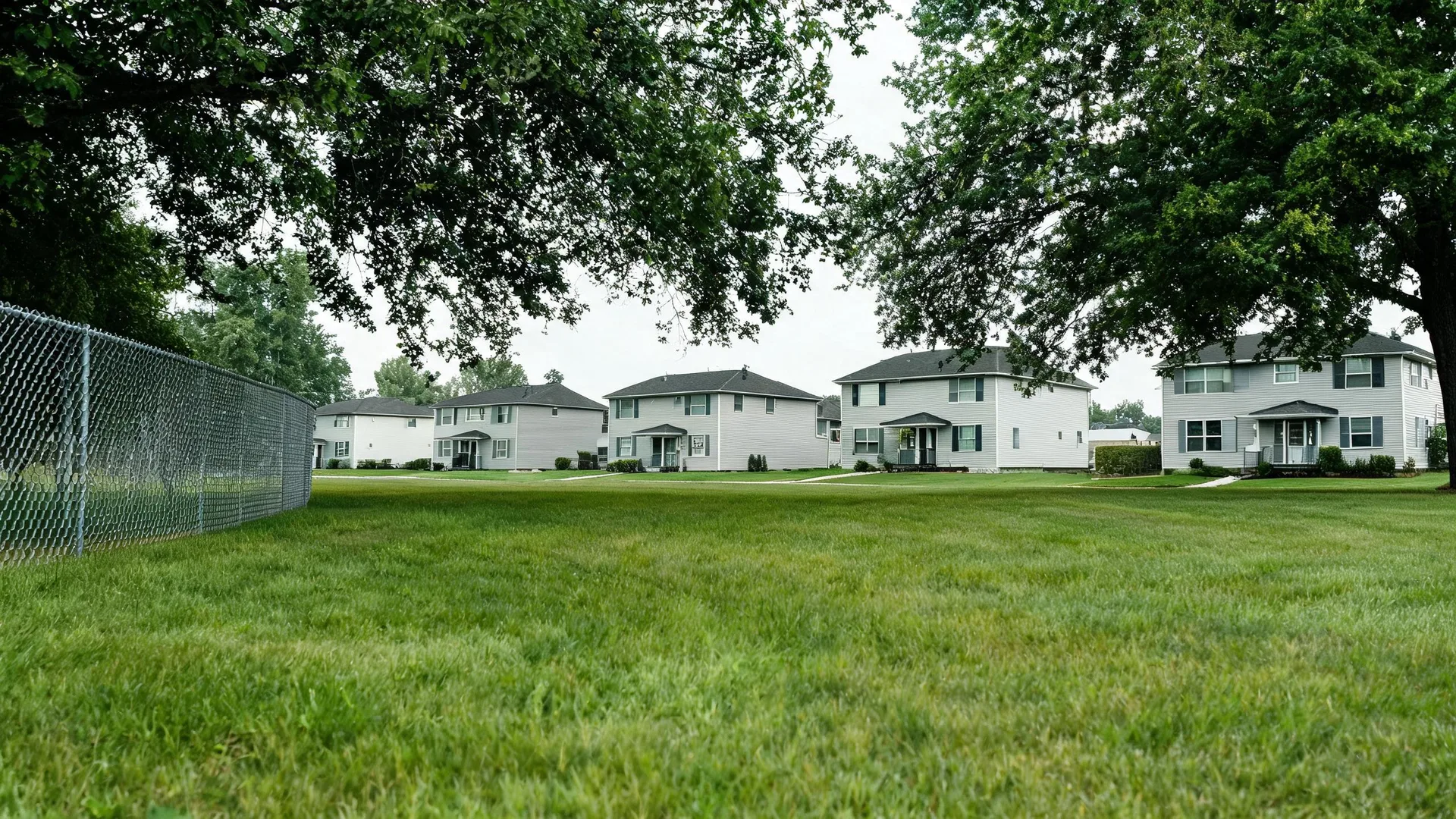
A wide mowed lawn with a chain-link fence at left leads to a row of two-story light-colored houses under overcast sky, framed by overhanging tree branches.

Heat Pump Repair in Velva, ND

Tell us about the job

Takes about a minute. No obligation.

RepairHeat PumpMcHenry County, ND
Step 1 of 2

What ZIP code is the job in?

Blowing air that isn't warm or cold

A heat pump stuck on fan, or air coming out that feels barely different from room temperature, usually means the reversing valve is stuck or the refrigerant charge has dropped. It won't fix itself, and running it this way can push the compressor toward failure.

Ice building up on the outdoor unit

Some frost in defrost cycles is normal. A coil caked in ice that doesn't clear, or ice forming even when the unit is running, points to a defrost control problem or a fan motor that's not pulling air through the coil. Left alone, it stops the system from moving heat at all.

9 months
September through May, your system heats
2 months
July through August, it cools
3°F
the average winter night it heats against
79°F
the average summer afternoon it cools against
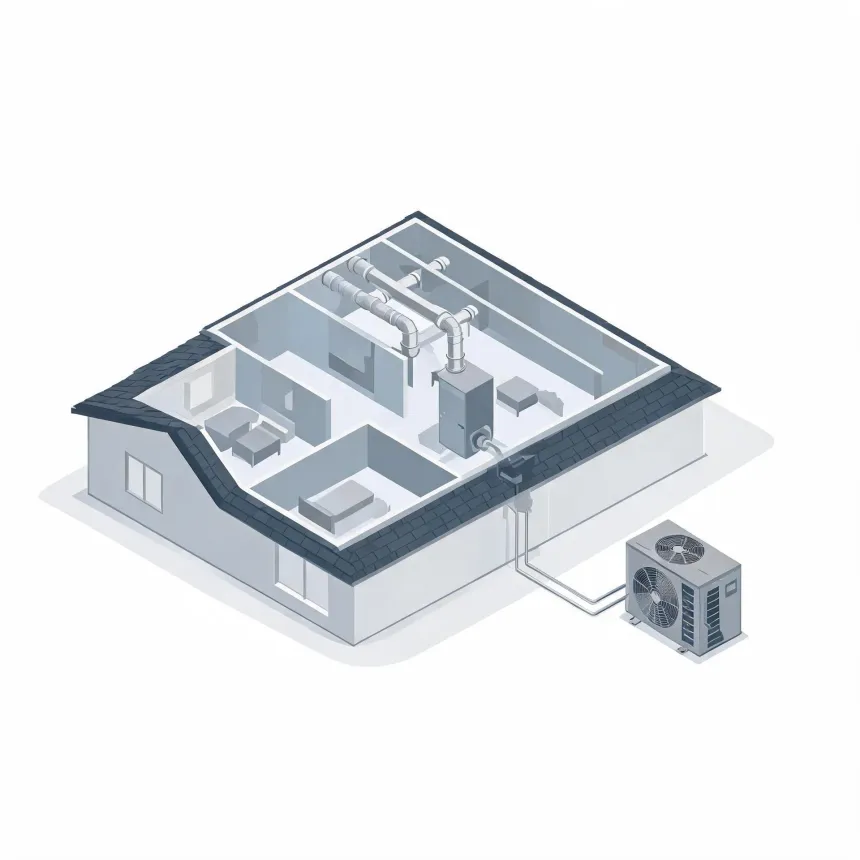
Isometric cutaway illustration of a single-story house showing interior rooms with ductwork, a furnace or air handler, and refrigerant lines running outside to a condenser unit on a pad.
Your system heats September through May and cools July through August.

NOAA nClimDiv, 1991–2020 normals

Half the homes in McHenry County were built in 1966 or earlier.

A heat pump in a house that old is more likely to be on its original ductwork and electrical setup, and that's worth knowing before you sink money into a repair.

Cheap power still adds up when a heat pump is running wrong

Power here costs 11.21 cents per kilowatt-hour
50 hail events from 2015 to 2024
30 winter storms from 2015 to 2024

Heat starts running in September here, and that's when a weak heat pump usually shows its hand. A system that's been limping along in milder weather gets asked for a lot more the first cold week, and whatever was already marginal, a failing capacitor, a sensor drifting out of range, tends to give out right then. Nine months of heating a year is a long season to ask a tired unit to carry. If yours is already acting up in late summer, don't wait for that first September cold snap to find out how far it's slipped.

Ask how much life it has left

If your system came with an older house, it may be near the end of its life. Ask how much life it has left before paying for a big repair.

Find a contractor
A man in a cap, navy long-sleeve shirt and tan work pants carries a canvas tool bag up steps toward a dark front door, with a potted shrub beside the porch.
A gray air-source heat pump mounted on a concrete pad next to a house with gray vinyl siding, surrounded by gravel and flanked by green shrubs and white hydrangea flowers.

A heat pump never really gets a break

A heat pump runs every day of the year, not just in the hardest months, since the same system handles both sides. That means twice the running hours of a furnace or an air conditioner alone, and twice the chances for a part to wear out. The outdoor fan motor spins constantly whenever the system is heating or cooling, and motors like that wear on their bearings over years of continuous duty until they seize or start running loud. The reversing valve, the part that switches the system between heat and cooling, shifts position every time the mode changes, and a valve that's cycled thousands of times is a valve that can start sticking. The defrost board and sensors that manage ice buildup on the outdoor coil are only asked to work in cold weather, so a unit that sees a lot of cold sees a lot of defrost cycles, and that's wear a cooling-only system never has. None of these parts fail because of one bad day. They fail because the system doesn't get a real offseason to rest.

A failing part rarely fails alone

A compressor working against a bad capacitor or a low charge pulls harder than it's built for, and the extra strain spreads heat and wear to windings that were fine a week before. What started as one part to replace can turn into a compressor that needs to be replaced along with it.

Running it while you wait costs more than the delay

Shutting a heat pump off until someone can look at it protects whatever is already failing. Leaving it on to keep the house comfortable in the meantime asks a weak part to keep carrying a full load, and that's usually what turns a small repair into a system swap.

A few things are worth checking before anyone comes out. Look at the thermostat first. Make sure it's set to heat, not fan only, and that the set temperature is actually above room temperature. Check the breaker box for a tripped breaker on either the indoor or outdoor unit, since a heat pump has two power circuits and either one can trip on its own. Go outside and look at the unit itself. If the coil or the base is buried in snow or ice, that blocks airflow and the system can't do its job until it's cleared. Check the air filter too. A filter clogged with dust chokes off airflow across the indoor coil, and that alone can make a system blow weak or barely conditioned air. If the outdoor fan isn't spinning at all, or you hear a hum but no motion, don't keep cycling the system hoping it starts. That's a sign for a tech, not a DIY fix.

A heat pump pulling hard on a bad part doesn't just risk the compressor, it runs up the bill while it does it. Power here is cheap compared to most places, but a system fighting a failing capacitor or a low charge still draws more than it should, every hour it runs. That's not a cost you catch until the statement comes. Getting someone out now stops the meter from running against a machine that's already struggling, instead of waiting for the breakdown to force the issue.