A snow-covered small-town street at dusk, with lit white clapboard houses, bare trees, and a grain elevator silhouetted against an orange and blue twilight sky.

Heat Pump Repair in Valley City, ND

Tell us about the job

Takes about a minute. No obligation.

RepairHeat PumpBarnes County, ND
Step 1 of 2

What ZIP code is the job in?

Half the homes here were built by 1966

Barnes County's housing is old. Half the homes were built in 1966 or earlier. A heat pump that came with a house that age has had years to wear through the compressor, the coils and the controls, even if parts were swapped along the way.


What that means for a repair call

If your heat pump is original to an older house, a repair now might just delay a bigger failure next year. Before paying for a major fix, it's worth asking the contractor how many years the unit likely has left in it.

9 months
September through May, your system heats
2 months
July through August, it cools
3°F
the average winter night it heats against
79°F
the average summer afternoon it cools against
Isometric line illustration of a cutaway single-story building showing interior rooms, ceiling ductwork, an indoor air handler, and an outdoor condenser unit connected by refrigerant lines.
Your system heats September through May and cools July through August.

NOAA nClimDiv, 1991–2020 normals

A heat pump that's struggling to run keeps drawing on parts that are already stressed.

A compressor forced to work through a refrigerant leak or a failing capacitor wears out faster, and waiting usually turns a repair into a replacement.

Nine months of heat a year means a weak part fails fast, especially in September

Cooling runs July through August
Heat runs September through May
70 hail events from 2015 to 2024

This weather is hard on a heat pump. Find out what's really wrong before you pay to fix it.

Winters here average 3 degrees overnight, and Barnes County has logged 64 winter storms in the past decade. A heat pump out here runs hard most of the year, and one that's already worn from an older house doesn't have much left to give. Get the actual cause checked before you spend money on a fix.

Find a contractor
A gray heat pump outdoor unit mounted on a concrete pad next to the stone-accented exterior wall of a house.

What a struggling heat pump sounds and looks like before it quits

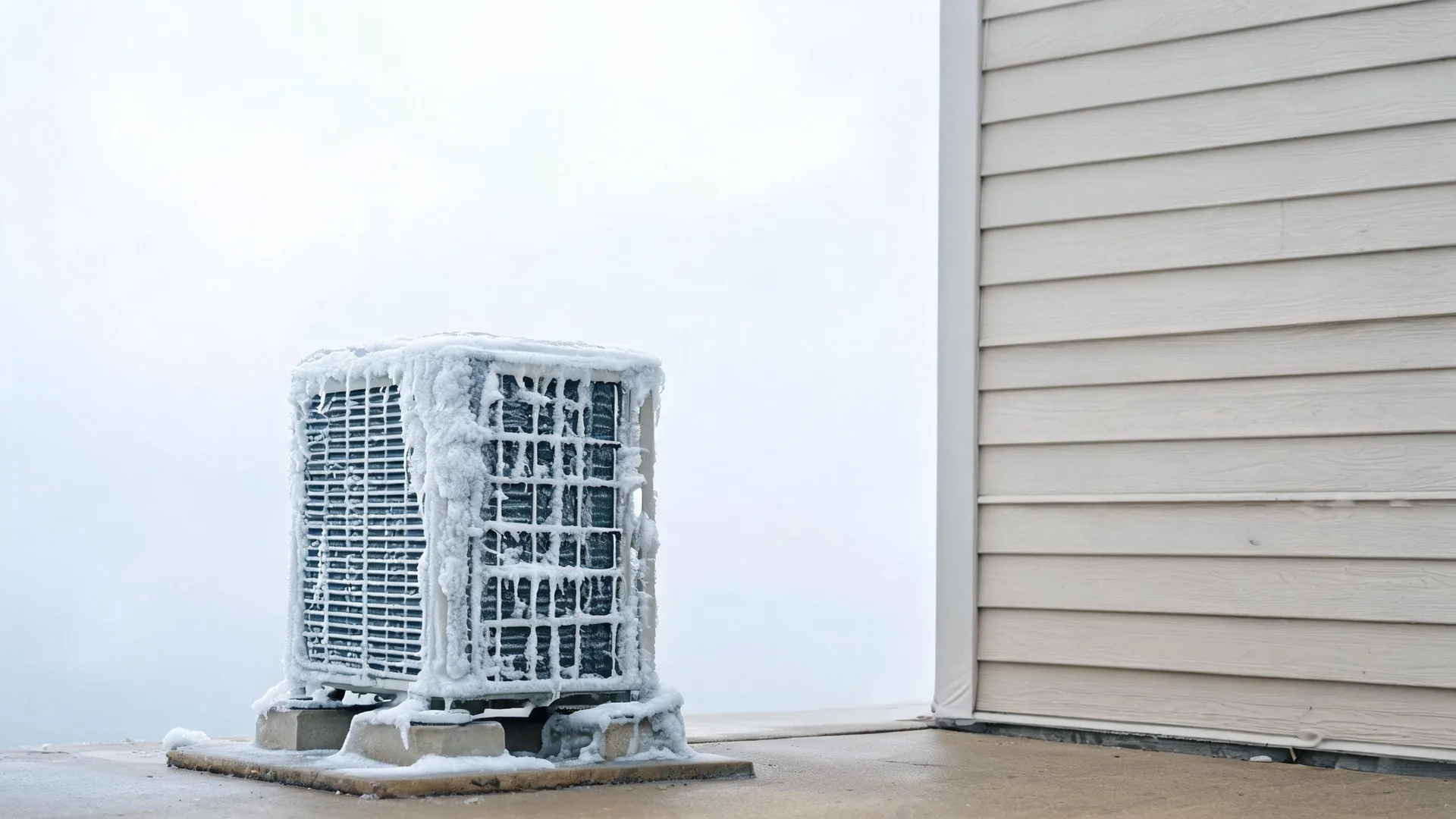
A heat pump cycles on and off thousands of times over a year, and every one of those starts puts load on the compressor and the contactor that feeds it power. Short cycling, where the system kicks on and shuts off again within a few minutes, points to a failing capacitor, a dirty outdoor coil, or a thermostat sensor that's lost its calibration. Ice building up on the outdoor unit outside of a normal defrost cycle means the reversing valve or the defrost control board isn't doing its job. A heat pump that runs constantly without ever satisfying the thermostat is often low on refrigerant, and that's a leak, not something that fixes itself. Warm air blowing in heating mode, or air that's barely cool in summer, usually traces back to the reversing valve stuck in the wrong position. Any grinding, screeching or a hard metallic bang on startup is the compressor or the fan motor telling you it's close to done. None of these get better left alone. A system straining through one of these problems is drawing more current than it should, and that shortens the life of whatever else is still working.

Check the thermostat before anything else

Make sure it's set to heat, not auto in a way that's confusing the call, and that the batteries aren't dead if it has them. A thermostat with a loose setting or a dead backup battery can make a perfectly good heat pump look broken.

Look at the outdoor unit and the filter

Clear away anything piled against the outdoor unit, leaves, snow, a cover left on by mistake, since blocked airflow there can shut the whole system down. Then check the filter. A filter clogged with dust chokes airflow on the indoor side and can cause the exact short cycling or weak output a failing part would cause.

A lot of what sends a heat pump into repair starts with the reversing valve, since that's the part that switches the system between heating and cooling and it takes that strain every single cycle. The valve can stick partway, or the solenoid that moves it can fail outright. Capacitors wear out on a schedule of their own, losing their charge slowly until the compressor or fan motor can't get the jolt it needs to start. Contactors pit and burn from years of making and breaking that high current, and eventually they stop closing the circuit at all. Low refrigerant is never normal wear, it's always a leak somewhere in the line set or the coil, and running the system low puts extra heat into a compressor that isn't built to handle it. Outdoor coils cake up with dirt and debris over time, and a coil that can't move heat properly forces every other part to work harder than it should.

A repair is worth doing when the failure is one part acting up and everything else still tests out fine. A capacitor, a contactor, a blown fuse, these are quick fixes that don't say anything bad about the rest of the system. It's a different story when the compressor itself is failing, since that part accounts for most of what a heat pump costs and a compressor job can run close to putting in a new unit anyway. Age matters alongside the part. A unit with a lot of hours on it that needs a second or third repair in a short stretch is usually telling you the next failure is already lining up behind this one. Ask what's actually failing before deciding anything, since that's what tells you whether you're buying a few more years or just postponing the same decision.