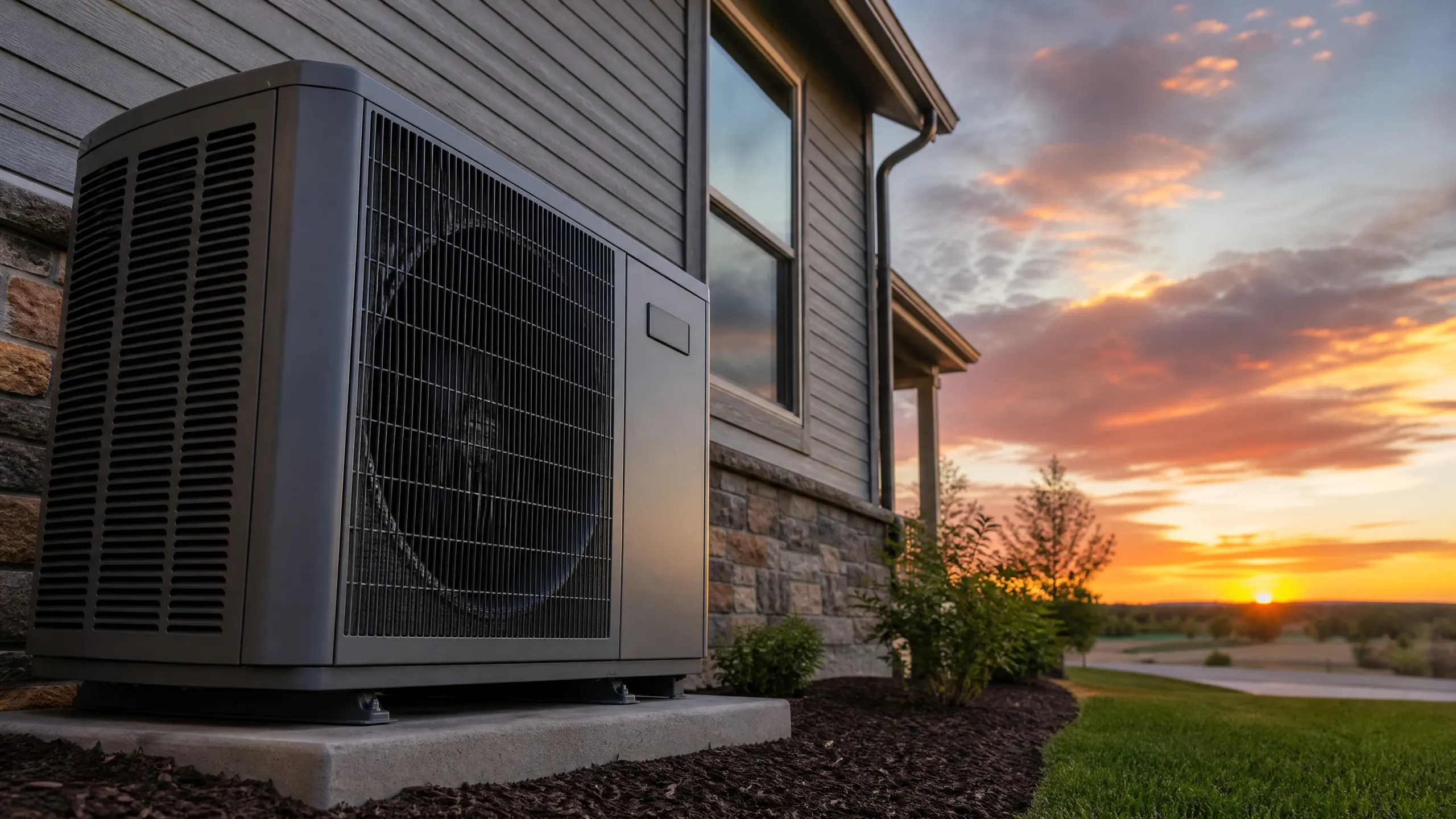






An outdoor air conditioning condenser unit mounted on a concrete pad next to a residential house at sunset.

Heat Pump Repair in McClusky, ND

Tell us about the job

Takes about a minute. No obligation.

RepairHeat PumpSheridan County, ND
Step 1 of 2

What ZIP code is the job in?

Half the homes in Sheridan County were built in 1967 or earlier. If your heat pump came with a house that old, it's worth finding out whether the system is original or a later replacement. Heat pumps don't last forever, and one that's been running since before a recent remodel may already be past the point where repair makes sense. A compressor or reversing valve failure on an old unit is a different conversation than the same failure on a unit installed five years ago. Before paying for a major repair, it's worth asking a contractor how much life is actually left in the system.

9 months
September through May, your system heats
2 months
July through August, it cools
4°F
the average winter night it heats against
79°F
the average summer afternoon it cools against
Isometric cutaway illustration of a single-story house showing interior rooms with furniture, an attic duct network connected to a furnace or air handler, and an outdoor condenser unit linked by lines outside the wall.
Your system heats September through May and cools July through August.

NOAA nClimDiv, 1991–2020 normals

A reversing valve that sticks won't switch the system between heat and cool.

A stuck valve needs replacing, not a refrigerant top-off, and it's worth knowing which one you're paying for.

Nine months of heat a year wears out a weak part fast, and August is when it shows

Cooling runs July through August
Heat runs September through May
25 winter storms from 2015 to 2024

A heat pump in trouble usually tells you before it quits outright. The air coming from the vents feels wrong, lukewarm when it should be properly hot or cold, and the system runs longer stretches to make up for it. Short cycling, where it kicks on and off again and again, is another sign something's off rather than just normal operation. Ice on the outdoor unit when the weather doesn't call for it points to a defrost problem or a refrigerant charge that's too low. A hissing sound near the lines usually means refrigerant is escaping somewhere, and that only gets worse, never better. If heat mode works but cool mode doesn't, or the other way around, that's the reversing valve or the control board, not something that clears up on its own. A hard clunk or a screech when the system starts up is often a motor or bearing wearing out. Any of these is worth a call before the system stops working altogether.

Ask how much life it has left

If your system came with an older house, it may be near the end of its life. Ask how much life it has left before paying for a big repair.

Find a contractor
A man in a gray t-shirt and tan work pants, seen from behind, climbs concrete steps toward a dark blue front door while carrying a canvas tool bag, with a potted shrub beside the entry.
A residential heat pump outdoor unit mounted on a concrete pad next to a house with gray vinyl siding.

Every repair buys time. At some point it stops buying enough

A heat pump doesn't fail all at once. It wears one part at a time, and most of those parts have a point where fixing them stops making sense. A capacitor or a contactor is a small job no matter how old the system is, cheap parts that fail on their own schedule and don't say much about anything else. A compressor is a different kind of decision. It's the most expensive part in the system, and replacing just the compressor on an old unit often costs close to what a new system costs, because the labor and refrigerant work is the same either way. The question isn't really whether a part can be fixed. Almost anything can be repaired once. It's whether this is a system worth putting that money into, or one where the next part is already lining up behind it.

A low refrigerant charge gets worse under load

A heat pump low on charge still runs, just poorly, and the compressor works harder to move heat with less refrigerant to carry it. That extra strain heats up the compressor itself, and over time that heat breaks down the oil that's supposed to protect its moving parts. What starts as a small leak and a weak charge can end as a burned-out compressor.
A failing part rarely fails alone

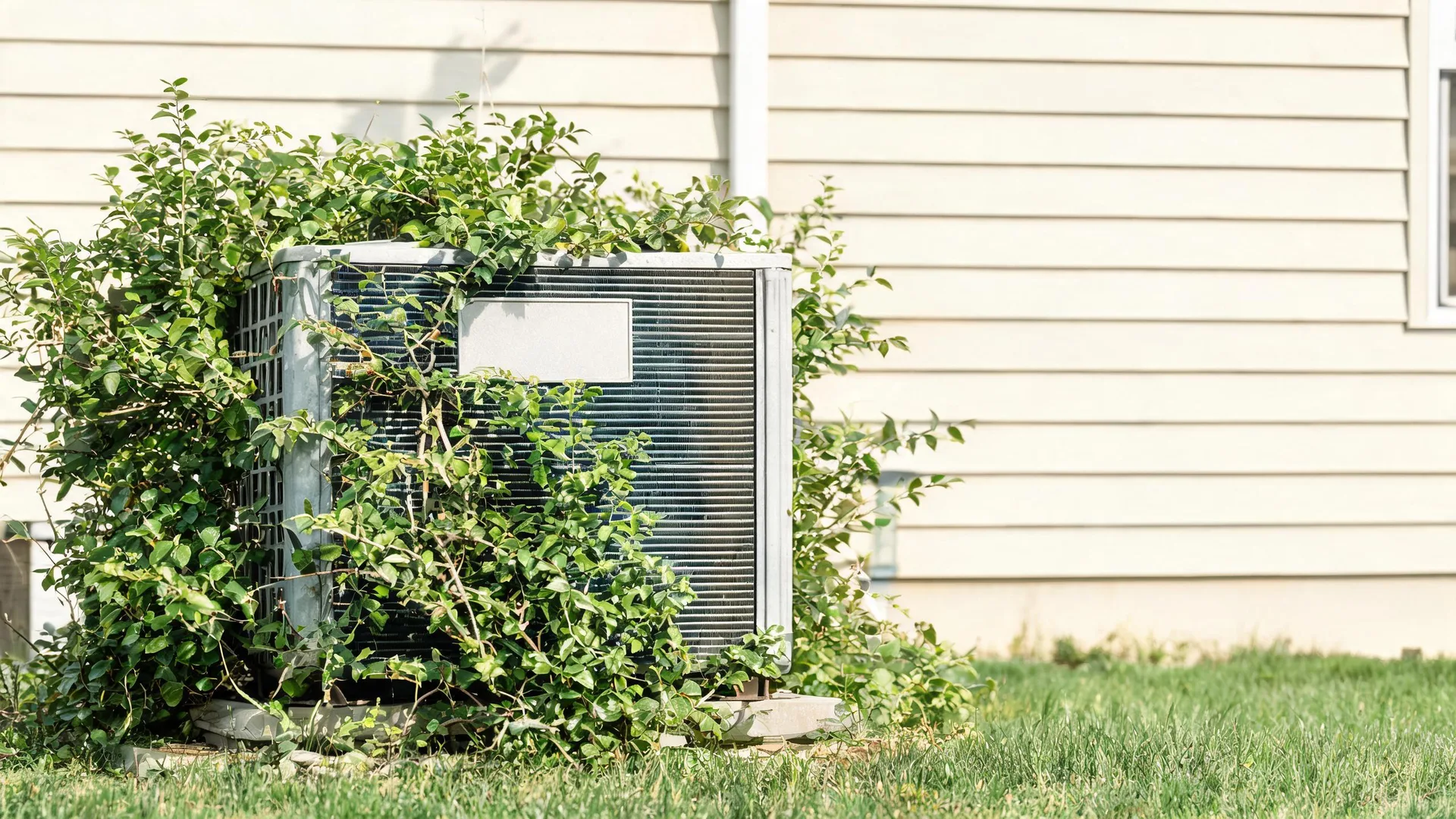
The reversing valve, the defrost control, the compressor, the fan motor all depend on each other. Keep running a system with a bad defrost control and ice builds on the outdoor coil every cycle, and that ice blocks airflow the compressor needs to work right. One worn part left alone usually drags another part down with it before long.

A few things are worth checking before paying anyone a visit. Look at the outdoor unit and clear away leaves, grass clippings or anything blocking the sides, since it needs open airflow to move heat at all. Check the air filter inside and swap it if it's gray and clogged, because restricted airflow makes the whole system work harder and can trigger problems that look electrical but aren't. Walk around and listen for the thermostat actually calling for heat or cool, and make sure it's set properly and has fresh batteries if it takes them. Check the breaker panel for a tripped switch before assuming the worst. None of this fixes a bad reversing valve or a failing compressor, but it rules out the simple stuff first, and a contractor would rather hear the filter's clean and the breaker's fine than find that out after the service call starts.

A diagnostic visit starts outside at the unit itself. A contractor checks the nameplate for the model and serial number, then hooks up gauges to see what the refrigerant pressures are doing compared to what they should be. They run the system in both heat and cool and watch whether the reversing valve actually switches it over. Electrical testing comes next, checking the capacitor, the contactor and the control board for readings that say a part is failing rather than just old but fine. If the coil is iced up or dirty, that gets noted too, since it changes how the rest of the system is read. By the end, the point isn't just naming what's broken. It's telling you whether that part can be replaced on its own or whether it's a sign the whole system is winding down.