





A row of two-story houses with light siding and gray roofs behind a wide mown lawn, with a chain-link fence at left and overhanging tree branches framing the top of the frame.

Heat Pump Repair in Lisbon, ND

Tell us about the job

Takes about a minute. No obligation.

RepairHeat PumpRansom County, ND
Step 1 of 2

What ZIP code is the job in?

Most heat pump trouble shows up slow at first. You notice the air coming out of the vents feels cool when it should feel warm, or the system runs and runs without the house catching up to the thermostat. Sometimes it's frost built up on the outdoor unit that doesn't melt off on its own, which points to a problem with the defrost cycle or the reversing valve. A clicking or buzzing when it tries to switch between heating and cooling is worth paying attention to, since that valve is what lets it do both jobs. If the outdoor fan isn't spinning but the unit is making noise, that's not something to wait on. Short cycling, where it kicks on and off every few minutes, wears on the compressor and usually means it's time to have someone look at it.

9 months
September through May, your system heats
3 months
June through August, it cools
5°F
the average winter night it heats against
80°F
the average summer afternoon it cools against
Isometric line illustration of a cutaway house showing interior rooms with furniture, a furnace or air handler with overhead ductwork, and an outdoor condenser unit connected by lines outside the wall.
Your system heats September through May and cools June through August.

NOAA nClimDiv, 1991–2020 normals

Half the homes in Ransom County were built in 1969 or earlier.

A heat pump that came with a house that old is worth asking about before you pay for a big repair.

Nine months of heating load means September is when a weak part finally gives out

Cooling runs June through August
Heat runs September through May
54 winter storms from 2015 to 2024

Get it diagnosed properly

Your heat pump works hard here, and that's usually what's behind the problem. Have it diagnosed properly so the fix lasts.

Find a contractor
A man in a cap, gray T-shirt and tan work pants carries a canvas tool bag up porch steps toward a dark blue front door of a gray clapboard house, with a potted plant at left.
A gray air-source heat pump mounted on a concrete pad next to a house with gray vinyl siding, surrounded by gravel and flanked by green shrubs and white hydrangea flowers.

What to check yourself before the call

Check the thermostat first. Set it to heat, not auto, and set the temperature a few degrees above room temperature so it actually calls for heat. Look at the air filter next. A filter packed with dust chokes off airflow, and a heat pump that can't pull in enough air will run long and still feel weak at the vents. Go outside and look at the outdoor unit. Clear away leaves, grass clippings or snow piled against it, since it needs open space on every side to move air. If the coil is covered in ice and it isn't melting off on its own, leave it alone. Don't chip at it or pour water on it. That's a sign the defrost cycle isn't doing its job, and a tech needs to find out why. Check the breaker panel too. Sometimes a heat pump that won't start at all just needs a tripped breaker reset. If it trips again right after, stop and leave it off. Last thing, listen to it. A grinding, screeching or banging sound that wasn't there before means something is wrong inside, and that's not something to wait out.

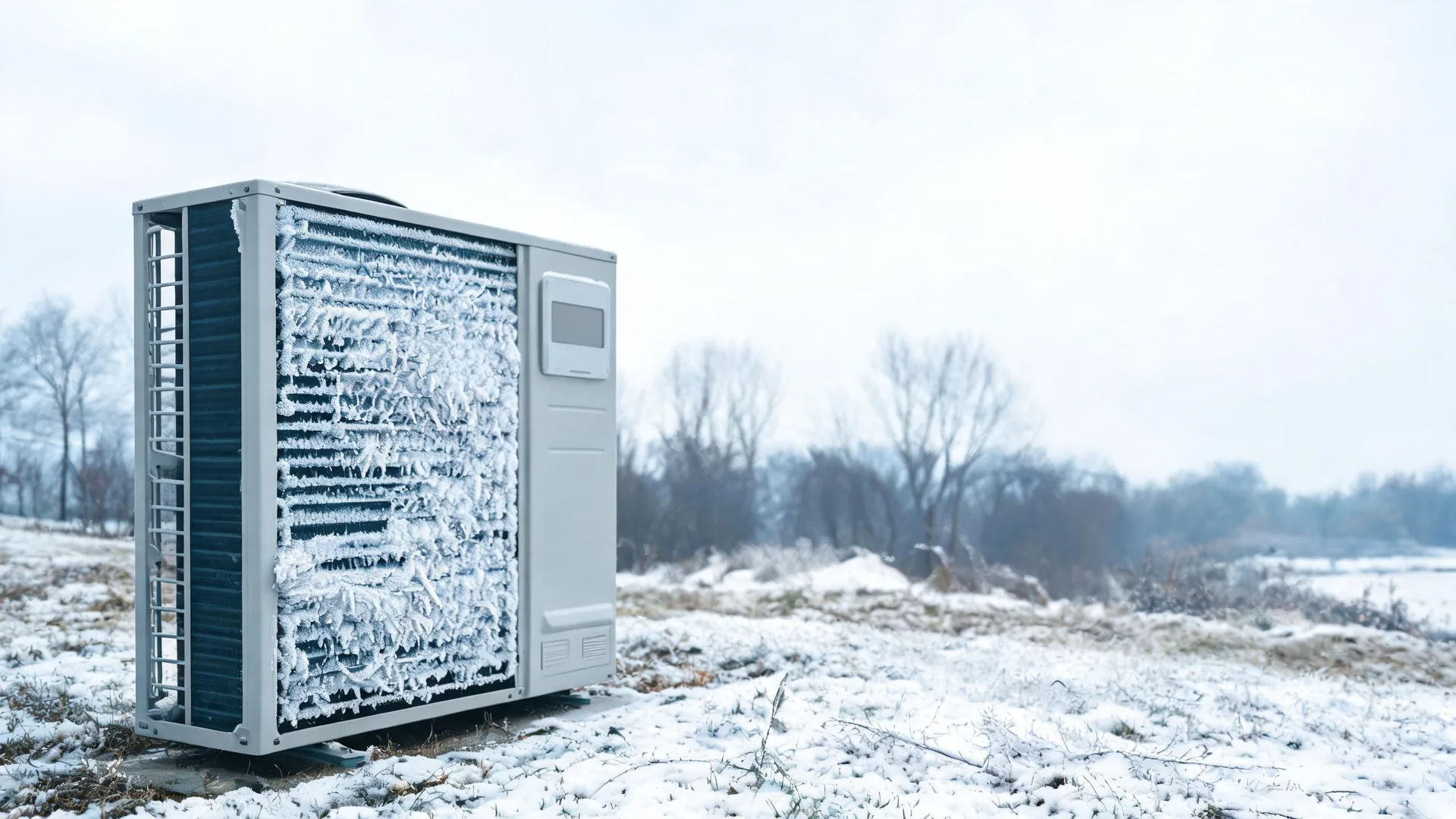
A frosted coil only gets worse

When the defrost cycle isn't clearing ice off the outdoor coil, the ice doesn't stay put. It builds with every cycle, and thicker ice blocks more airflow across the coil each time. Eventually the coil can't pull in enough air to do its job, and the compressor keeps working against a unit that can't breathe.
A failing compressor doesn't fail quietly

Short cycling or a compressor straining to start puts heat into its motor windings every time it tries. Run it long enough in that state and the windings can burn out for good, turning a repair into a full replacement. The sounds and short cycles mentioned above are the warning before that happens, not after.

A diagnostic visit starts outside, at the outdoor unit, with gauges hooked to the refrigerant lines to check pressure on both sides. Low pressure points to a leak somewhere in the line set or coil. High pressure on the wrong side can mean a stuck reversing valve or a failing compressor. From there the tech checks amp draw on the compressor and the outdoor fan motor, since a motor pulling more current than it should is wearing out even if it's still spinning. Indoors, they'll check the temperature of the air coming off the coil against the air going in, which tells them whether the system is actually moving heat the way it's supposed to. They'll also check the defrost control board and the sensors that tell it when to start and stop a defrost cycle, since a bad sensor can leave frost building on the coil even when everything else is working fine. By the end they can usually point to one part that's failing rather than guessing at several.

Age matters more than the symptom when you're deciding whether to fix a heat pump or replace it. A failed capacitor or a bad sensor is a small job no matter how old the unit is. But a compressor going bad on a unit that's already put in a decade or more of run time is a different decision, since the compressor is the most expensive part to replace and the rest of the system has been wearing alongside it the whole time. Ask what exactly failed before you ask what it costs to fix. A refrigerant leak in the line set can sometimes be patched, but a leak inside the coil itself usually means the coil gets replaced, and that's a bigger job than most people expect going in. If a contractor finds more than one thing wrong at once, that's usually the system telling you it's reaching the end of its working life rather than having one bad day.