A large outdoor air-conditioning unit mounted beside a vinyl-sided house, surrounded by mulched garden beds and green shrubs.

Heat Pump Repair in Fort Yates, ND

Tell us about the job

Takes about a minute. No obligation.

RepairHeat PumpSioux County, ND
Step 1 of 2

What ZIP code is the job in?

A heat pump with no season off

Sioux County asks a heat pump to run through long cold stretches and comes back for blizzards and heavy snow too, with 30 winter storms logged here between 2015 and 2024. There's no slow season where the system just idles.


What that does to the repair

A compressor or defrost control that's been cycling hard through storm after storm wears differently than one in a milder county. Whatever's acting up on your heat pump, it's worth finding the actual cause before anything gets replaced.

9 months
September through May, your system heats
3 months
June through August, it cools
7°F
the average winter night it heats against
82°F
the average summer afternoon it cools against
Isometric cutaway illustration of a house showing interior ductwork, an indoor air handler, and beds, with an outdoor condenser unit connected by lines outside the wall.
Your system heats September through May and cools June through August.

NOAA nClimDiv, 1991–2020 normals

Half the homes in Sioux County were built in 1984 or later.

A heat pump that came with a newer house still has working life in it, and that's worth knowing before you replace anything.

A heat pump running on 14.18 cent power doesn't idle when something's wrong

Power here costs 14.18 cents per kilowatt-hour
Climate zone 6A
Cooling runs June through August
The first cold snap finds the weak partHeat here starts running in September. Whatever's been wearing quietly through the months before tends to give out right when the load hits it.

If your heat pump came with the house, call a repair tech before you let anyone talk you into replacement. A unit installed new in 1984 or later still has working parts in it, and a bad capacitor or a stuck reversing valve doesn't mean the whole system is done. Repair is cheaper and faster, and it's usually the right first call on a system that isn't old enough to be failing outright. If you're in a mobile home, the repair itself may look a little different since the equipment is often sized and mounted to fit the unit, so say that when you book the call. Either way, get a tech out to look at the actual part before you decide anything's beyond fixing.

Find out what's actually wrong before you decide what it needs

A heat pump here doesn't get a break between storms, and that kind of strain tends to find the weak part first. Get the actual cause diagnosed before you decide what it needs.

Find a contractor
A man in a dark long-sleeve shirt and tan work pants carries a canvas tool bag up porch steps toward a navy blue front door, with a potted shrub beside the entry.
A gray outdoor HVAC unit mounted on a concrete pad beside a house with gray lap siding and a stone foundation.

What it sounds and feels like before it fails

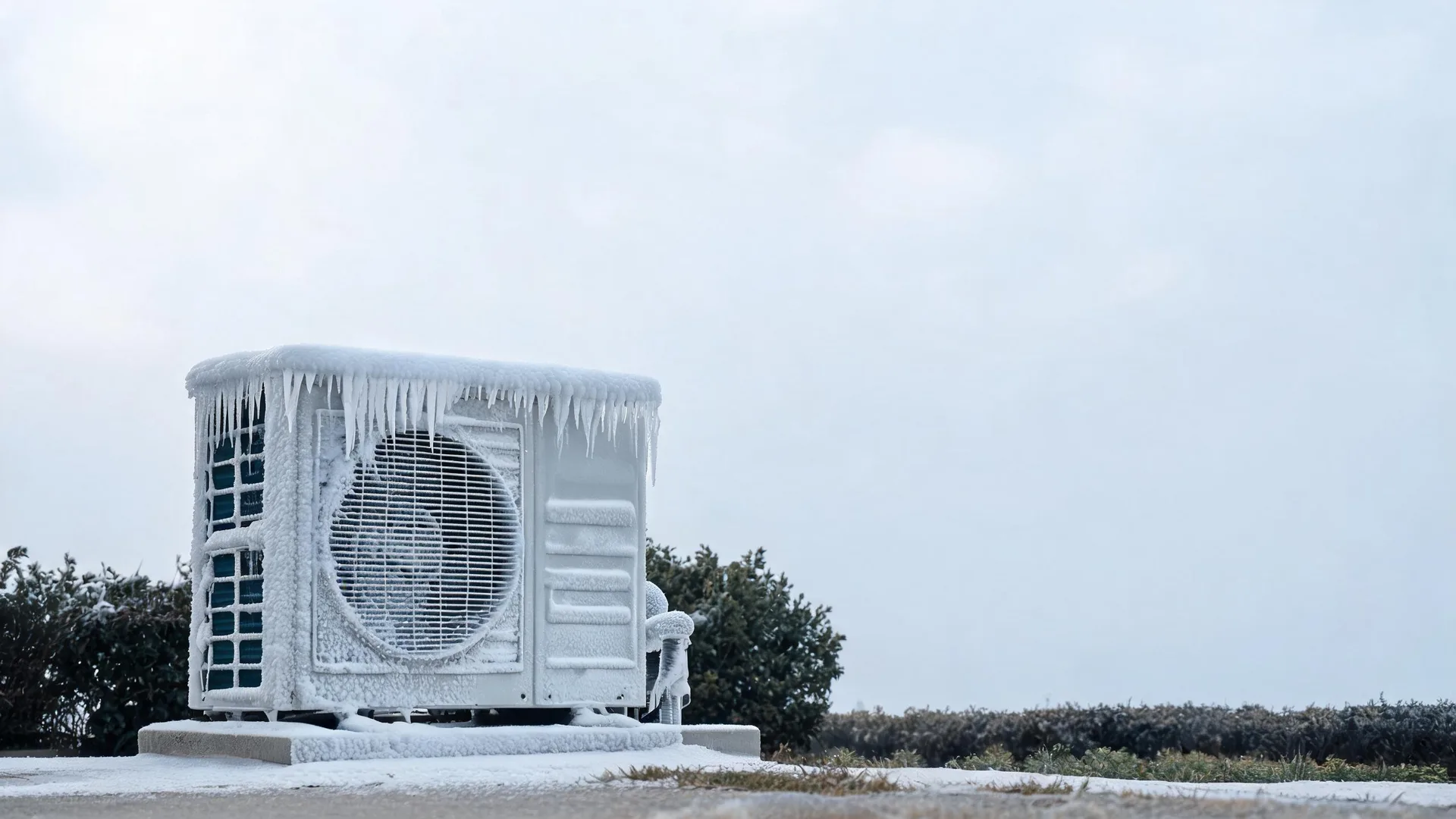
A heat pump that's struggling usually tells you before it quits outright. It runs but doesn't bring the house up to temperature, or it runs far longer than it used to just to hold steady. Air coming out of the vents feels barely warm instead of warm. Outside, the unit may ice over in a way that doesn't clear on its own, or you'll hear it click on and off more than it should, short cycling instead of settling into a run. A hissing or bubbling sound near the lines can mean refrigerant escaping. Grinding or squealing from the outdoor unit usually means a motor bearing or fan is on its way out. If the system switches from heat to defrost and back more than it used to, the defrost control or a sensor may be misreading the coil. None of these mean the whole unit is shot. They mean a specific part is failing, and the sooner it's looked at, the less it drags down everything else the system is trying to do.

The reversing valve takes the abuse

Every time a heat pump switches between heating and defrost, the reversing valve shifts to redirect refrigerant flow. That valve cycles far more than it would in a system that only ever ran one direction. Over time the coil inside it weakens, or it gets stuck halfway, and the system starts blowing cold air when it should be heating. A valve that won't fully switch is one of the most common reasons a heat pump stops keeping up.

The outdoor coil carries the wear

The outdoor coil has to shed frost constantly through defrost cycles, and every cycle is a small stress on the metal and the sensors that tell the system when to defrost. A failing defrost sensor or thermostat means the coil either doesn't clear or defrosts when it doesn't need to, and either way the compressor ends up working against ice it shouldn't have to fight. Catching a bad sensor early is a lot simpler than dealing with a coil that's iced over for good.

A heat pump that's short cycling or blowing lukewarm air is still drawing power every minute it runs. It's just not turning that power into heat the way it should. A stuck reversing valve or a failing defrost sensor means the compressor works longer to get less out of it, and that cost lands on the power bill before the system ever quits outright. Power here isn't cheap enough to waste on a part that's already failing. Getting a tech out to find the actual part is what keeps this a repair instead of a bigger job in the middle of winter.

A heat pump earns its keep by running, so the real question is whether what's wrong is a part or the machine itself. A compressor that's failed outright, or a coil that's corroded through, usually means the unit is done, and a tech will tell you that straight. But most calls aren't that. A capacitor, a contactor, a defrost sensor, a reversing valve stuck halfway: these fail on their own schedule, often years before anything else on the system is tired. Replacing one of them brings the whole unit back to normal operation. The age of the system matters less than which part quit and why. A unit that's been maintained and is only now throwing its first real problem is usually worth fixing. One that's had several unrelated failures in close succession is telling you something different. Either way, that's a judgment made by looking at the actual part, not a guess made from the driveway.