This county sees real storms
Cass County logged 354 severe weather events between 2015 and 2024. That includes 172 damaging wind events, 109 hail events and 5 tornadoes. An outdoor heat pump unit sits outside through all of it.
Takes about a minute. No obligation.
Cass County logged 354 severe weather events between 2015 and 2024. That includes 172 damaging wind events, 109 hail events and 5 tornadoes. An outdoor heat pump unit sits outside through all of it.
A heat pump can take a hit from hail or flying debris and keep running for a while before it fails. If a storm has come through, it's worth having the outdoor unit looked at, not just listened to.

NOAA nClimDiv, 1991–2020 normals
Electricity here runs 13.26 cents a kilowatt-hour, cheaper than most of the country.
That's exactly why a heat pump struggling to heat or cool is quietly costing you more each month it runs that way.




August is when heat kicks back on here after sitting idle since May. A heat pump that's been coasting through a mild stretch doesn't show a weak capacitor or a failing contactor until it has to work hard again. That first cold push in September is often when it does. The reverse happens at the start of summer, when the system switches back to cooling after nine months of heating and a part that was marginal all winter finally gives out. If yours is struggling right as the season turns, that timing is not a coincidence.
If a storm has come through and your heat pump is still running, that's not the same as it being fine. Hail and debris can mark up the coils or bend the fins without stopping the unit right away. Worth having the outdoor unit checked rather than just listening for trouble.
Find a contractor
A diagnostic visit starts outside, at the unit itself. The tech checks refrigerant pressure, looks at the coil for damage, and watches the fan and compressor run. Then it moves inside to the air handler, the filter, and the thermostat settings, because a heat pump that seems broken outside sometimes has the problem on the other end. Electrical readings come next: the capacitor, the contactor, the wiring at the disconnect box. A reversing valve gets tested by switching the system between heating and cooling and watching whether it actually responds. None of this takes guesswork once the tech is standing there with gauges and a meter. What takes time is narrowing down which part is causing what you're noticing, since a lot of different failures can look the same from inside the house.
A heat pump switches between heating and cooling with a reversing valve, and that valve works every single cycle, both directions, all year. The coil it's built into can also develop slow leaks at the joints over time. When a heat pump heats fine but won't cool, or cools fine but won't heat, the reversing valve is usually why.
Outside, the compressor and fan motor take the wear: a seized fan motor, a compressor running low on refrigerant, a defrost sensor that stops telling the system to clear ice off the coil. Inside, it's usually the blower motor or a clogged filter restricting airflow. Knowing which side is acting up tells you a lot about what's actually failing.
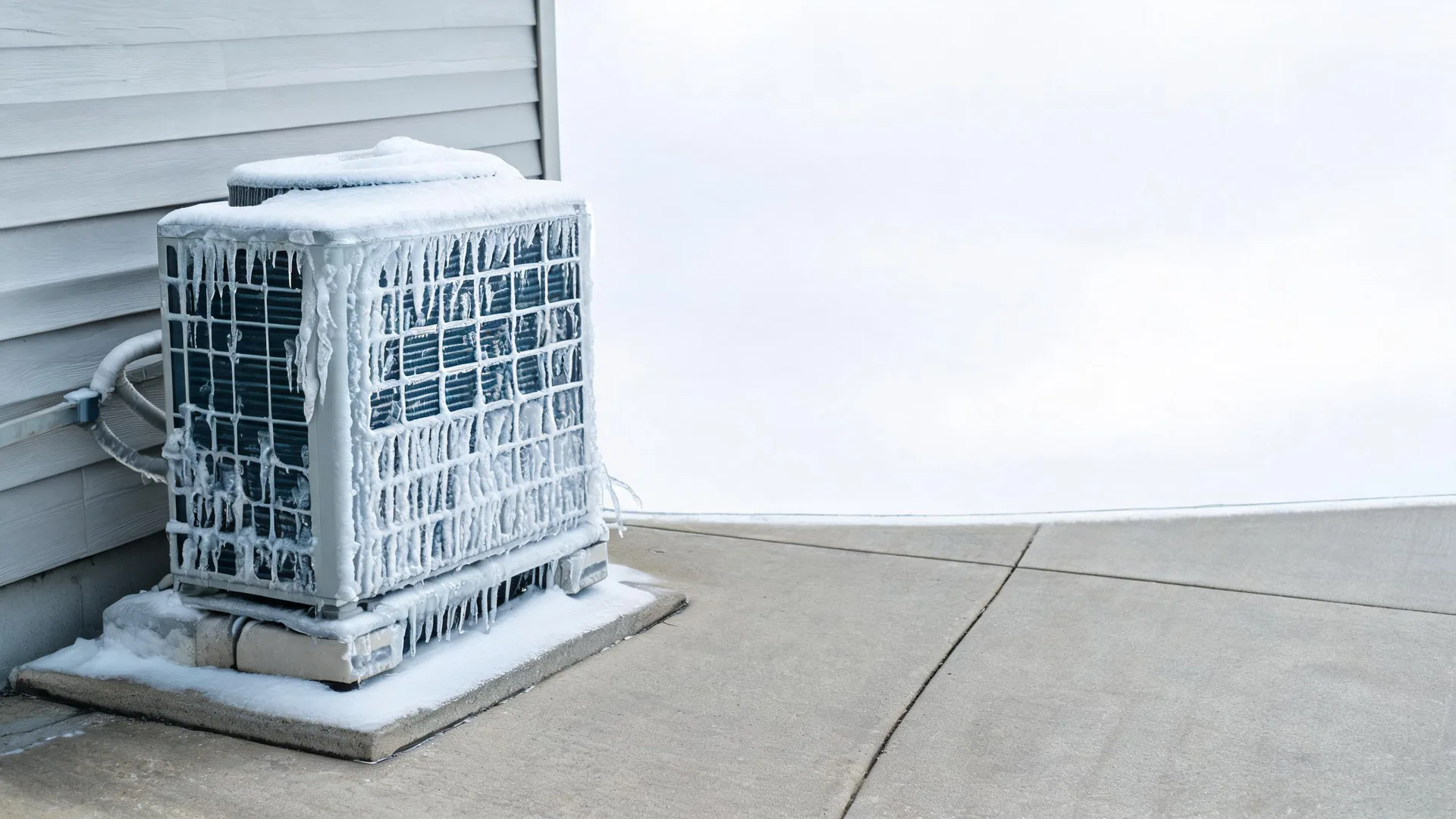
A heat pump in trouble usually tells you before it quits outright. Warm air blowing when it should be hot, or the system running nonstop without catching up to the thermostat, both point to a unit working harder than it should. Short cycling, where it kicks on and off in quick bursts instead of running a full cycle, wears on the compressor and is worth a call on its own. Ice building up on the outdoor coil during a cycle that should be defrosting it means the defrost sensor or control board isn't doing its job. A hissing or bubbling sound near the lines can mean refrigerant escaping, and that's not something that fixes itself or waits politely. Strange smells from the vents, especially anything electrical or burnt, mean stop running it and get it looked at rather than waiting to see if it clears up.
Winter storms hit this county 68 times between 2015 and 2024, on top of 172 damaging wind events and 109 hail events. The outdoor unit sits through all of it. A bent fin or a knocked loose panel doesn't always cause trouble right away. It shows up later as a part working harder than it should until it quits. When a heat pump here is acting up, storm exposure is worth asking about before anything else, not just age or normal wear. Tell whoever comes out whether the unit has taken a hit recently, even if it kept running afterward. That detail can point the diagnosis in the right direction faster than guessing from symptoms alone.