






An outdoor HVAC condensing unit on a concrete pad next to a beige single-story house with a dark shingle roof.

Heat Pump Repair in Elgin, ND

Tell us about the job

Takes about a minute. No obligation.

RepairHeat PumpGrant County, ND
Step 1 of 2

What ZIP code is the job in?

A heat pump in Grant County sits outside through whatever the weather does, and here that's not mild. Between 2015 and 2024 the county saw 73 hail events and damaging wind 57 times. Winter storms, heavy snow, ice and blizzards, hit 26 times in that same stretch. An outdoor unit takes that directly, year after year. Zone 6A means a long heating season on top of it, so the system runs hard for months at a stretch. When one starts acting up here, that kind of wear is usually the reason, not bad luck. Worth getting it diagnosed properly before deciding what it needs.

9 months
September through May, your system heats
2 months
July through August, it cools
7°F
the average winter night it heats against
81°F
the average summer afternoon it cools against
Isometric line illustration of a cutaway single-story house showing interior rooms, ceiling ductwork, an indoor air handler unit, and an outdoor condenser connected by a line set.
Your system heats September through May and cools July through August.

NOAA nClimDiv, 1991–2020 normals

Half the homes in Grant County were built in 1962 or earlier.

A heat pump on a house that old is probably closer to the end than the start.

Electricity here is cheap. A heat pump running wrong still runs up the bill.

Power here costs 12.95 cents per kilowatt-hour
57 damaging wind events from 2015 to 2024
73 hail events from 2015 to 2024
Call Before SeptemberHeat starts running in September here, and a weak heat pump usually shows it in the first cold week.

A heat pump that's lost its charge or is cycling wrong doesn't just heat poorly, it runs longer to make up for it. Here that means more hours drawing power every single day it goes unfixed. Power may be cheap in Grant County, but cheap times constant still adds up on a system already struggling. The longer a bad repair sits, the more it costs to ignore, even on a low rate. Have it looked at soon instead of waiting to see if it sorts itself out.

Know What You're Repairing Before You Pay For It

If your heat pump came with the house, it's worth finding out which half it's in. A repair can still make sense. But on a system this old, ask the contractor how much life is left in it before you pay for a big one.

Find a contractor
A gray outdoor HVAC unit mounted on a concrete pad beside a house with gray lap siding and a stone foundation.

What Actually Happens When Someone Comes Out to Look at It

A diagnostic visit starts outside at the unit, not with a guess. A tech will check the refrigerant pressures first, since that one reading points toward a leak, a bad metering device, or a compressor working harder than it should. They'll pull the cover and look at the contactor and capacitor, because a motor that hums but doesn't spin or a unit that short cycles usually comes down to one of those two parts. The reversing valve gets tested next, forcing the system into heating and cooling to see if it actually switches or gets stuck partway. Inside, they'll check the air temperature coming off the vents against what's going into the return, which tells them whether the system is actually moving heat or just moving air. The defrost board gets checked too, along with the sensor that tells it when the outdoor coil needs to clear ice. None of this is guesswork. Each test rules something in or out, and by the end the tech should be able to say exactly which part failed and why, not just that the system isn't working right.

A Small Problem Rarely Stays Small

A heat pump low on refrigerant will keep running, just worse. The compressor still tries to move a full load of refrigerant through the system with less than it needs, and that makes it run hotter than it was built to. Keep that up and the compressor wears out early instead of lasting out its years. The same goes for a failing capacitor. It can still start the motor, weakly, for a while, until the day it can't.
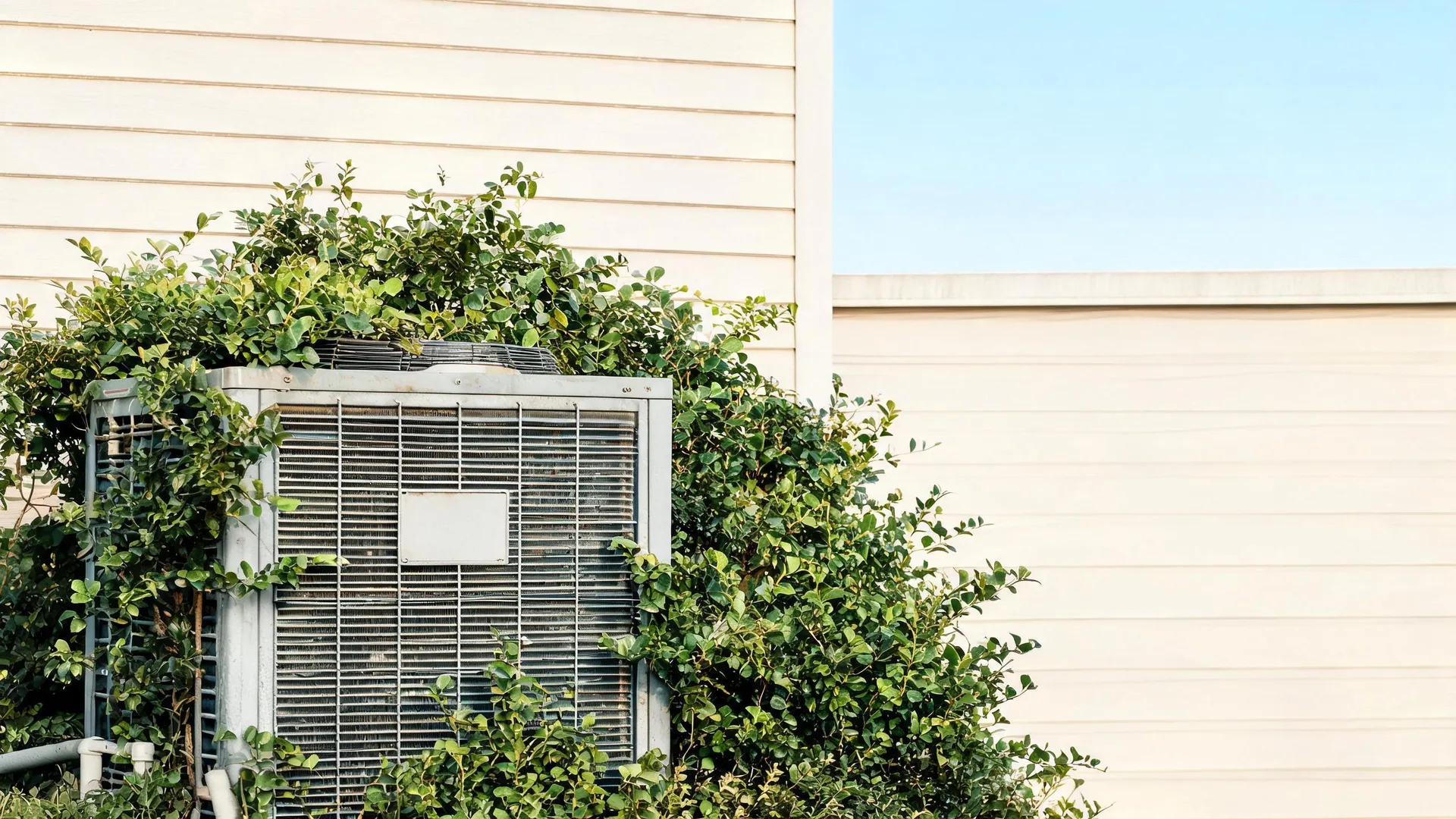
Some Signs Mean Shut It Off Now

A breaker that trips more than once is telling you something is drawing too much power, and resetting it again just gives the short or the overloaded motor another chance to do damage. Ice building up on the outdoor coil while the system keeps running is the same kind of warning. Shut it down and get it looked at instead of waiting to see if it clears on its own.

A heat pump fails in a handful of predictable ways. The reversing valve is the part unique to it, the one that switches the system between heating and cooling, and when it sticks the unit can get stuck in one mode or stop changing over at all. Refrigerant leaks show up at fittings and coils over time, and a system low on charge works harder for less heat. The defrost board and sensor are another common point of failure, since the outdoor coil needs to clear ice on a schedule and a bad sensor leaves it either frosting over or defrosting when it doesn't need to. Contactors and capacitors wear out from the plain fact of starting and stopping a motor thousands of times, and a weak capacitor often shows up as a compressor that hums but won't start. Dirty coils make the whole system work against itself, since they're how it moves heat in both directions, and a coil caked with debris loses capacity it never gets back without a real cleaning.

Not every failure means a new system. A contactor, a capacitor, a defrost sensor, these are small parts and swapping them is a normal repair, done often, on units of any age. What changes the math is the compressor. It sits in the middle of the system under a sealed shell, and when it fails the honest options are a very expensive repair or a new outdoor unit, because a compressor swap on an old unit rarely makes sense next to replacing the whole thing. Refrigerant leaks sit in between. One leak at a fitting is a fix. A system that's lost its charge twice in a few years has a problem that keeps costing money every time it gets patched instead of solved. Ask what actually failed before deciding what the repair is worth.