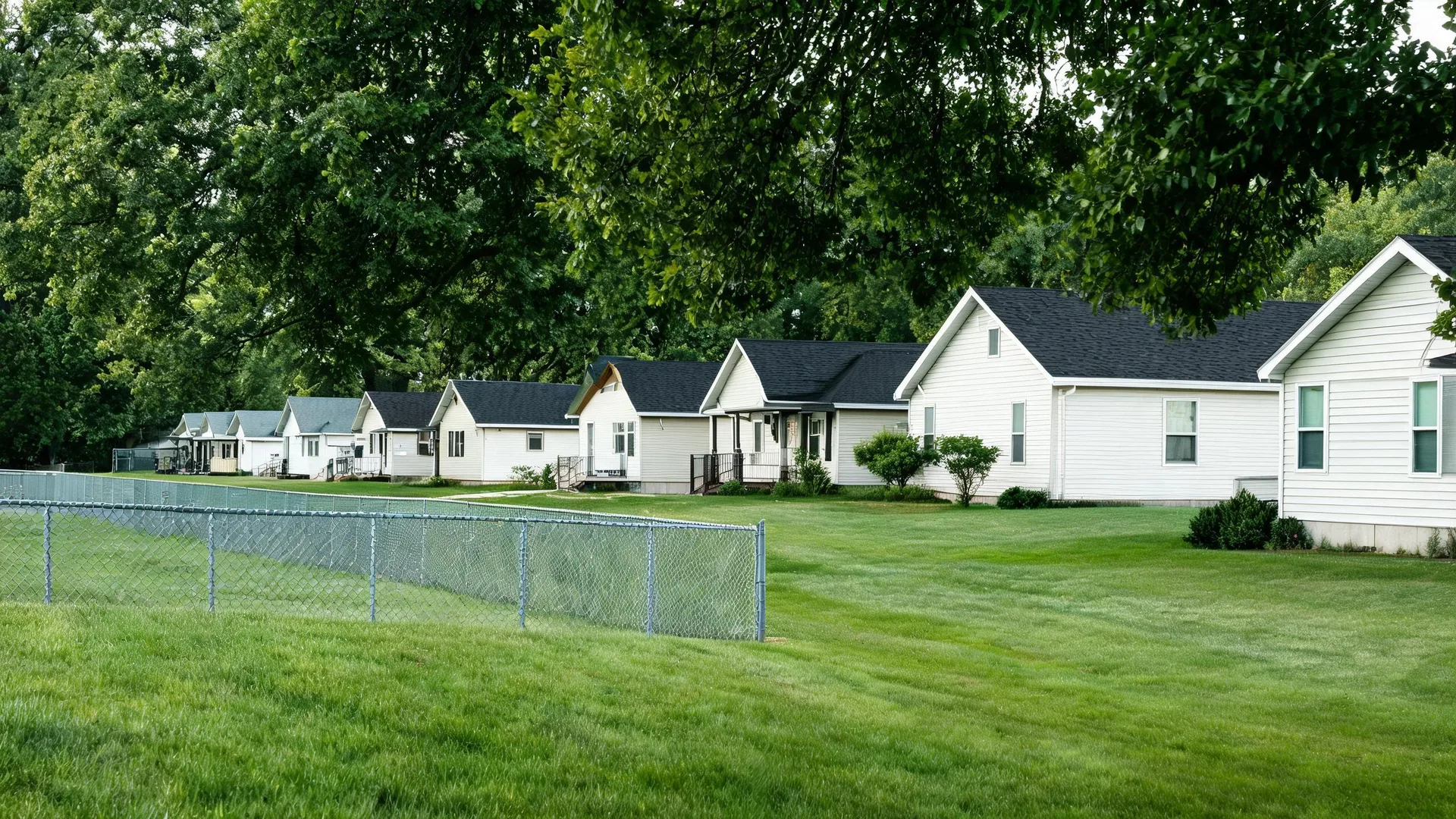






A row of similar white single-story houses with dark gray gabled roofs behind a chain-link fence, with a mowed lawn in the foreground and large leafy trees above.

Heat Pump Repair in Dickinson, ND

Tell us about the job

Takes about a minute. No obligation.

RepairHeat PumpStark County, ND
Step 1 of 2

What ZIP code is the job in?

A heat pump outside in Stark County takes a beating that one in a milder spot never sees. The outdoor unit sits exposed through 95 damaging wind events and 64 hail events recorded here between 2015 and 2024, plus 23 winter storms bringing heavy snow and ice over that same stretch. Wind drives grit and debris into the coil fins. Hail dents the cabinet and can bend those fins shut, cutting off the airflow the unit needs to work right. None of that takes the system down in one shot, most of the time. It wears on the compressor, the reversing valve, the coil, a little at a time, until a part that should have had more life left in it gives out. If your heat pump is acting up, that slow wear is usually part of the story. Worth having someone look at the actual cause before paying for a fix that does not last.

10 months
September through June, your system heats
2 months
July through August, it cools
7°F
the average winter night it heats against
81°F
the average summer afternoon it cools against
Isometric line illustration of a cutaway single-story house showing interior rooms with beds and furniture, ceiling ductwork connected to an indoor air handler, and an outdoor condenser unit linked by refrigerant lines.
Your system heats September through June and cools July through August.

NOAA nClimDiv, 1991–2020 normals

Half the homes in Stark County were built in 1986 or later.

A heat pump that came with a newer house still has working life in it, and that's usually worth repairing.

Heat starts in September and runs clear through June, long enough for a weak part to fail

Cooling runs July through August
Heat runs September through June
Climate zone 6A
Electricity here is cheap. A struggling heat pump still runs up the bill.Stark County pays about 11.44 cents per kilowatt-hour, below most of the country.

If your heat pump came with the house and the house is newer, it's worth getting a straight diagnosis instead of guessing at replacement. A compressor or reversing valve that's a few years old still has the reasons to be repaired rather than pulled out. Get the contractor to tell you what actually failed and why, not just a quote to swap the unit. If the part that gave out is something that wears from wind and hail, like a coil or fan motor, fixing that one part usually makes more sense than starting over.

Get the real cause found before it takes out another part

Whatever's acting up on your heat pump, wind, hail and winter storms are usually part of why it wore down in the first place. That wear doesn't stop on its own. A proper diagnosis finds the part that actually failed and why, so the fix holds instead of giving out again next season.

Find a contractor
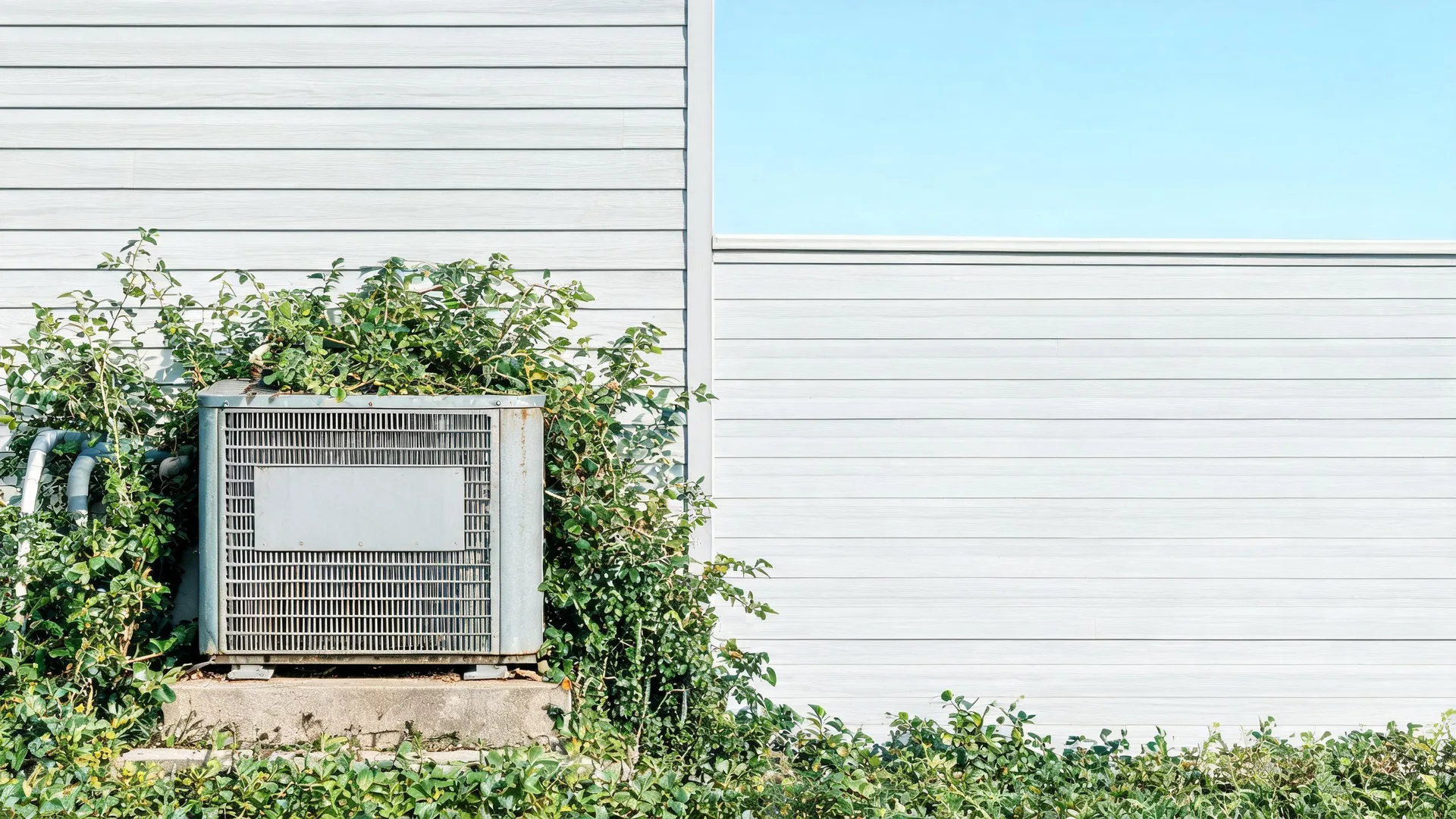
A gray heat pump condenser unit mounted on a concrete pad against the gray lap-siding exterior wall of a house.

What to check yourself first

Before anyone comes out, walk outside and look at the outdoor unit. Check that nothing is stacked against it or growing into it. Clear away leaves, grass clippings or anything blocking the sides. Look at the coil fins around the cabinet. If they're caked with dirt or bent over, airflow is choked and the system has to work harder to do anything at all. Check that the fan on top spins freely and isn't making a grinding or rattling sound. Go inside and look at the air filter. A filter clogged with dust cuts airflow just as much as a blocked coil, and it's the easiest thing on this list to fix yourself. Check the thermostat is set to the right mode and the batteries aren't dying, since a heat pump that seems dead sometimes just has a thermostat that stopped talking to it. If there's a disconnect box near the outdoor unit, make sure it hasn't been bumped or switched off. Look for ice built up on the outdoor coil beyond a light frost. Some frost is normal, especially in cold weather, and the unit should clear it on its own through a defrost cycle. Ice that keeps building and never clears points to a problem worth having looked at rather than something to chip off yourself. None of this fixes a failed compressor or a bad reversing valve. What it does is rule out the simple stuff, so when someone does come out, the time goes toward finding the actual failure instead of the filter or the breaker.

What actually fails first

The parts most likely to quit are the ones doing constant work. The compressor pumps refrigerant every time the system runs, heating or cooling, so it logs more hours than almost anything else in the house. The reversing valve is what switches the unit between heat and cool, and that switching wears the valve until it sticks partway or stops shifting at all. A capacitor that's weak will make the compressor or fan struggle to start, and a contactor with pitted contacts can stop sending power through even when the thermostat is calling for it.
Why it rarely fails all at once

A heat pump usually gives you signs before it quits outright. Weak airflow, a longer runtime to reach the set temperature, or short cycling where the unit shuts off and restarts too soon are all signs a part is on its way out, not yet gone. Chasing down the cause at that point, rather than waiting for a full breakdown, is what keeps a bad capacitor from taking the compressor down with it.

A heat pump running on a weak part doesn't shut itself off, it just keeps going while working harder than it should. That extra runtime is what shows up on the bill. Power being cheap here doesn't change that math, it just means the waste is smaller than it would be elsewhere, not that it isn't there. Getting the actual part found and fixed stops that extra draw now instead of paying for it every month until the unit quits outright.

When a heat pump breaks down, the question is whether the part that failed is worth fixing on its own, or whether it's the latest in a line of parts giving out. A single failure, a bad capacitor, a stuck contactor, a sensor that's drifted, is almost always worth repairing. Those parts don't take long to replace and doing so brings the whole system back to normal. It's a different question when the compressor itself is failing, since that's the most expensive part in the unit and the one that does the most work. A compressor going bad on a unit that's otherwise sound is still usually worth repairing. A compressor going bad after the system has already needed two or three other repairs in recent memory is a sign the whole unit is wearing out at once, not just one part of it. That pattern matters more than any single failure does.