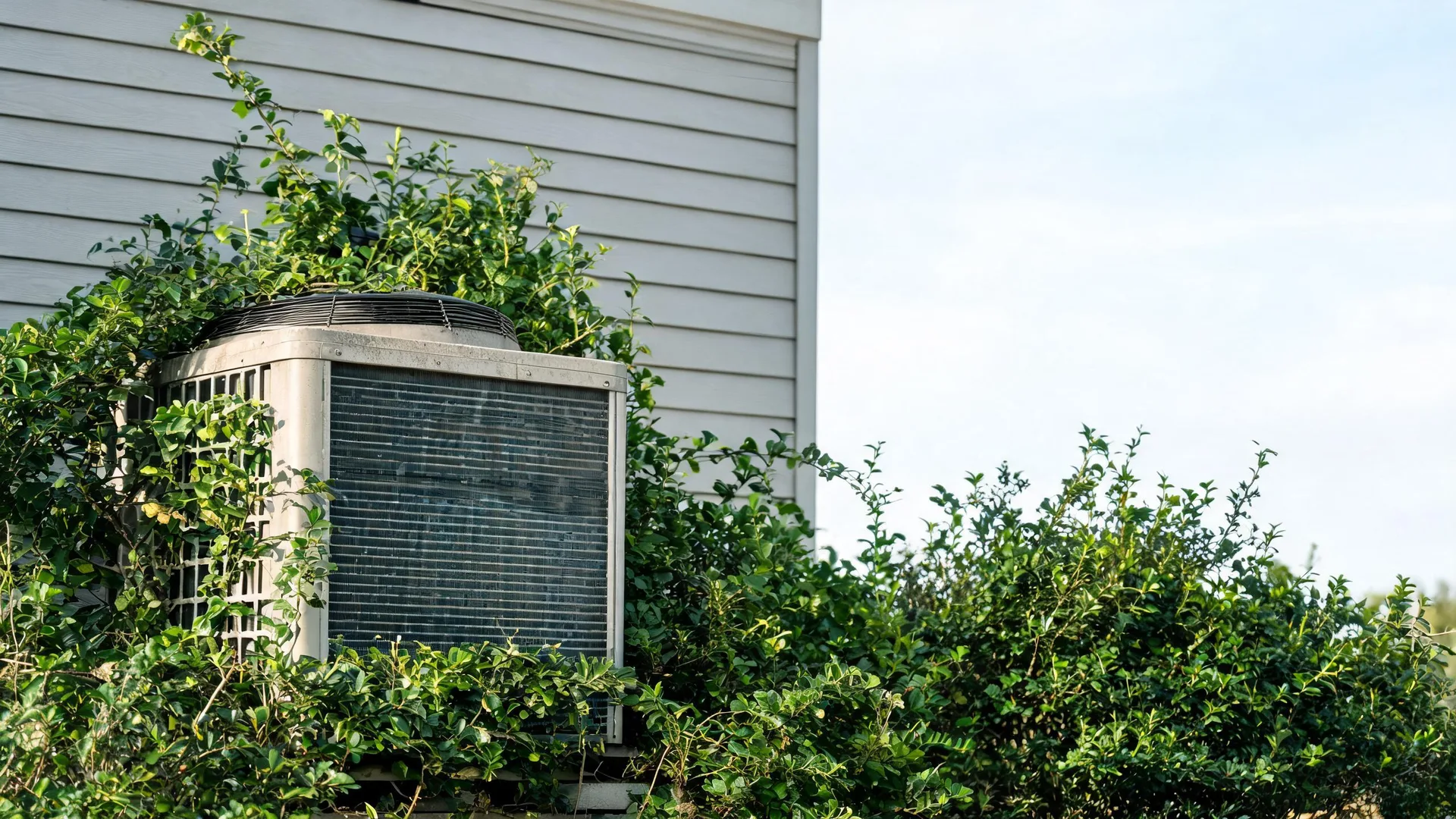
A grey heat pump outdoor unit mounted on a concrete pad against the exterior wall of a house with grey siding and stone veneer.

Heat Pump Repair in Crosby, ND

Tell us about the job

Takes about a minute. No obligation.

RepairHeat PumpDivide County, ND
Step 1 of 2

What ZIP code is the job in?

Half the homes here were built in 1963 or earlier

Divide County's housing stock is old. A heat pump in a house built that long ago is tied into whatever ductwork and insulation came with it, from before anyone built a heat pump to work with either one.


What that means for a repair call

If your heat pump came with an older house, a big repair bill is worth a second thought. Ask the contractor how much life is left in the unit before you pay to fix the one it has now.

10 months
September through June, your system heats
2 months
July through August, it cools
3°F
the average winter night it heats against
78°F
the average summer afternoon it cools against
Isometric cutaway illustration of a small house showing interior ductwork and an air handler connected by lines to an outdoor condenser unit on a pad beside the building.
Your system heats September through June and cools July through August.

NOAA nClimDiv, 1991–2020 normals

Divide County sees winter storms or hail about four times a year.

A heat pump out here takes a beating most machines never see.

Heat starts in September, and that's when a weak part gives out

Cooling runs July through August
Heat runs September through June
20 hail events from 2015 to 2024

Electricity here runs 10.43 cents a kilowatt-hour, cheaper than most of the country sees. That's the one break you get. A heat pump that's lost its charge or is fighting a bad defrost cycle still burns through power trying to keep up, and it runs for months on end here. Cheap power just means a struggling unit costs you less per hour than it would somewhere else. It doesn't mean a broken one is free to ignore.

Have it diagnosed before the next storm finds the weak spot

Get a heat pump that's been through four storm seasons a year looked at by someone who can tell you what the weather actually did to it. A proper diagnosis finds the worn part now, instead of leaving it to quit in the next cold snap.

Find a contractor
A man in a cap, gray T-shirt and tan work pants carries a canvas tool bag up porch steps toward a dark blue front door of a gray clapboard house, with a potted plant at left.
A dark gray heat pump unit mounted on a concrete pad next to a house with gray siding and a stone veneer wall.

What actually breaks in a heat pump

A heat pump fails the same handful of ways in any climate. The compressor is the part most likely to end its life for good. It can seize, or it can lose its seal and start pumping refrigerant past worn rings instead of compressing it. Either way, once the compressor goes, the repair usually costs close to a new unit, so most contractors won't fix one at all. Short of that, the usual failures are smaller and worth fixing. A run capacitor weakens and stops giving the compressor or fan motor the jolt they need to start. A contactor pits and sticks until the outdoor unit won't kick on. The reversing valve can get stuck partway between heating and cooling, so the system runs but doesn't do what the thermostat asked for. Refrigerant doesn't get used up, so if the charge is low, something let it out, usually a slow leak at a fitting or a rubbed-through line. None of these wear out on a schedule. They wear out from running, from cycling on and off thousands of times, from dirt and moisture working into places they shouldn't be. A unit that runs more hours in a year gets to that wear sooner than one that sits idle most months.

The heat pump won't switch out of defrost

A heat pump that's stuck defrosting the outdoor coil will blow cool air inside for too long, or keep cycling into defrost when the coil isn't even iced over. That points to a bad defrost sensor or a reversing valve that's stopped shifting cleanly. Left alone, the coil ices over for real and the unit stops moving heat at all.

The air from the vents feels wrong for the setting

Air that comes out lukewarm when it should be hot, or warm when it should be cold, usually means the refrigerant charge is low or the reversing valve is stuck partway. The thermostat might say it's working. The air at the vent tells you if it actually is. Don't wait for the house to feel uncomfortable before you trust that sign.

Before you call anyone, walk outside and look at the unit. A heat pump needs open air on all sides to move heat, so check that the cabinet isn't packed in by snow or ice buildup around the base. Look at the coil through the side of the cabinet. If it's coated in frost or solid ice outside of a normal defrost cycle, that's worth mentioning when you call, not something to chip off yourself. Inside, check the air filter. A clogged filter starves the system of airflow and can be behind weak heat or a unit that runs constantly without catching up. Check the thermostat batteries and settings too. It sounds too simple to matter, but a thermostat stuck in the wrong mode or with a dead battery looks exactly like a failing unit. None of this fixes a bad reversing valve or a low charge, but it rules out the easy explanations before someone drives out to look at the hard ones.

A heat pump that's running weak doesn't stop pulling power, it just stops doing much with it. If the defrost cycle is stuck or the charge is low, the unit keeps drawing current while the house gets less heat out of every hour it runs. That's the part worth acting on. Get the diagnosis now instead of waiting to see if it gets worse, because a unit in this shape runs for months before spring gives it a break. The cheap rate softens what a struggling heat pump costs you. It doesn't erase it.