





A snow-covered small-town street at dusk, with lit white clapboard houses, bare trees, and a grain elevator silhouetted against an orange and blue twilight sky.

Heat Pump Repair in Carrington, ND

Tell us about the job

Takes about a minute. No obligation.

RepairHeat PumpFoster County, ND
Step 1 of 2

What ZIP code is the job in?

A tech starts by asking what the system is actually doing. Blowing cold air in heating mode, short cycling, running nonstop without reaching the set temperature, or not starting at all. That changes where they look first. From there they check the thermostat settings and power to the unit, then move outside to the compressor and the reversing valve, since that valve is what switches the system between heating and cooling and is a common failure point. They'll check refrigerant charge, because too little or too much makes the whole system work against itself. They'll check the defrost cycle too, watching whether the outdoor coil is icing up and whether the unit is clearing that ice on its own. Airflow gets checked on the indoor side, since a dirty coil or a weak blower motor can look like a refrigerant problem when it isn't one. By the end they can usually tell you which part is failing and why, not just that something is wrong.

9 months
September through May, your system heats
2 months
July through August, it cools
3°F
the average winter night it heats against
79°F
the average summer afternoon it cools against
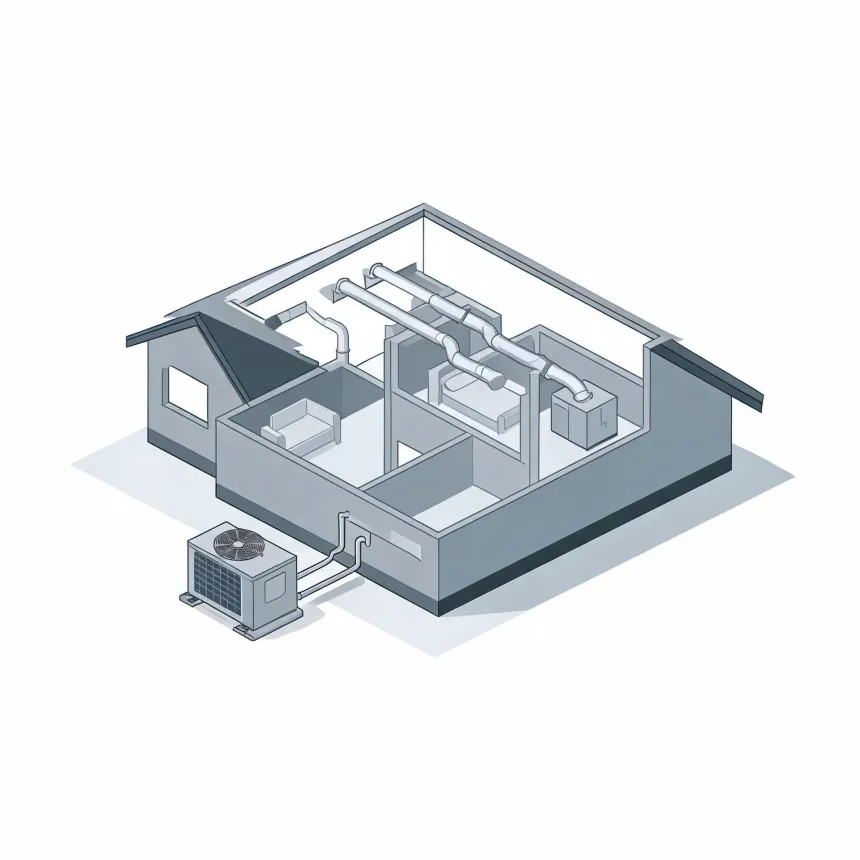
Isometric grayscale illustration of a cutaway house showing interior rooms, ceiling ductwork and an air handler, connected by lines to an outdoor condenser unit on a pad outside.
Your system heats September through May and cools July through August.

NOAA nClimDiv, 1991–2020 normals

Heat here starts up in September and stays on through May.

A part that barely made it through last winter usually fails in the first cold snap, not the dead of January.

Half the homes here were built by 1973, and the heat pump inside may be original

Half the homes here were built by 1973
27 hail events from 2015 to 2024
34 winter storms from 2015 to 2024
A Struggling Heat Pump Costs You Every Month It RunsElectricity here runs 10.98 cents a kilowatt-hour, cheap by national standards, but a heat pump that runs most of the year still adds up when it's working harder than it should.

If the system in question came with the house, ask the contractor for its actual age before signing off on a big repair. A label inside the unit or a permit from the install usually settles it. A heat pump that old has had a long run in weather that doesn't let up for months at a time, and a failing compressor or reversing valve can cost close to what a new system runs. Worth knowing before paying for the fix rather than after. If the age checks out as original, use the diagnostic visit to ask what else is close behind, not just what failed today.

Weather This Hard Wears a Heat Pump Down Faster. Get It Diagnosed Right.

This system runs most months of the year, and Foster County throws real weather at it. Hail has hit the county 27 times between 2015 and 2024. Winter storms, the heavy snow, ice and blizzards, hit it 34 times over that same stretch. A heat pump out here cycles through snow and ice loads that a lot of systems never see, and that wear catches up with parts like the reversing valve and the defrost control sooner than it would somewhere milder. A proper diagnosis finds the part that's actually failing, not just the symptom, so the repair holds.

Find a contractor
A gray heat pump outdoor unit mounted on a concrete pad next to the stone-accented exterior wall of a house.

What You Can Check Before the Tech Gets There

Before anyone comes out, there are a few things worth checking yourself. Start at the thermostat. Make sure it's set to heat, not cool or fan only, and that the set temperature is actually above room temperature. A dead thermostat battery can make a system look broken when it isn't. Next, check the breaker panel. A tripped breaker will shut the whole unit down, and it's worth resetting once to see if it holds. Look at the outdoor unit. If it's buried in snow or ice, or if the fan can't turn because of debris around it, clear that away before anything else. Check the air filter too. A clogged filter chokes airflow and can cause problems that look electrical or mechanical but aren't. If the outdoor coil is caked in ice and the system doesn't seem to be clearing it on its own over the course of a day, that's worth noting for the tech, not something to chip off yourself. Walk through the house and feel the vents. Weak airflow at every vent points to the blower or the ductwork. Cold air at just one or two rooms usually means something closer to that room, not the whole system. If the breaker keeps tripping after you reset it, stop resetting it and call. That's not a problem to keep testing.

A Small Problem Doesn't Stay Small

A reversing valve that's sticking will keep sticking every time it's asked to switch, and each cycle wears the same spot a little more until it gets stuck for good. A refrigerant leak doesn't heal itself either. Running low on charge longer just means the compressor works harder to move what's left, and that heat and strain is what kills compressors early. The failure you catch today is almost always cheaper than the one it turns into next month.
Running It Masks What's Actually Wrong

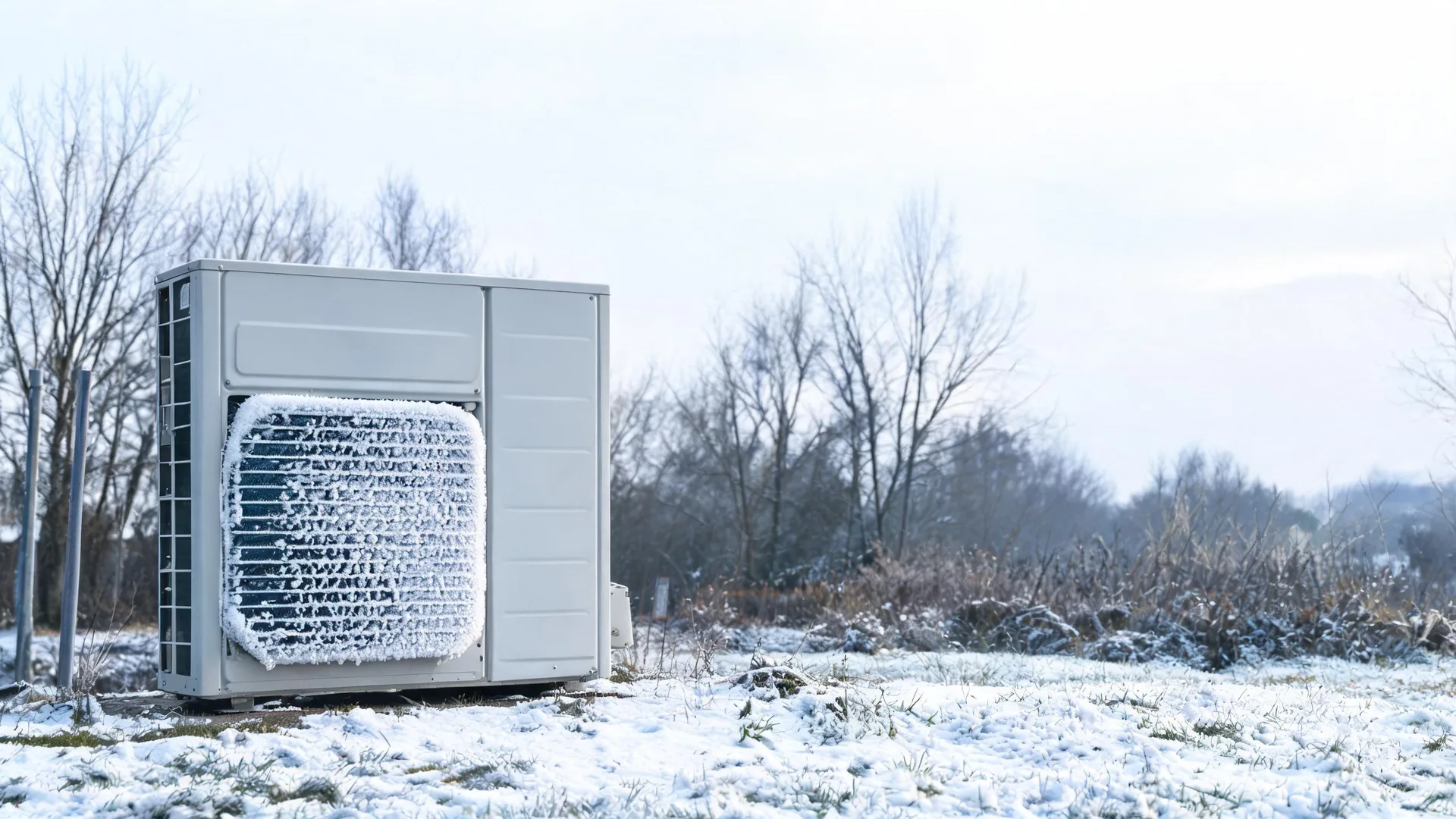
A system that's short cycling or not reaching temperature is already telling you something, and letting it keep running on those symptoms doesn't buy time, it burns through parts that are already struggling. An iced-up outdoor coil that isn't clearing on its own will keep icing, and running the unit through that just keeps the compressor fighting restricted airflow. The longer it runs in that state, the more likely the next call is about a compressor instead of a defrost control.

A heat pump that's running rough doesn't stop pulling power, it just stops using it well. A stuck reversing valve or a low charge makes the compressor run longer to hit the same set temperature, and that extra runtime shows up on the bill before the unit ever fully quits. Waiting on the repair doesn't save you anything. It just means paying more each month to run a system that's already struggling, right up until it fails outright and you're paying for a repair anyway.

At some point the question isn't what's wrong, it's whether fixing it makes sense. Age matters less than what's actually failed. A blower motor or a capacitor is a straightforward swap on a system of any age, and worth doing. A compressor is a different call, since it's the most expensive part in the unit and replacing one often costs close to what a new system runs. The same goes for a reversing valve on an older unit, since getting to it takes real labor on top of the part itself. Ask the tech what failed and what it takes to replace, then decide from there. A system that's needed two or three repairs in as many years is telling you something a single repair bill won't.