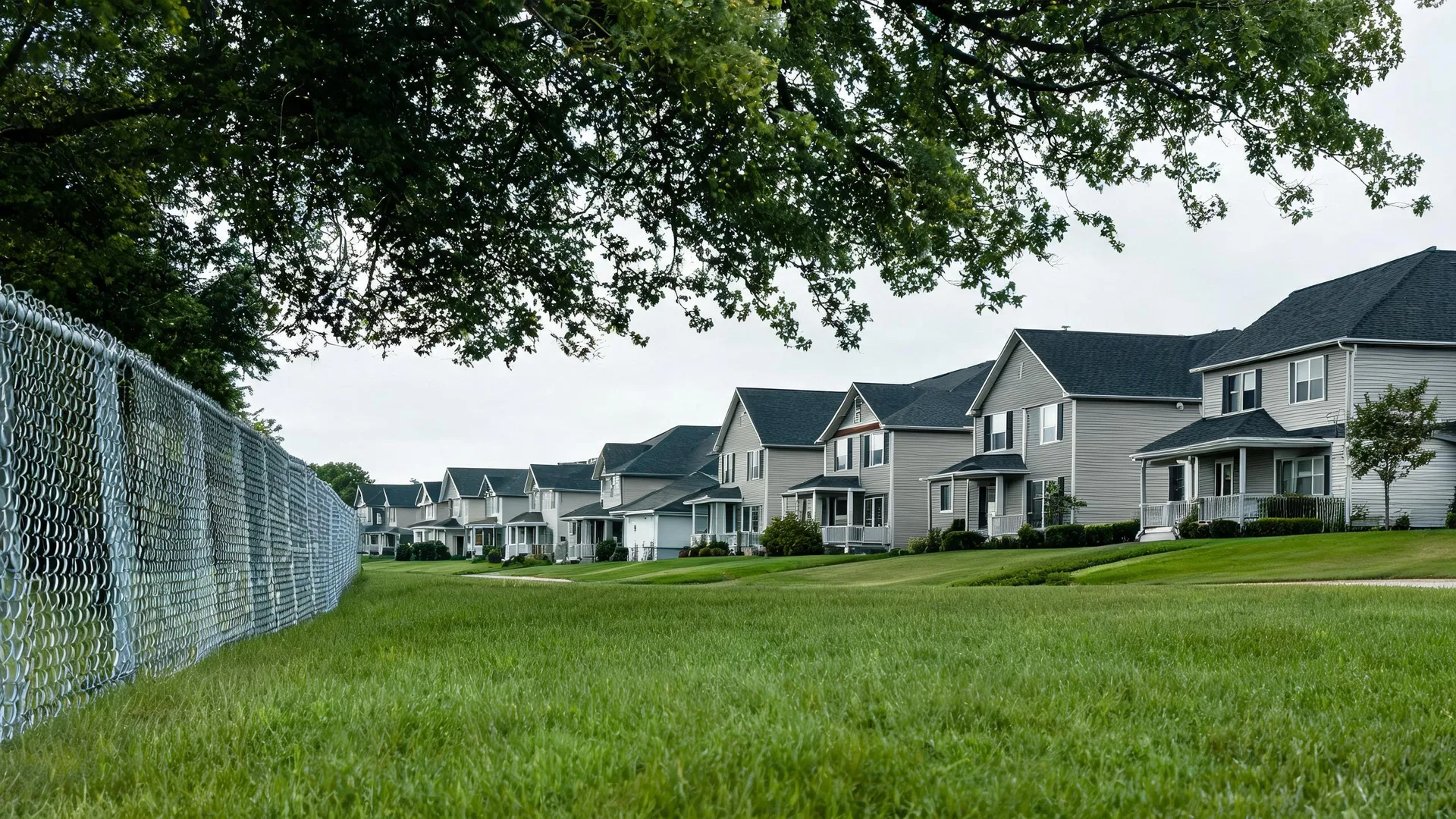
A row of two-story houses with gray siding and shingled roofs behind a wide mown lawn, with a chain-link fence at left and tree branches overhanging a pale sky.

Heat Pump Repair in Bismarck, ND

Tell us about the job

Takes about a minute. No obligation.

RepairHeat PumpBurleigh County, ND
Step 1 of 2

What ZIP code is the job in?

Weather that doesn't let up

Burleigh County logged 96 damaging wind events and 27 winter storms between 2015 and 2024, plus 74 hail events in that same stretch. The outdoor unit sits through all of it, year after year. Coils and cabinets take a beating that milder climates don't deal out.


Why that matters for your repair

A heat pump that's run through weather like that wears differently than one in a calmer spot. When a part fails, it's worth finding out whether years of that stress is the real cause. Replacing the part without catching that just sets up the next failure.

9 months
September through May, your system heats
2 months
July through August, it cools
5°F
the average winter night it heats against
80°F
the average summer afternoon it cools against
Isometric cutaway illustration of a house showing interior ductwork, an indoor air handler unit, and an outdoor condenser unit beside the building.
Your system heats September through May and cools July through August.

NOAA nClimDiv, 1991–2020 normals

Heat pumps in Burleigh County switch from heat to cooling in July and back to heat in September.

A part that barely held on all winter can fail outright the first hot week of July.

Half the homes here were built by 1988, new enough that your heat pump is likely still within its working life

Half the homes here were built by 1988
96 damaging wind events from 2015 to 2024
74 hail events from 2015 to 2024
Power here is cheap. A broken heat pump still wastes it every day.Burleigh County electricity runs 11.91 cents per kilowatt-hour, below most of the country.

If your heat pump came with the house, check when that was. Half the homes in Burleigh County were built in 1988 or later, and a unit that's original to a newer build hasn't necessarily logged the years the breakdown makes it feel like. That changes what a repair call is worth. A compressor or a reversing valve failing at year six is a warranty question first, a repair second. One failing at year fifteen is a different conversation. Either way, the fix is usually the same part, not a new system.

Find out what the weather did before you fix what broke

The outdoor unit has already taken years of wind, hail and winter storms before whatever's wrong with it now showed up. That kind of stress doesn't always point to the part that failed. Getting it looked at properly, not just patched, is what makes the fix hold.

Find a contractor
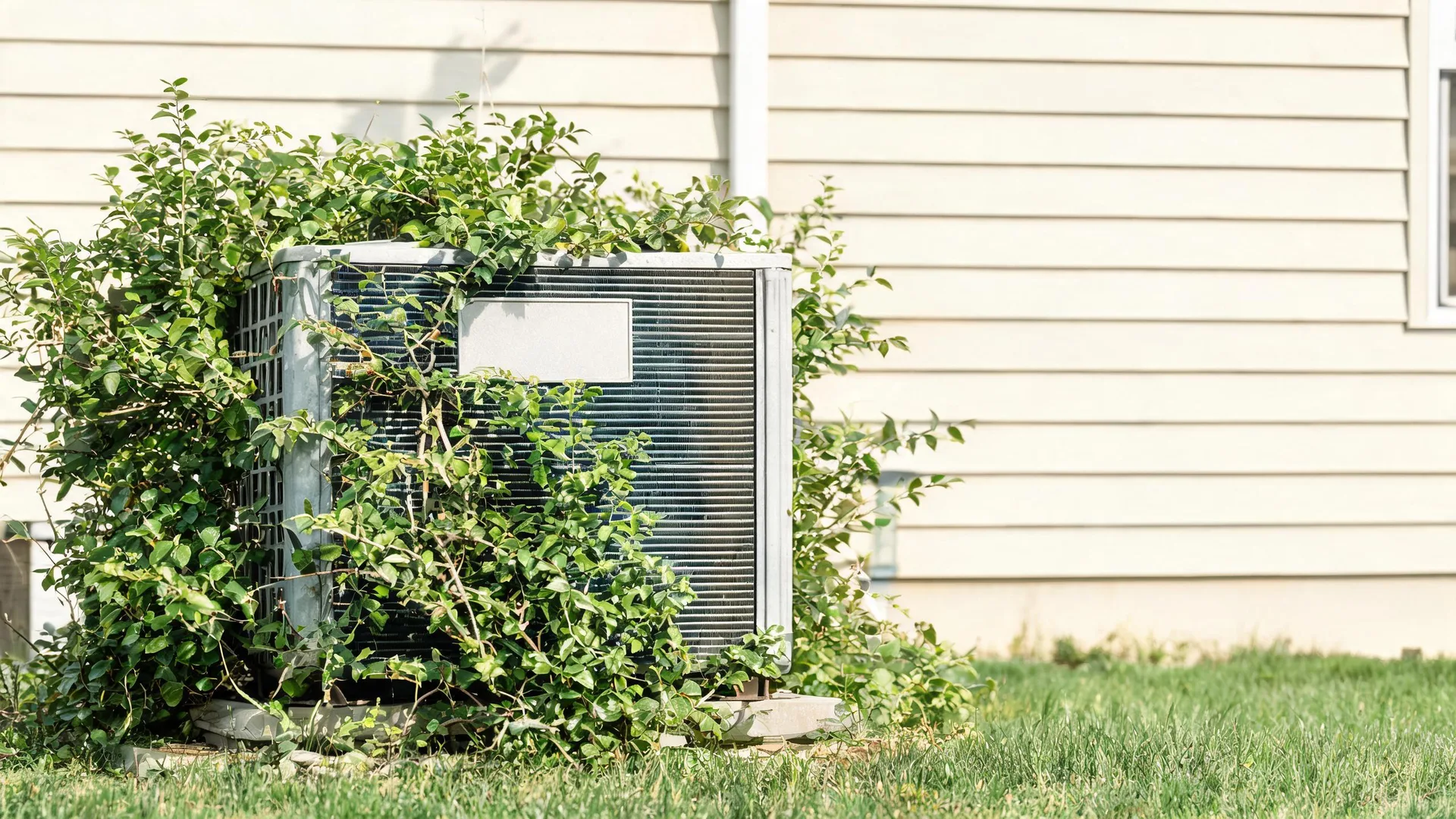
A residential heat pump outdoor unit mounted on a concrete pad next to a house with gray vinyl siding.

Running it through the problem rarely fixes the problem

A heat pump that's limping along doesn't fail cleanly. It fails a little more each day you let it keep running. A compressor working against a low charge runs hotter than it should, and heat is what kills a compressor over time. A reversing valve that's sticking will keep sticking, and each cycle it fails to switch cleanly leaves a little more wear on the parts around it. Ice on the outdoor coil is the clearest case: a unit that can't defrost properly buries the coil a little deeper each cycle, the airflow drops further, and the compressor ends up working against a block of ice instead of moving heat. None of that reverses itself by running longer. The parts around a failing one don't get a break while it struggles, they pick up the slack, and that's how a one part problem turns into a two part repair.

What you can check yourself

Look at the thermostat first. Make sure it's set to the mode you want and the batteries aren't dead. Check the outdoor unit for anything blocking it, leaves, a cover, snow piled against the cabinet. Look at the indoor filter and swap it if it's gray or clogged. Check the breaker panel for a tripped switch on either the indoor or outdoor unit. If the outdoor coil is caked in ice outside of a normal defrost cycle, that's worth noting but not worth chipping at yourself.

What to leave alone

Don't open the outdoor unit's cabinet or touch anything inside it. The refrigerant lines, the compressor and the electrical connections in there aren't a homeowner job, and low refrigerant isn't something you can top off like oil. If you smell something burning, hear grinding or clicking that wasn't there before, or see the outdoor fan not spinning while the unit is calling for heat or cooling, shut it off at the thermostat and leave it off until someone looks at it. Running it through a problem like that is how a failing part takes out the ones around it.

A heat pump that's cycling wrong or running low on charge still pulls power the whole time it's on, it just gets less heat or cooling out of it. That gap doesn't show up as a noise or a smell. It shows up on the bill next month. Waiting on a repair doesn't change what the electricity costs, it just means more of those bad cycles run before someone fixes the part causing them. Get it looked at while it's still one part, not after it's two.

A diagnostic visit starts outside, at the unit itself, before any panel comes off. A tech checks how it's running right now: what mode it's in, what the coil looks like, whether the fan is turning the way it should. From there it's gauges on the refrigerant lines and a meter on the electrical components, because a heat pump throwing the wrong symptoms can point to a dozen different causes and most of them look alike from the outside. A compressor that's struggling and a reversing valve that's stuck can both leave you with a unit blowing the wrong temperature of air. Reading the pressures and the amp draw is what tells those apart. Once the actual cause is found, you get a straight answer: what failed, what it takes to fix it, and whether it's worth doing.