





A chain-link fence runs along the left edge of a mowed lawn beside a row of two-story white and gray sided houses with covered porches, under leafy tree branches and an overcast sky.

Furnace Repair in Watford City, ND

Tell us about the job

Takes about a minute. No obligation.

RepairFurnace or heatingMcKenzie County, ND
Step 1 of 2

What ZIP code is the job in?

Your furnace in Watford City runs from September through May. That's nine months of the year it's expected to just work, through nights that average 7°F in December, January and February. A system carrying that kind of load wears differently than one that gets a few months off. Igniters, blower motors, pressure switches, all of it sees more cycles here than in milder places. When something acts up after a stretch of cold like that, it's usually not bad luck. It's the machine telling you what nine months of work does to it.

9 months
September through May, your furnace is on duty
7°F
the average winter night it heats against
16 winter storms
in ten years, the nights a failure hurts most
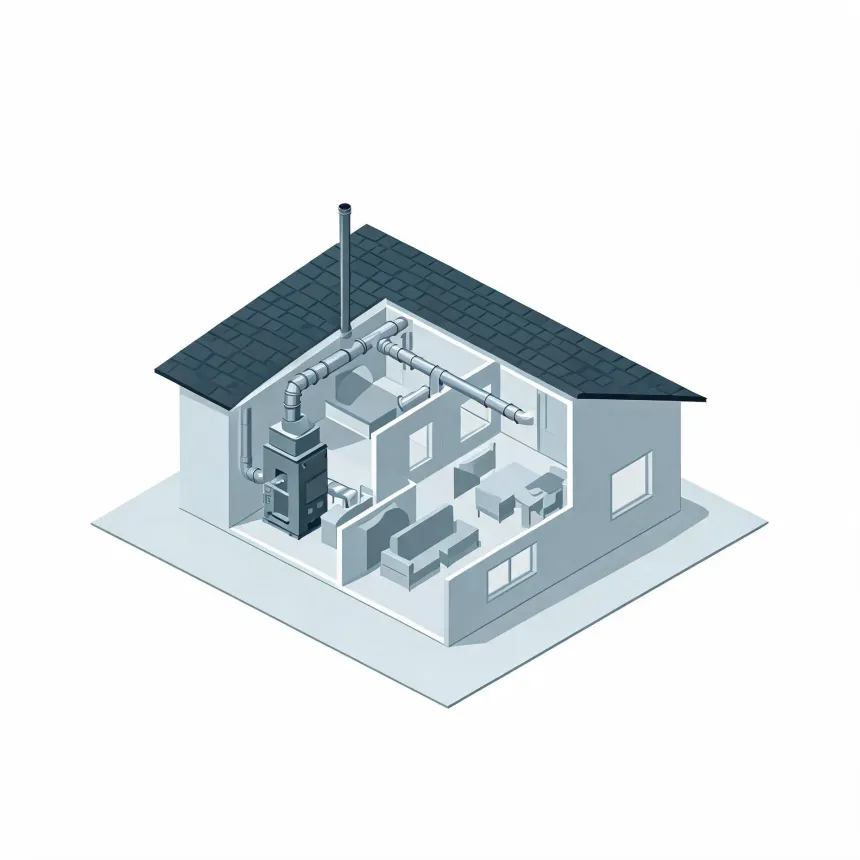
Isometric cutaway illustration of a single-story house with a dark shingled roof, showing a furnace with a flue pipe and branching ductwork running through interior rooms furnished with a sofa, table and chairs.
Your furnace works hardest from November through March.

NOAA nClimDiv, 1991–2020 normals

Electricity in North Dakota runs $33.73 per million Btu.

A furnace that's struggling burns more of it every night the temperature drops.

Nine months of heat means September is when the weak parts fail first

Heat runs September through May
Winter nights average 7°F
Climate zone 6A
This county's homes are newer than mostHalf the homes in McKenzie County were built in 2011 or later.

A furnace that's acting up after a run of cold nights isn't being dramatic. It's showing you the part that's closest to failing. Guessing at a fix wastes a trip and leaves the real problem for next week. A proper diagnosis means someone checks the igniter, the pressure switch, the blower, whatever's actually drawing the complaint, and finds which one is actually failing instead of swapping parts until something sticks. That matters more here than most places, because the next cold snap is never far off. Fix the part that's actually worn and it holds through the rest of the season.

Get it diagnosed properly

Your furnace works hard here, and that's usually what's behind the problem. Have it diagnosed properly so the fix lasts.

Find a contractor
A man in a cap, dark shirt and tan pants carries a worn canvas tool bag up concrete steps toward a dark blue front door with a sidelight window and a large planter beside it.
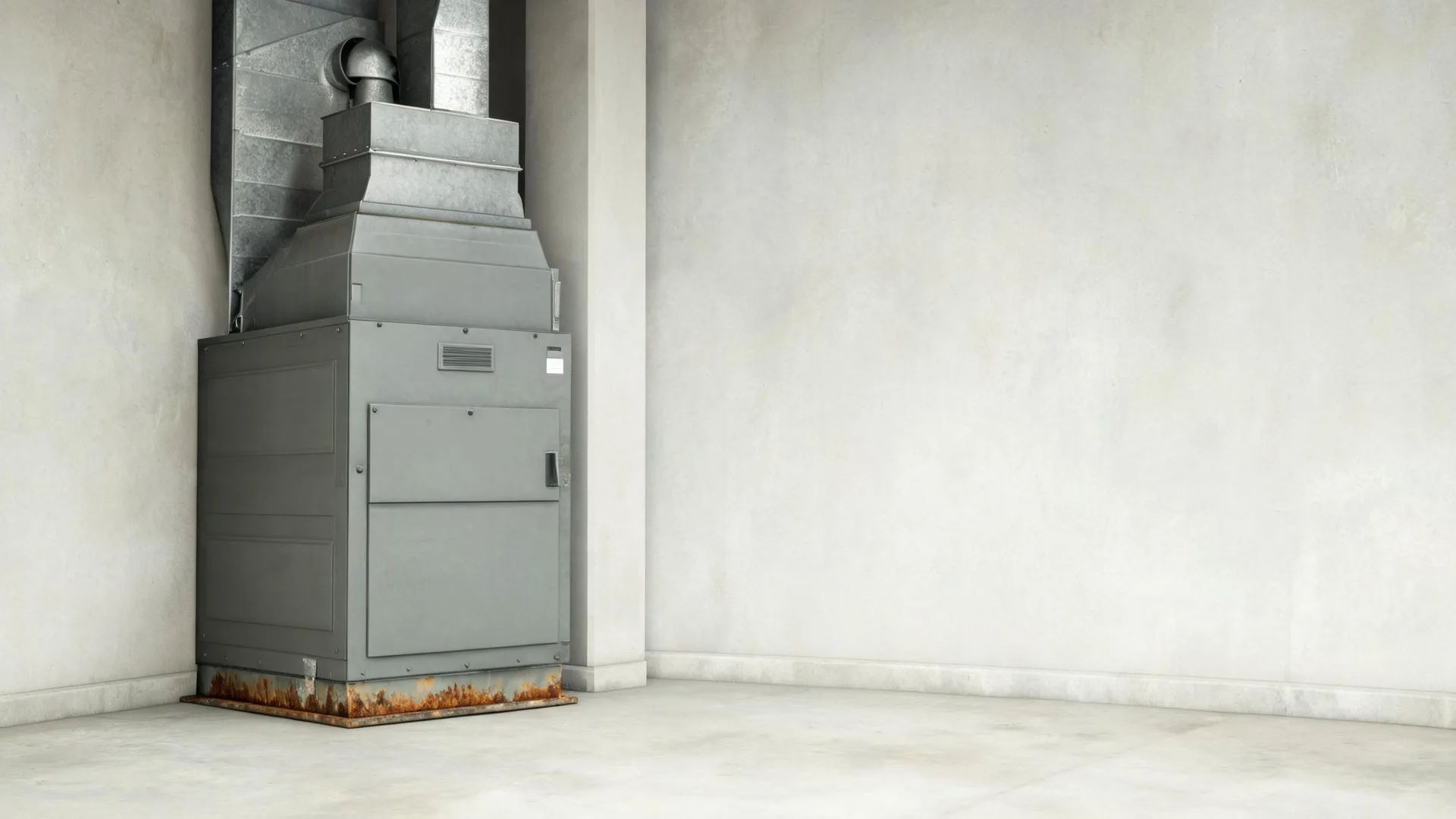
A gray gas furnace with attached ductwork and piping installed in an unfinished concrete basement.

Running it through the problem rarely fixes the problem

A furnace that's cracked a heat exchanger or dragging a weak draft can still limp along for a while, and that's the problem. Running it doesn't fix anything, it just adds more cycles on top of the part that's already failing. A pressure switch that's barely making contact will keep tripping until it doesn't make contact at all. A blower motor bearing that's starting to go won't heal from use, it'll wear faster carrying a load on the next cold night. Carbon monoxide from a cracked exchanger doesn't announce itself, it just builds a little more with every cycle the burner fires. Shutting the furnace off and calling someone catches the failing part while it's still just one part. Letting it run through more cold nights usually means that part takes something else down with it, the control board or the blower, and a small repair turns into a bigger one.

Heat exchangers crack from the same cycle that heats the house

Every time the burner fires, the heat exchanger expands, and every time it shuts off, it contracts. That cycle, thousands of times over, is what eventually opens a crack in the metal. It's not a defect, it's just the part wearing out the way it's built to eventually wear out.
Ignition parts fail quietly, then all at once

A hot surface igniter loses a little strength every time it heats up, and a flame sensor builds up a film every time it reads a flame. Neither gives much warning. The furnace just stops lighting one morning, and the part that was wearing down the whole time finally gives out.

Most people notice their furnace is in trouble before they can say why. The heat feels thinner than it should, or it runs longer to get the house to the same temperature it used to hit fast. Some notice a smell, a sharp one right when it kicks on, or a burnt dust smell that fades after a minute. Some notice sound, a rattle that wasn't there before, a boom when the burner lights, a blower that whines going up or down. Short cycling is another one, the furnace firing, running a few minutes, shutting off, firing again, never settling into a normal run. None of these mean the same thing every time, but every one of them means a part is already struggling with the job, not about to start.

A diagnostic visit starts with questions, not tools. What the furnace is doing, when it started, whether it's one symptom or several. Then it moves through a sequence. A tech checks the thermostat call, watches the ignition sequence start to finish, reads the flame where it's visible, checks how the pressure switch responds, pulls the blower access to look at the motor and wheel. Each step rules something out or points at something. A part can sit still and look fine and still be the one dropping out once the furnace is actually running a full heat call, so the tech is watching it work, not just looking at it. The visit ends with a part named and a reason given. Not a part swapped and hoped for.