





A snow-covered small-town street at dusk, lined with illuminated two-story houses and a grain elevator on the horizon.

Furnace Repair in Velva, ND

Tell us about the job

Takes about a minute. No obligation.

RepairFurnace or heatingMcHenry County, ND
Step 1 of 2

What ZIP code is the job in?

A furnace in Velva runs about nine months a year, from September through May. Overnight lows average 3°F across December, January and February, and the furnace has to make up that difference every night it runs. That's a long season with hard nights mixed in. It adds up on the parts that cycle the most, things like the igniter, the blower motor, the pressure switch. A furnace working that schedule shows wear sooner than one that only kicks on a few months a year. Whatever's going wrong with yours right now likely traces back to that workload.

9 months
September through May, your furnace is on duty
3°F
the average winter night it heats against
30 winter storms
in ten years, the nights a failure hurts most
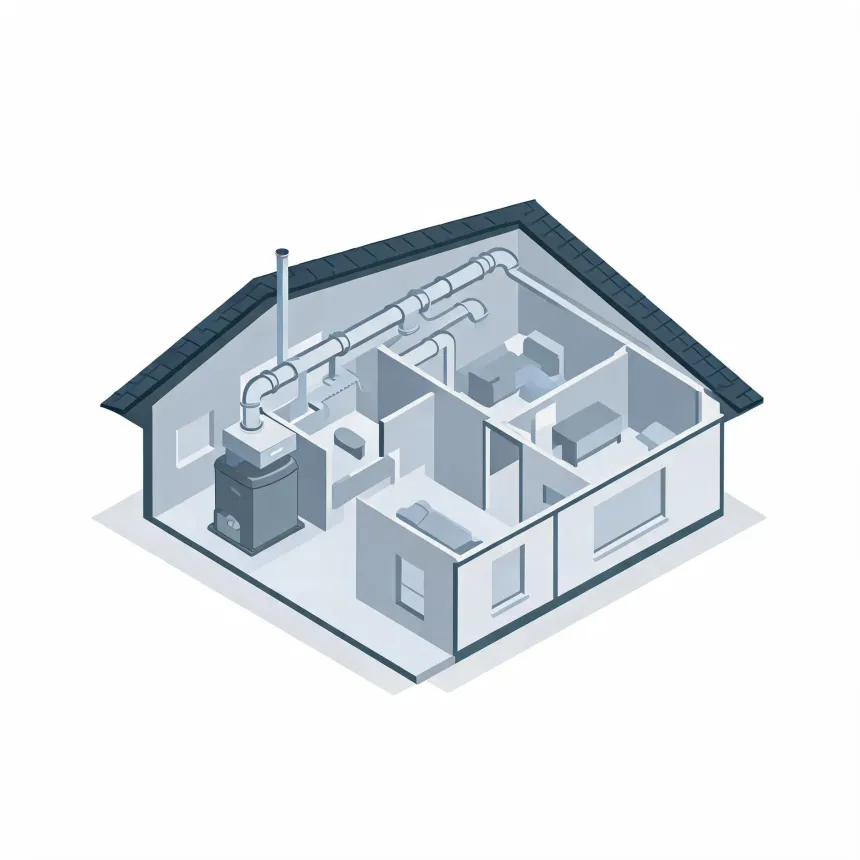
Isometric cutaway illustration of a single-story house showing interior rooms, ductwork running along the ceiling, a flue pipe through the roof, and a dark furnace unit in one corner.
Your furnace works hardest from November through March.

NOAA nClimDiv, 1991–2020 normals

Furnaces in McHenry County start running in September.

August is the month to get a weak part fixed before the season puts a full load on it.

Half the homes in McHenry County were built in 1966 or earlier, and the furnace may be original to the house

Half the homes here were built by 1966
Heat runs September through May
Winter nights average 3°F

A repair call this time of year is rarely bad luck. The part that's failing has been cycling on and off for months already, and whatever strain the season put on it is still there when the tech shows up. That's why a proper diagnosis matters more than a quick swap. Replacing the igniter when the pressure switch is the real problem just means another call later. Get the actual cause found and fixed once, not patched.

Ask how much life is left before you pay for the repair

If your furnace came with the house, it may be older than you think. Half the homes in McHenry County were built in 1966 or earlier, and a furnace that old is working on borrowed time. Before you pay for the part that failed, ask the tech how much life is left in the rest of it.

Find a contractor
A man in a dark long-sleeve shirt and tan work pants carries a canvas tool bag up porch steps toward a navy blue front door, with a potted shrub beside the entry.
A gray high-efficiency gas furnace installed in an unfinished basement, surrounded by gas lines, a condensate drain, and sheet-metal ductwork.

What to check before you pick up the phone

Start with the thermostat. Make sure it is set to heat and the target temperature is above the room temperature. Swap the batteries if it takes them. Next check the filter. A filter packed with dust chokes off airflow, and a furnace that cannot breathe will shut itself down or run in short bursts. If it looks gray and matted, change it. Check the breaker and the furnace switch too, the one that looks like a light switch near the unit or at the top of the basement stairs. It gets bumped off more often than people think. If the furnace has a standing pilot, check whether it is lit. If it uses an igniter, listen for the sequence. The inducer motor hums on first. Then a click. Then a brief glow or spark before the burners catch. If you hear the inducer running but never hear ignition, tell the tech that. It points straight at the igniter or the flame sensor instead of something else. Last, walk outside and check the intake and exhaust vents for anything blocking them, leaves, snow, a nest. If everything checks out and the furnace still will not run, stop there. The cabinet and the gas valve are not something to open up on your own.

A small problem feeds on itself

A cracked flame sensor still lets the furnace run, just worse. It misreads the flame, the control board cuts fuel early, and the burners short-cycle instead of holding a steady flame. Every short cycle is another cold start, and cold starts are what wear an igniter down. Left alone, the sensor problem creates an igniter problem that didn't exist before.
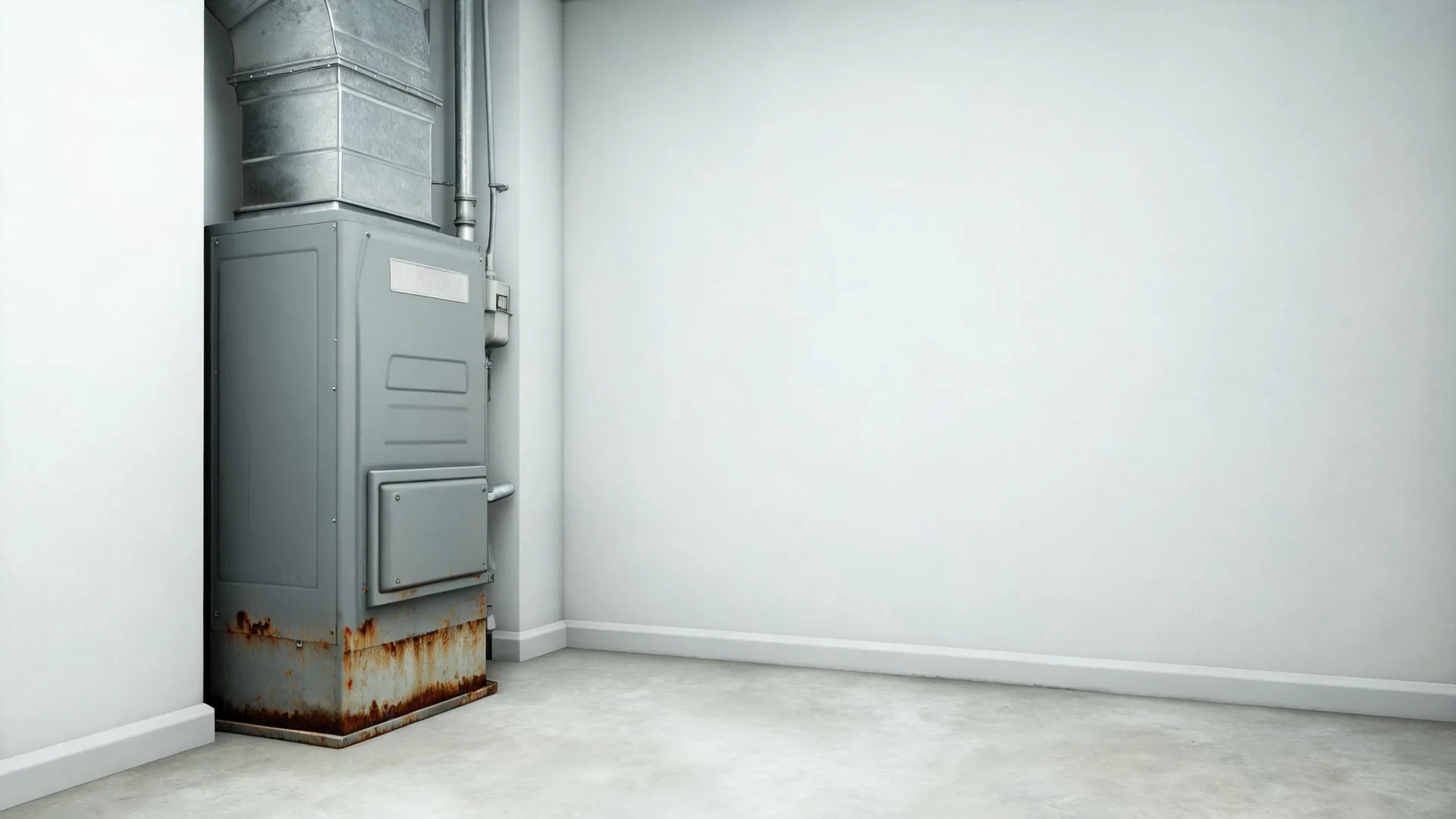
Running it only hides the clock

A furnace that still produces heat feels fine to the person standing next to the vent. But a blower motor grinding under a failing bearing doesn't announce itself until it seizes. A pressure switch that's barely making contact doesn't warn you before it finally doesn't. The furnace keeps heating right up until the part it was leaning on gives out completely, usually on the coldest night it has to work.

Most furnace failures trace back to one of a handful of parts. The igniter is the one that goes most often, since it heats up and cools down every single cycle and the wire inside gets brittle with age. The flame sensor is close behind. It sits in the burner flame and builds up a film over time, and once that film gets thick enough it can't sense the flame anymore even though the flame is right there. The blower motor fails a different way, usually a bearing that wears down slowly until the motor is loud, then hot, then seized. Pressure switches fail from the inside, a diaphragm that gets weak and stops closing the circuit reliably. None of these parts usually fail out of nowhere. They weaken over a lot of cycles before the one that finally doesn't work.

A diagnostic visit starts before the panel ever comes off. A tech asks what the furnace was doing right before it quit, whether it was short cycling, running cold, or not starting at all, because that narrows things fast. Then comes a visual check of the burners, the wiring, the connections at the control board, looking for scorch marks, loose splices, anything obviously off. Most of the real work happens with a multimeter. Each part gets tested against the numbers it's supposed to hit, not guessed at by eye. The igniter gets checked for resistance, the flame sensor for the microamp signal it's putting out while the burners are lit, the pressure switch for continuity when the inducer kicks on. A part can look fine and still fail every one of those tests. That's the point of running them instead of just replacing whatever looks old.