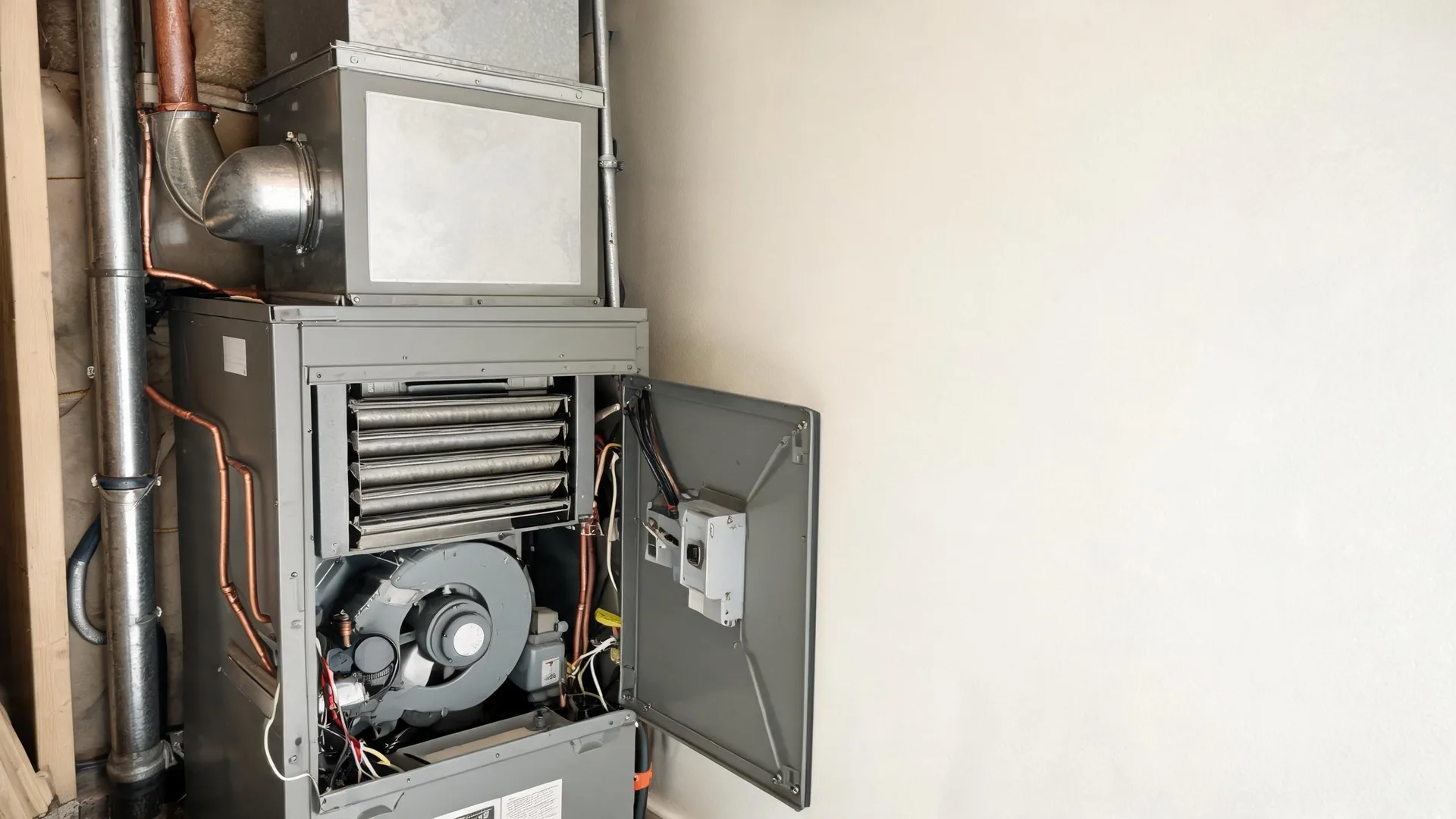
Nine months of runtime
Furnaces in Barnes County run from September through May. That's most of the year asking the igniter, the blower motor and the heat exchanger to cycle on and off without a real break.
Takes about a minute. No obligation.
Furnaces in Barnes County run from September through May. That's most of the year asking the igniter, the blower motor and the heat exchanger to cycle on and off without a real break.
Overnight lows average 3°F through December, January and February. On those nights the furnace runs longer stretches to keep up, and that's when a weak part finally gives out.

NOAA nClimDiv, 1991–2020 normals
Furnaces in Barnes County start running in September.
August is the month to get a furnace looked at, before it has to carry a full season.




A furnace that has been running hard for months doesn't usually fail without warning. It gives some sign first. A longer cycle than normal. A smell when it kicks on. A flame that looks different than it used to. That's worth having a tech look at rather than waiting to see if it clears up. They can tell you whether it's a weak part or something more serious. Catching it now means it gets fixed on your schedule instead of on a night when it's 3 below outside.
A furnace short on parts or airflow still pulls the same power, it just does less with it. At $33.73 per million Btu, that adds up fast on a furnace that's not running right. Get it looked at before another month of high bills goes by.
Find a contractorIf your furnace is original to the house, ask the tech straight out how much life it has left before you agree to the repair. A repair makes sense on a furnace with good years left in it. On one that's already old for its type, the same money might just be a down payment on a replacement not long after. Get that answer before you pay for the part, not after.
A cracked heat exchanger starts as a hairline. Left running, the metal keeps flexing with every cycle and the crack grows. A blower motor with a worn bearing keeps drawing power to turn a shaft that's binding, and the motor heats up more than it should. None of these fix themselves by running longer. They wear further along the same path.
A dirty flame sensor lets the burner shut off late, so the igniter cycles more than it was built for. Weak airflow from a clogged filter makes the heat exchanger run hotter than it's designed to. The parts in a furnace depend on each other, so a problem left alone doesn't stay contained to the one part that started it.
Before you call, check the filter. Pull it out and hold it up to a light. If you can't see through it, swap it, that alone solves more bad-airflow calls than anything else. Next, check the thermostat is set to heat and the batteries aren't dead, simple as that sounds. Go look at the furnace itself and see if the switch on the side, the one that looks like a light switch, is flipped on, and check that the service panel breaker hasn't tripped. If you've got a standing pilot, see if it's lit. None of this is risky and none of it requires opening the cabinet. If the furnace still won't run after that, the problem is inside it, and that's where it's time to call someone.
Repair versus replacement comes down to what's actually worn out. A furnace is a collection of parts with different lifespans. An igniter or a flame sensor is cheap to swap and fixing one tells you nothing about the rest of the furnace. A cracked heat exchanger is different. That's the part that separates the flame from the air moving through your house, and it's not something a tech patches, it's something that gets replaced, and on an older unit that cost can be close to a new furnace anyway. The question worth asking isn't just what's broken, it's whether the rest of the furnace is in shape to keep running once this one thing is fixed. A tech who's inside the cabinet can tell you that. One who's only heard the symptom over the phone can't.