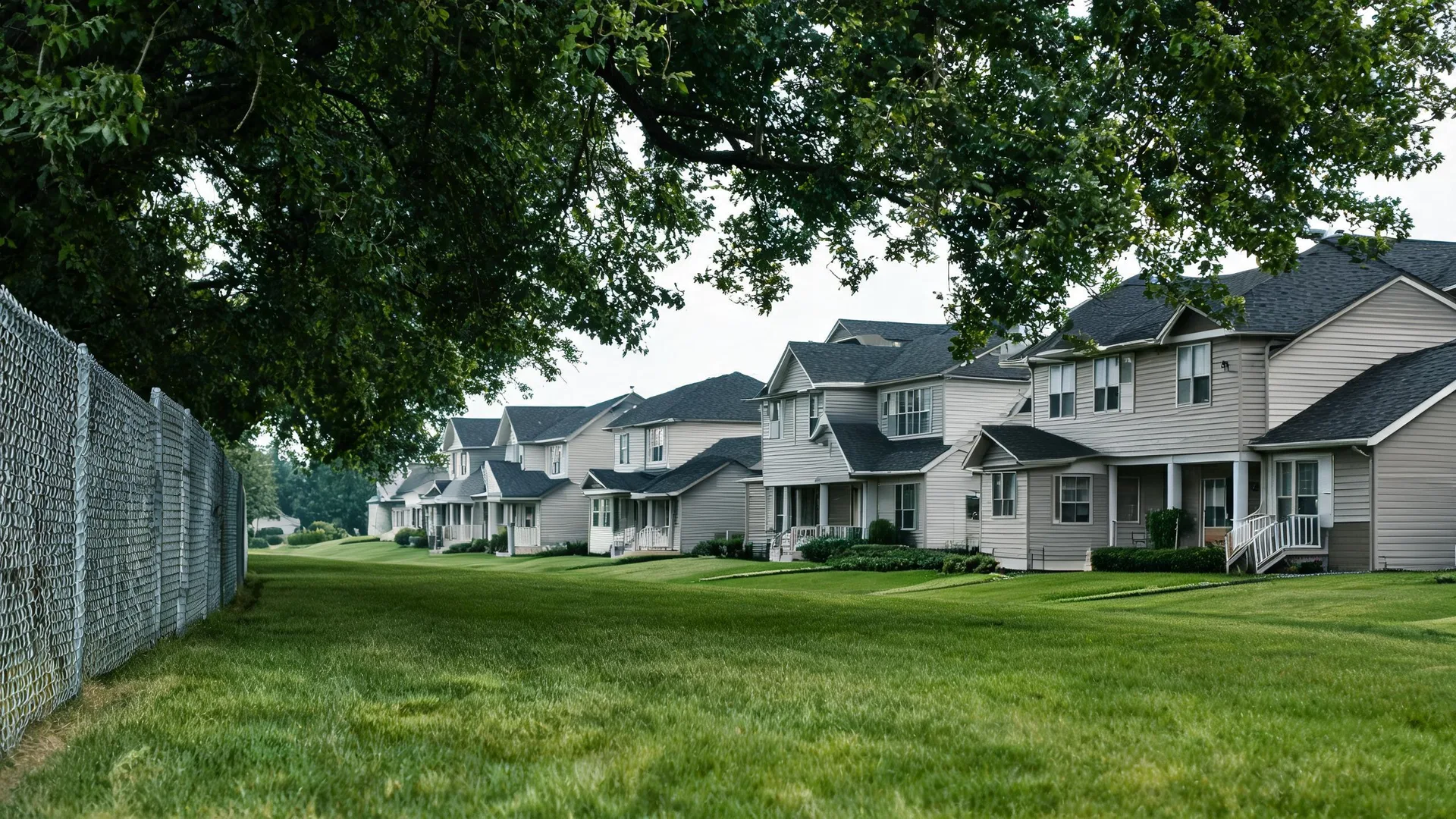




A row of two-story houses with gray vinyl siding and shingled roofs behind a wide mown lawn, with a chain-link fence at left and large tree branches overhead.

Furnace Repair in Medora, ND

Tell us about the job

Takes about a minute. No obligation.

RepairFurnace or heatingBillings County, ND
Step 1 of 2

What ZIP code is the job in?

Your furnace in Medora runs about nine months out of the year, September through May. That overnight low averages 8°F across December, January and February, and the furnace is what stands between that cold and a warm house. A system working that many months wears parts sooner than one that gets long stretches of rest. The igniter or the blower motor acting up now has likely been under steady strain since fall. Whatever's going wrong, have it looked at properly so the fix holds through the months still ahead.

9 months
September through May, your furnace is on duty
8°F
the average winter night it heats against
18 winter storms
in ten years, the nights a failure hurts most
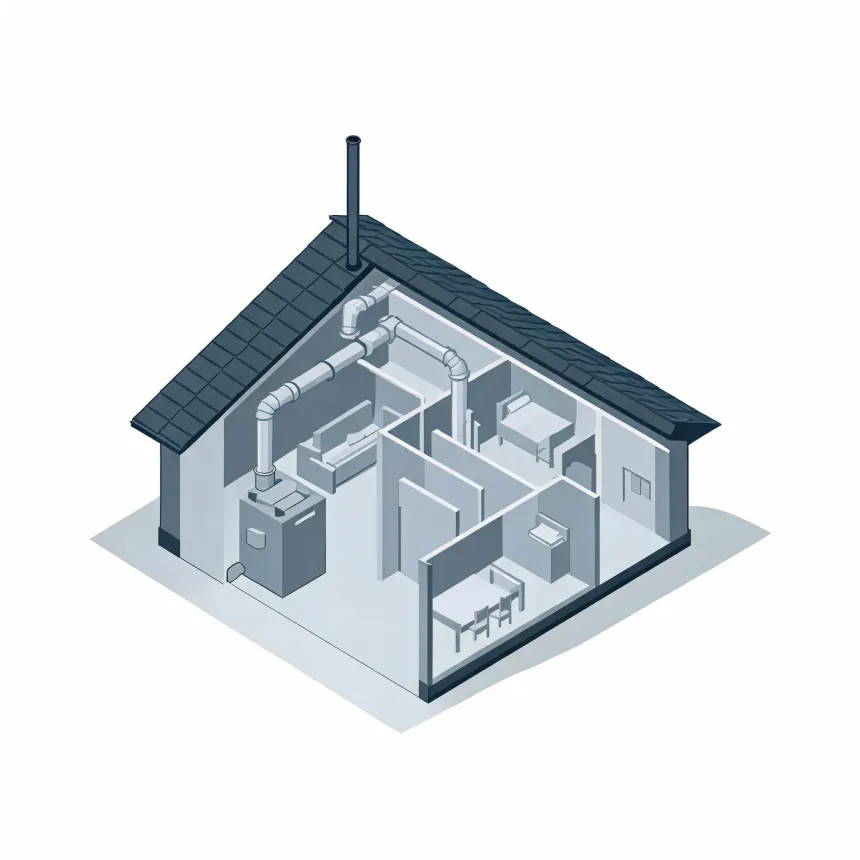
Isometric cutaway illustration of a small single-story house showing interior rooms with furniture, a furnace unit with attached ductwork running to a roof flue, and a dark shingled roof.
Your furnace works hardest from November through March.

NOAA nClimDiv, 1991–2020 normals

Furnaces fail one part at a time, the igniter, the blower motor, the flame sensor, not all at once.

A single worn part on a furnace that runs fine otherwise is almost always a repair, not a reason to replace it.

Nine months of heat means September is when a weak part finally gives out

Heat runs September through May
Winter nights average 8°F
Climate zone 6A
Medora winters don't give a furnace much restHeat runs September through May, with overnight lows averaging 8°F in December, January and February.

If your furnace came with a newer build in Medora, that's worth knowing before you decide anything. A system with years of expected life left is almost always worth repairing when one part fails. Replacement makes more sense when a unit is old and starting to fail in several ways at once, not when it's young and dealing with one bad igniter or a worn blower motor. Ask whoever comes out how old the unit actually is before you agree to anything bigger than a repair.

Get it diagnosed properly

Your furnace works hard here, and that's usually what's behind the problem. Have it diagnosed properly so the fix lasts.

Find a contractor
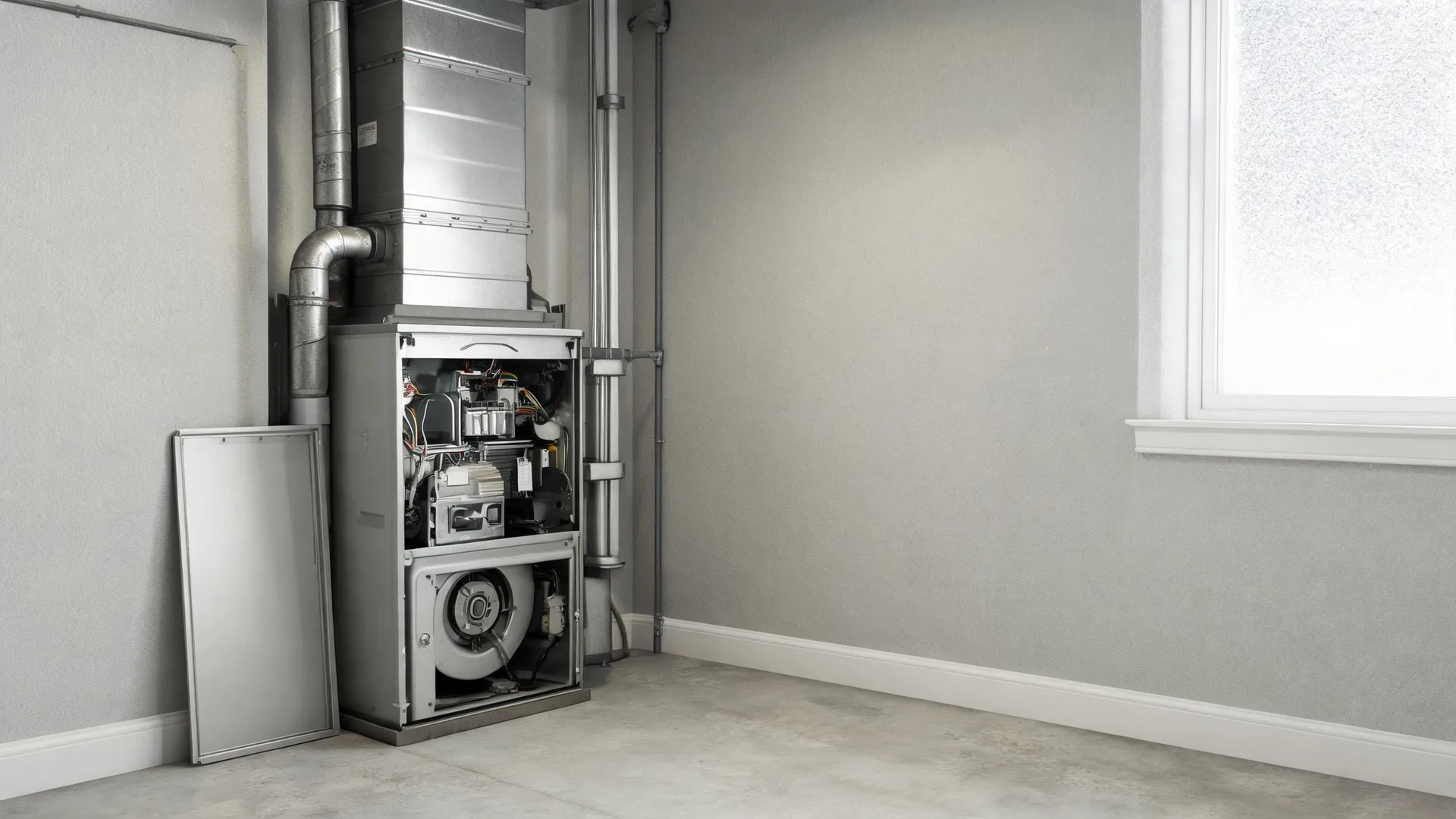
A gray residential gas furnace installed in an unfinished basement, connected to sheet-metal ductwork and PVC pipes.

A problem that's small today doesn't stay that way while the furnace keeps firing

A cracked igniter still lights the burners. A blower motor with a bad bearing still pushes air. So the furnace keeps running, and most people let it, since the house is still warm. But every cycle after that first sign of trouble puts more load on a part that's already failing, and on whatever is near it. A struggling blower motor draws more current and runs hotter, which wears the bearing faster and can take the motor out completely instead of leaving it repairable. A failing igniter that still mostly works will eventually fail to light the burners at all, usually on the coldest night it's asked to work. Heat exchangers crack the same way, metal flexing under heat over and over until a small crack turns into a bigger one. None of this means shut the furnace off and freeze. It means the day something first seems off, a short cycle, a new sound, a smell that wasn't there before, is the day to get it looked at, not the week after.

What you'll actually notice first

Furnace trouble rarely announces itself all at once. Short cycling is one of the clearest signs, the furnace fires up, runs a few minutes, then shuts off before the house warms. Air coming out of the vents can feel cooler than it used to, even while the furnace is running. A new sound is worth paying attention to, a rattle, a squeal when it starts up, a clicking that keeps repeating. A burning dust smell is normal the first time the furnace runs for the season. That same smell showing up weeks into regular use is not.
Why these signs are worth acting on

A sound or a smell does not tell you which part is failing or how close it is to quitting. A loose panel and a cracked heat exchanger can both show up as a rattle. A dying igniter and a failing flame sensor can both show up as short cycling. Guessing from the symptom alone usually points the wrong way. Getting a furnace looked at as soon as something seems off is what keeps a small failing part from choosing the coldest night to stop working completely.

There's a short list worth checking before you pick up the phone. The filter is the first thing to look at, a clogged one starves the furnace of airflow and can cause a lot of what feels like a bigger problem. Check that the thermostat is set to heat and the setting is actually above room temperature, it sounds obvious until it's the answer. Look at the furnace switch, the one that looks like a light switch on or near the unit, and make sure it hasn't been bumped off. If the furnace has a standing pilot, check whether it's still lit. Walk the vents and make sure none are closed or blocked by furniture or rugs, since that alone can cause uneven heat or short cycling. Breakers are worth a look too, a tripped one will stop the furnace cold with no warning at all. None of this fixes a cracked heat exchanger or a dying igniter, but it rules out the simple stuff before you pay someone to find out the switch was off.

A repair decision comes down to how many things are going wrong at once, and how old the furnace already is. One failed igniter or one worn blower motor on an otherwise sound furnace is a repair, almost always. Fixing a single part is nowhere near the cost of replacing the whole system, and one failure doesn't mean the rest of the unit is in trouble. It's a different conversation when the furnace is old and several things are failing close together, a cracked heat exchanger alongside a blower that's already weak, because at that point you're paying to fix one thing while the next is already lining up behind it. The furnace itself usually tells you which situation you're in, if you ask the right questions before agreeing to anything bigger than a repair.