






A gray forced-air furnace with sheet-metal ductwork stands in an unfinished basement with exposed wooden joists, concrete walls, and a hanging incandescent bulb.

Furnace Repair in McClusky, ND

Tell us about the job

Takes about a minute. No obligation.

RepairFurnace or heatingSheridan County, ND
Step 1 of 2

What ZIP code is the job in?

Furnaces in Sheridan County run from September clear through May, close to nine months of the year. That's most of the year spent heating against overnight lows that average 4°F in December, January and February. A furnace built for occasional cold snaps and one built to hold a house above zero for weeks at a stretch wear differently. The igniter cycles more. The blower motor logs more hours. When something starts acting up after a stretch like that, it's usually not bad luck. It's a part that's been working since September finally wearing down.

9 months
September through May, your furnace is on duty
4°F
the average winter night it heats against
25 winter storms
in ten years, the nights a failure hurts most
Isometric cutaway illustration of a single-story house showing interior rooms, furniture, a dark furnace unit with a tall vertical flue pipe, and ductwork running under the pitched shingle roof.
Your furnace works hardest from November through March.

NOAA nClimDiv, 1991–2020 normals

Check the thermostat batteries and the switch on the furnace itself before anything else.

A dead battery or a flipped switch looks exactly like a broken furnace, and it rules out the simplest answer first.

Nine months of heat means September is when a weak furnace shows it

Heat runs September through May
Winter nights average 4°F
Climate zone 6A
Heat that costs more herePropane ran $17.33 per million Btu in North Dakota in 2024. A furnace running rough burns more of it every month.

A furnace that's been cycling since September doesn't fail at a convenient time. It fails when the igniter or the blower finally gives out, which is often the coldest week of the year. That's when a proper diagnosis matters more than a quick patch. A tech who checks the igniter, the flame sensor and the blower motor together can tell you if one part quit or if the whole system is nearing the end. Fixing the symptom without finding the cause just means another call in a few weeks, likely on a colder night than this one.

Before you fix it again, find out what's left in it

Half the homes in Sheridan County were built in 1967 or earlier. A furnace in a house that old may be the original one, or close to it. Before paying for another repair, ask the tech how much life is actually left in the system.

Find a contractor
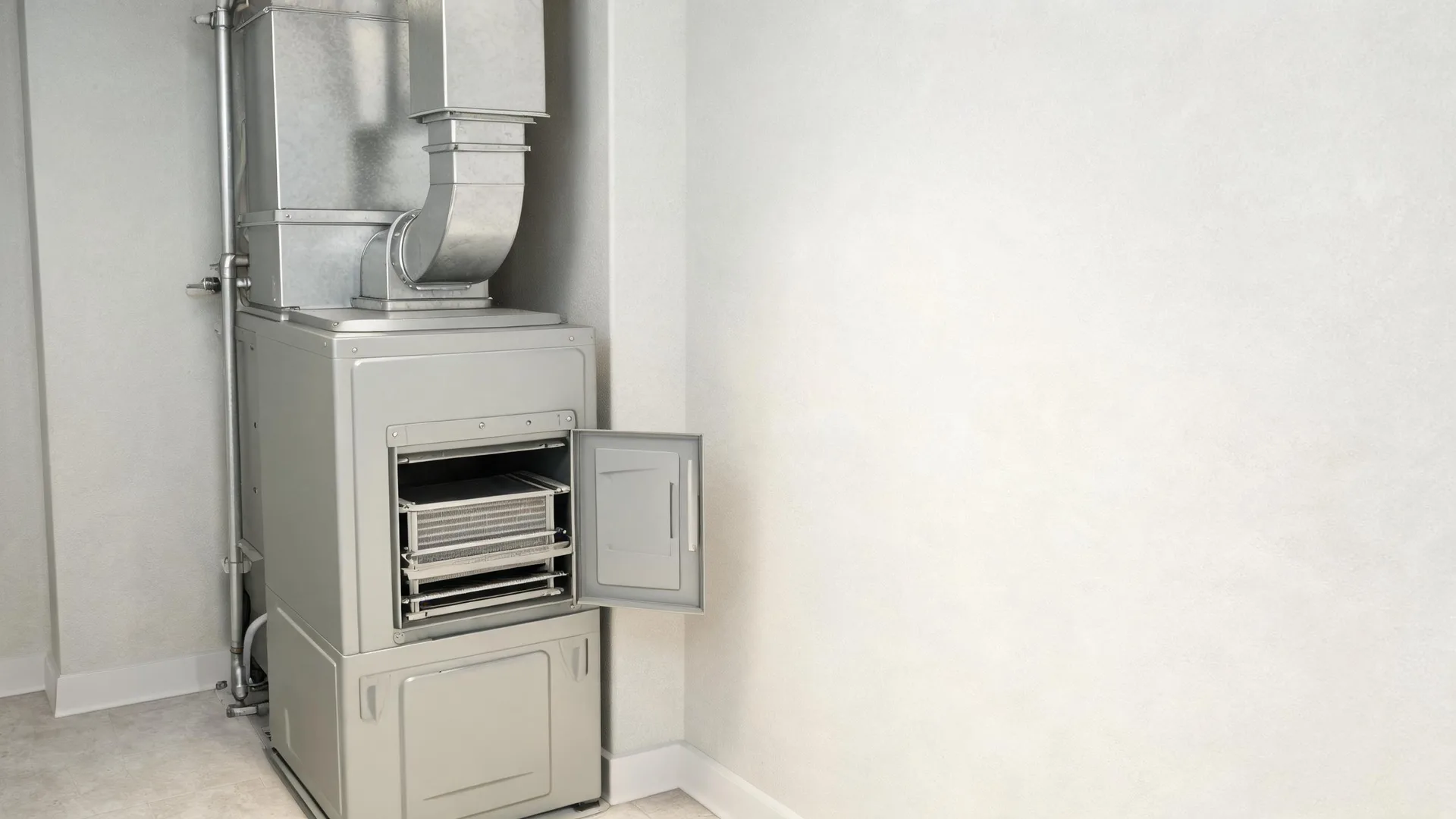
A gas furnace with attached ductwork, gas piping, and condensate lines installed in a concrete-block basement.

A small problem now runs on the same schedule as the furnace

A flame sensor coated with a thin layer of residue still lets the furnace light, just for a shorter window each cycle. Run it another week and the furnace starts locking out mid-cycle instead of just struggling. A blower motor with worn bearings makes a noise before it seizes, and if the noise gets ignored, the motor can take the limit switch or the control board down with it when it finally quits. A cracked heat exchanger is the one that matters most. It usually starts small, and heat or a weak flame can grow that crack over time. Letting the furnace keep running on a problem like that doesn't just risk a bigger repair. It risks carbon monoxide leaking into the house. None of these get better by waiting. They get worse at the pace the furnace keeps running, which this time of year is most of the day.

What you'll actually notice first

Most furnace trouble shows up as sound or smell before it shows up as cold air. A grinding or rattling blower, a burnt or metallic smell from the vents, short cycling where the furnace fires and quits before the house warms up, or a burner flame that's yellow instead of blue. Any of these means something's already failing, not about to fail.

Why noticing early changes the job

A furnace that still runs but sounds wrong is a different repair than one that won't start at all. Catch the grinding blower or the weak flame while it's still running and a tech is replacing one part. Wait until it quits outright and the diagnosis has to cover everything that part could have damaged on its way out.

An unfinished basement featuring exposed ceiling joists, a metal HVAC unit with round ductwork, a hanging light bulb, and scattered boxes and debris along the left wall.

A new furnace would cut about $220 a year off heating for a typical Sheridan County home.

  • A new high-efficiency furnace$930 a year
  • An older furnace$1,150 a year

Estimates for a typical Sheridan County home, compared with an older unit built to the previous federal minimum, from EIA household energy data, North Dakota fuel prices and NOAA climate normals. Your home will differ.

Repair makes sense when one part has failed and the heat exchanger is sound.

Replacement makes sense when the heat exchanger is cracked or the furnace keeps needing parts.

A repair makes sense when the rest of the furnace is sound and the failing part is one a tech can point to and replace. It stops making sense when the repairs start stacking up, each one fixing a different part while the real issue is a cabinet that's simply old. Age works against a furnace in ways a single repair can't fix. Heat exchangers thin out over years of firing and cooling. Control boards see enough power cycles that the solder joints get brittle. A blower motor can be replaced on its own, but if the bearings went because the whole unit is old, something else is next. The question worth asking isn't just what broke, it's whether this furnace has been reliable up to now or whether this is the latest in a string of calls. A furnace that's needed a tech out multiple times in one season is telling you something a single repair won't fix.