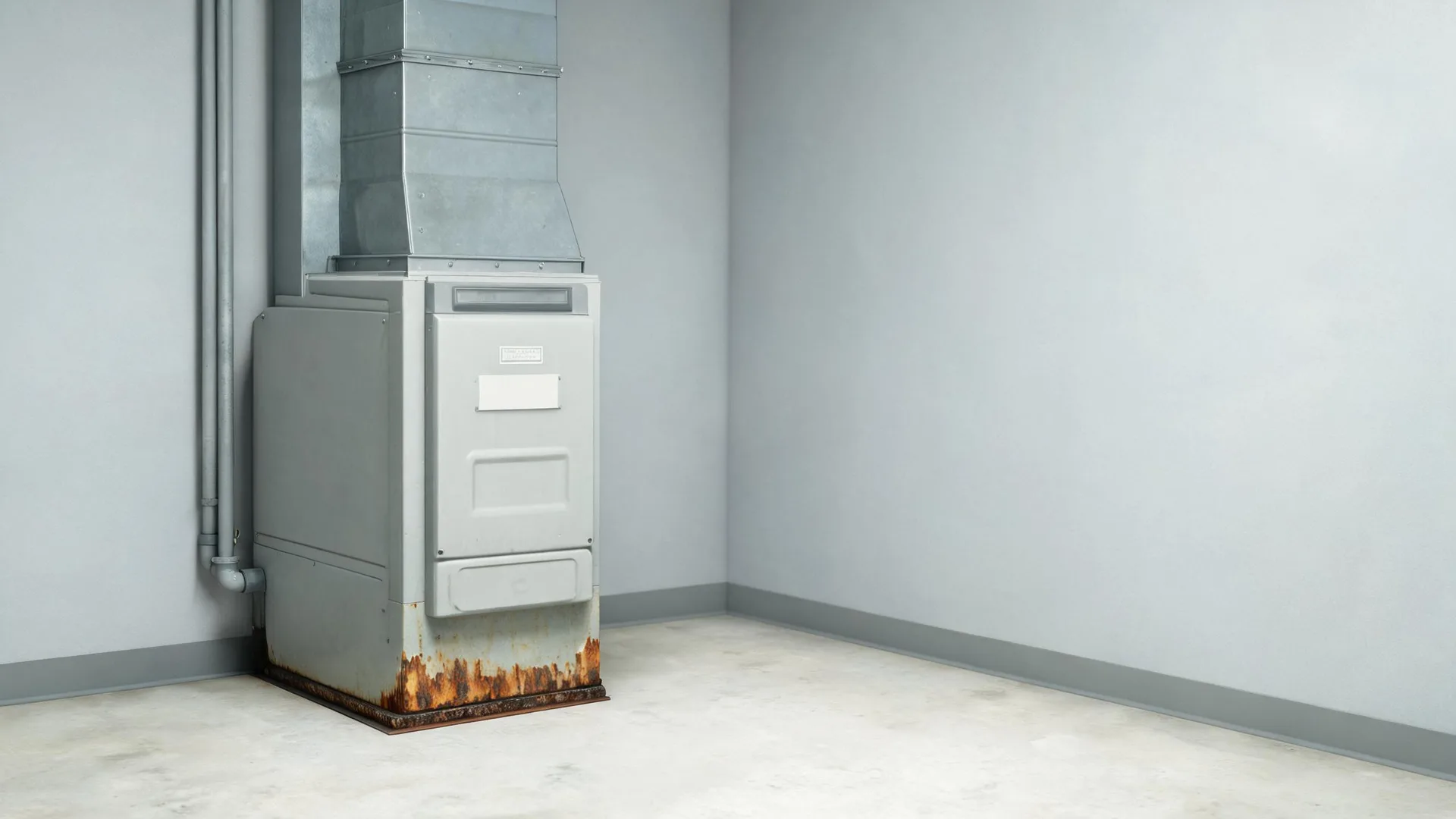
Nine months of heat a year
Furnaces in Lisbon run from September through May, with only a few months of rest in summer. That's the burner, the igniter and the blower motor working most of the year, not just through the coldest stretch.
Takes about a minute. No obligation.
Furnaces in Lisbon run from September through May, with only a few months of rest in summer. That's the burner, the igniter and the blower motor working most of the year, not just through the coldest stretch.
A furnace running nine months a year wears parts sooner than one that only runs a few weeks of the winter. When something fails, it's worth finding out why it failed, not just swapping the part, so the same issue doesn't show up again in January.
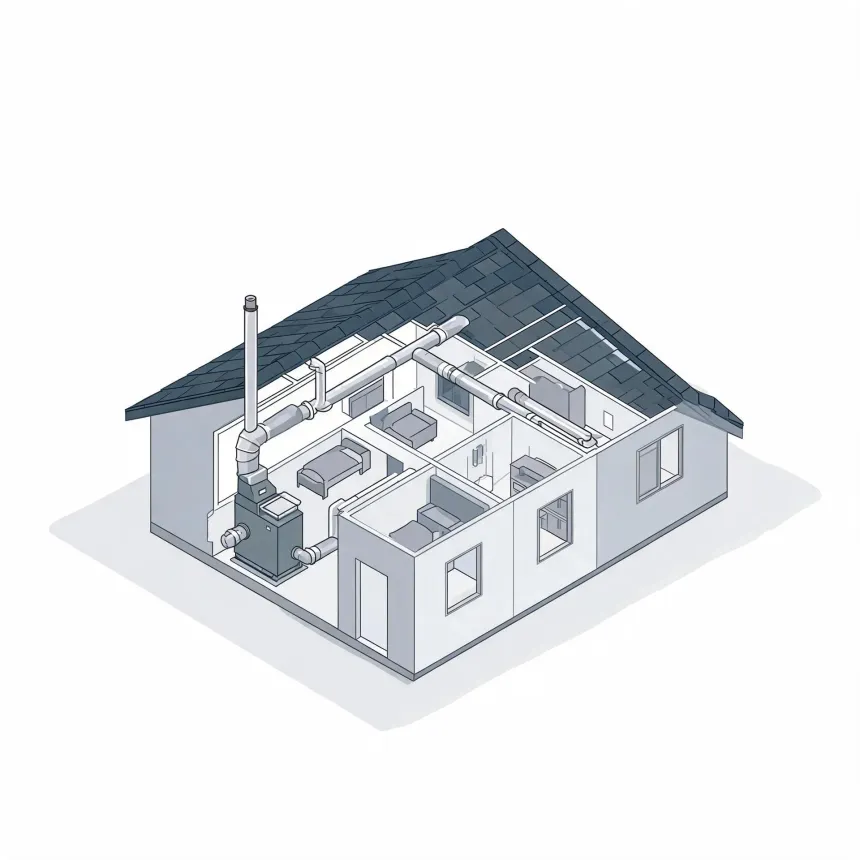
NOAA nClimDiv, 1991–2020 normals
A cracked heat exchanger means a new furnace, not a repair.
Almost everything else on a furnace, from the igniter to the blower motor, can be replaced on its own.




When a part fails on a furnace that runs nine months a year, it's worth asking why before swapping it out. A technician who checks the pressure switch, the wiring and the airflow around a failed part can usually tell whether it wore out on its own or something else is driving it. That matters most on a night near 5 below, when the furnace is running close to flat out and a repair that doesn't hold will show itself fast. A proper diagnosis now is what keeps the same failure from showing up again in January.
If your furnace came with the house, a repair call is a good time to ask how much life is left in it before you pay for another one.
Find a contractorA furnace that's about to fail usually tells you first. It short cycles, running for a little while and shutting off before the house warms up, then kicking back on. It blows air that isn't as hot as it used to be, so the thermostat keeps calling and the system keeps answering without catching up. It makes a noise it didn't used to make, a rattle from the blower wheel or a screech from the inducer motor bearing. The flame in the window looks yellow instead of blue, which points at a combustion problem, not just a dirty burner. A rattle or a weak heat output can wait for a scheduled visit. A yellow flame, a burning smell or a furnace that won't stop cycling can't.
A hot surface igniter takes the heat, over and over, every time the furnace starts. It's a thin strip and it's brittle. It cracks from age, not from one bad night. When it goes, the furnace tries to start, fails to light, and locks out until someone resets it or a tech replaces the igniter.
A flame sensor coated in soot can't tell the furnace a flame is burning, so the gas valve shuts and the burner won't stay lit. That's not a broken part, it's a dirty one. Wiping the sensor often fixes a furnace that was about to get written off as dead.
A furnace that's struggling doesn't fix itself by staying on. If the blower motor is drawing more current than it should, running it longer just pushes it closer to burning out the windings. A hairline crack in the heat exchanger opens a little more with every cycle of heat and cool. A pressure switch that's failing lets the burner fire into a flue that isn't drafting right, and that bad draft is how a cracked exchanger happens in the first place. Short cycling wears on the ignition system the same way. Every early shutoff means another cold start, and a furnace doing that for weeks wears out parts that a same-week repair would have left alone.
A diagnostic call starts before any panel comes off. A tech asks what the furnace is doing, when it started, and whether it happens on every cycle or just some. Then the cover comes off and the tech watches a full cycle start to finish, because a furnace can look fine sitting still and still fail to light, or light and then drop out partway through. Voltage gets checked at the igniter, resistance gets checked across the flame sensor, and the pressure switch gets watched to see if it closes when the inducer motor spins up. None of that tells the whole story by itself. A weak reading on one part next to a dirty flame sensor or a blocked vent often points at the real problem sitting upstream of the part that quit.