A snow-covered small-town street at dusk, with lit white clapboard houses, bare trees, and a grain elevator silhouetted against an orange and blue twilight sky.

Furnace Repair in Langdon, ND

Tell us about the job

Takes about a minute. No obligation.

RepairFurnace or heatingCavalier County, ND
Step 1 of 2

What ZIP code is the job in?

A small fault turns into a bigger one

A cracked heat exchanger often starts as a faint ticking sound while the furnace runs. Keep running it and that crack spreads, and now carbon monoxide has a path into the air the blower pushes through the house. A flame sensor coated in soot makes the burner shut off early, and ignoring that means the ignition system cycles again and again trying to light, wearing down parts that were fine before.

Parts that still work don't stay that way

A failing part rarely fails alone. A clogged filter forces the blower motor to strain to move air through a tighter path than it was built for. A draft problem can crack a heat exchanger that was sound before. The longer the furnace runs in that state, the more parts around the original fault start wearing out alongside it.

9 months
September through May, your furnace is on duty
0°F
the average winter night it heats against
51 winter storms
in ten years, the nights a failure hurts most
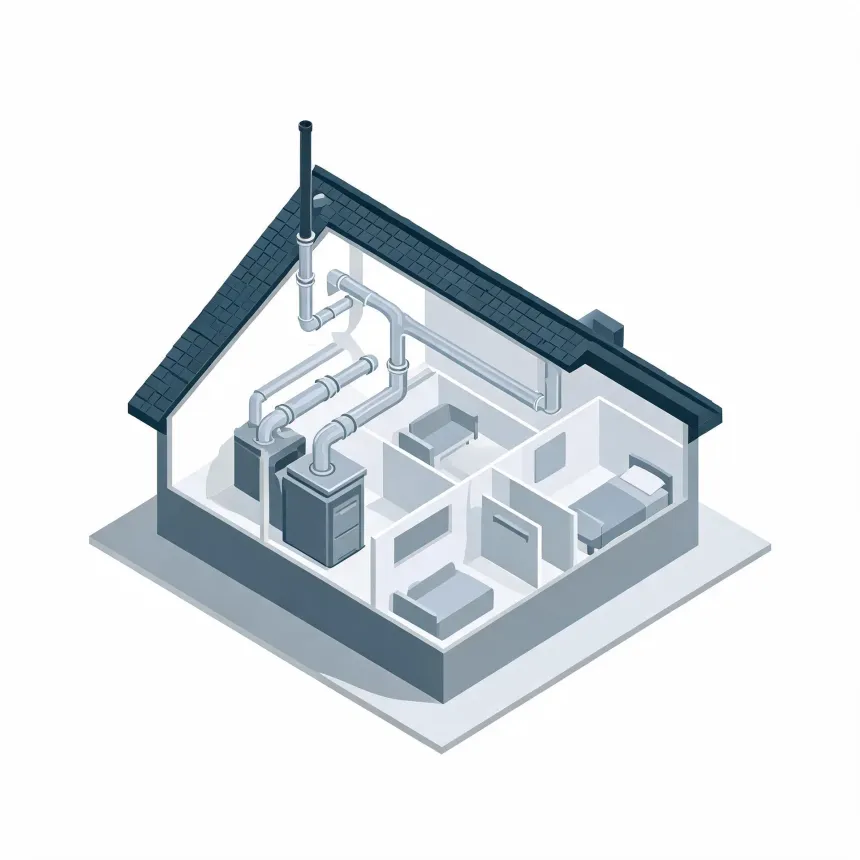
Isometric illustration of a cutaway house showing a furnace unit with ductwork and a flue pipe running through the interior rooms, which contain simple furniture.
Your furnace works hardest from November through March.

NOAA nClimDiv, 1991–2020 normals

Furnace season in Langdon starts in September.

August is when a weak part is still a small problem instead of a cold house in week one.

Half the furnaces here are older too

Half the homes here were built by 1968
Heat runs September through May
Winter nights average 0°F
Nine months of heat a yearWinter nights in Cavalier County average 0°F, December through February.

Half the homes in Cavalier County were built in 1968 or earlier. If your furnace came with the house and nobody has swapped it out since, it's worked a lot of winters already. That doesn't mean it needs replacing now. It means a repair call is a good time to ask the contractor how much life is really left in it, before you pay for a part on a furnace that's close to done anyway. An old furnace can still run fine for years with the right fix. You just want to know which case you're in before you spend the money.

Get it looked at early

Problems tend to show up in the first weeks of the season, when the load hits a part that was already weak.

Find a contractor
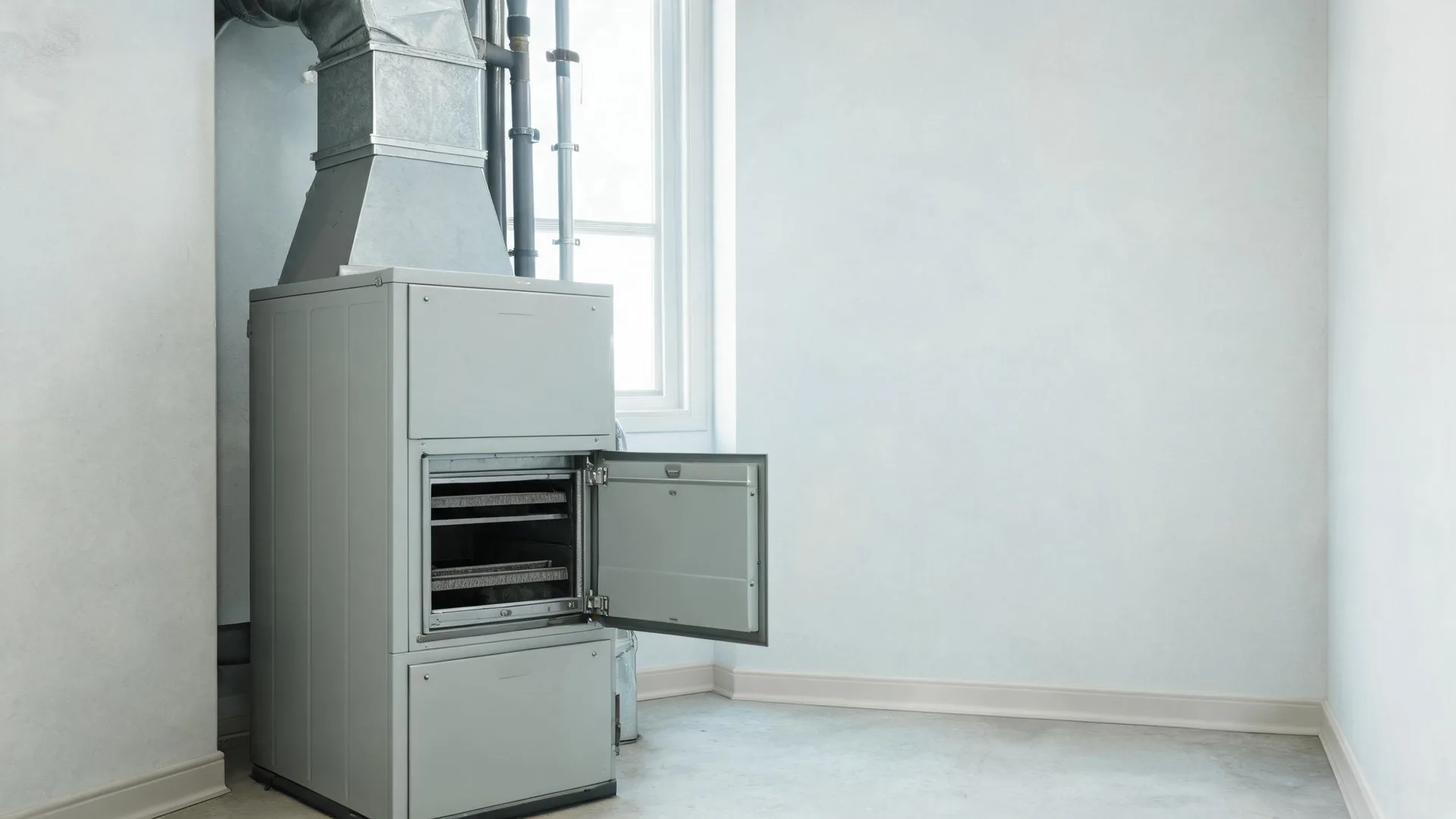
A gray high-efficiency gas furnace installed in an unfinished basement, surrounded by gas lines, a condensate drain, and sheet-metal ductwork.

The furnace tells you before it quits

A burner flame that's gone from steady blue to yellow or flickering usually means it isn't getting the air mixture it needs. Short cycling is another sign. The furnace fires up, runs a couple minutes, shuts off, then starts again instead of finishing a full heating cycle. That's often a flame sensor or limit switch telling the control board something is wrong, even when nothing looks wrong from outside. A grinding or squealing blower motor means a bearing is going. Banging or popping from the ductwork when the furnace starts usually means the metal is expanding against something, or burners are igniting unevenly. Air coming out of the vents feeling cooler than it should, or one room running cold while the rest of the house is fine, can mean the furnace is still running but not doing the job it used to. None of these mean the furnace is done. They mean something specific needs attention before it wears down the parts around it too.

What you can check yourself

Look at the filter first. Pull it out and hold it up to a light. If you can't see light through it, swap it. A clogged filter starves the furnace of air and can cause a lot of what feels like a bigger problem. Check that every supply vent and return in the house is open and clear of furniture or rugs. Look at the thermostat batteries if it has a screen that's dim or blank. These take a few minutes and rule out the simplest causes before anyone needs to open up the furnace itself.

What to leave alone

Don't take the burner cover or blower door off. Don't try to clean or bend the flame sensor yourself, it's a thin metal rod near the burner and it's easy to damage. If you smell gas, don't flip any switches or check anything at all, just get out and call from somewhere else. A furnace that's tripping its breaker repeatedly or smells like something burning needs a contractor before it runs again, not a homeowner fix.

Furnaces usually fail for one of a few reasons, and most of them build up slowly. The igniter weakens with age and stops lighting the burners reliably, so the furnace tries again and again until it gives up. A flame sensor gets a layer of soot on it over time and can't tell the control board the flame is lit, so the system shuts itself down as a safety measure. Blower motor bearings wear out from years of spinning, and that shows up as noise before it shows up as failure. A dirty filter is behind more of this than people expect, since it makes every other part work harder than it was built to. Pressure switches and limit switches do their job for years without issue, then fail right when a furnace is leaned on hardest. None of these parts fail because the furnace is bad. They fail because they're mechanical, and mechanical parts wear down on their own schedule.

At some point every furnace owner has to decide whether a repair is worth it, and the furnace itself usually gives you a clue. A part that fails on its own, like an igniter or a pressure switch, while everything else still runs fine, is usually worth fixing. The rest of the system was working around that one weak point, and once it's replaced the furnace is back to normal. It's a different question when the heat exchanger is cracked or the blower motor has seized, because those sit at the center of what the furnace does and replacing either one costs a real share of what a new furnace would. A contractor looking at a failed part can usually tell you whether it failed because its time was up, or because something else has been straining it for a while. That second case is worth asking about, since fixing the part without fixing what wore it down just starts the same clock over again.