




An unfinished basement featuring concrete block walls, exposed floor joists, a bare concrete floor, and a forced-air furnace with a large metal exhaust duct in the corner.

Furnace Repair in Jamestown, ND

Tell us about the job

Takes about a minute. No obligation.

RepairFurnace or heatingStutsman County, ND
Step 1 of 2

What ZIP code is the job in?

Furnaces in Stutsman County run from September through May. That's nine months out of the year the burner, the igniter, and the blower motor are all doing their job, sometimes several times an hour, all through a Jamestown winter. A furnace in a milder climate gets to rest. Yours doesn't get that break. All those extra cycles add up to wear on the same parts year after year, and that wear doesn't announce itself until something stops working right. A furnace acting up here usually isn't a fluke. It's a machine that's been asked to do more than most, finally showing it.

9 months
September through May, your furnace is on duty
4°F
the average winter night it heats against
37 winter storms
in ten years, the nights a failure hurts most
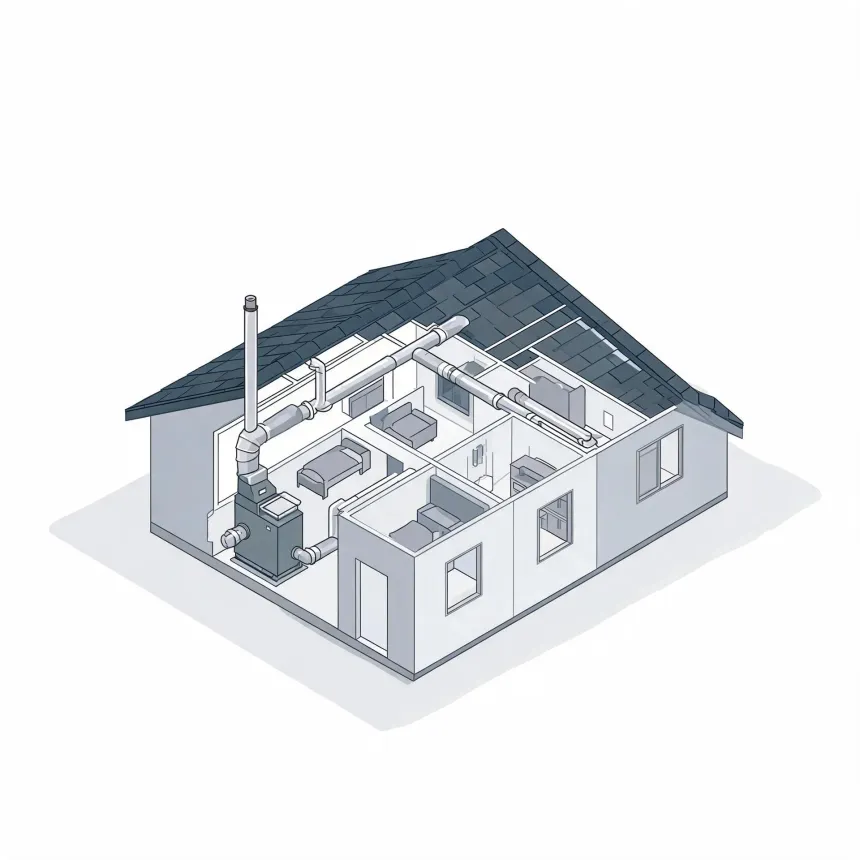
Isometric cutaway illustration of a single-story house showing interior rooms with furniture, ceiling ductwork, a furnace unit with a tall flue pipe, and a dark shingled roof.
Your furnace works hardest from November through March.

NOAA nClimDiv, 1991–2020 normals

Gas ran $8.44 per million Btu in North Dakota last year.

A furnace short-cycling or running long burns more of that gas every single day it goes unfixed.

Half the furnaces here are older than the houses got last rebuilt

Half the homes here were built by 1973
Heat runs September through May
Winter nights average 4°F

September is when most furnaces here start up after sitting idle since spring. That first run is when a weak igniter or a failing flame sensor usually gives out, because it's the first time all year that part has been asked to work. From there the burner and blower are cycling several times an hour and won't slow down until May. A problem that shows up in September only gets worse once nights start dropping toward that 4 degree average. Getting it looked at in those first weeks means it gets fixed on your schedule, not during a cold snap.

Get the real problem found, not just patched

Nine months of runtime wears a furnace down faster here than almost anywhere else, and that wear shows up as exactly the kind of trouble you're dealing with now. A proper diagnosis finds the part that's actually failing, not just the symptom, so the repair holds for the rest of the winter.

Find a contractor
A man in a cap, dark jacket and tan work pants walks up concrete steps toward a dark blue front door, carrying a canvas tool bag at his side.
A gray residential gas furnace installed in an unfinished basement, surrounded by ductwork, a metal flue pipe, and a gas supply line.

How many winters has this furnace already put in

If your furnace came with the house, ask the contractor straight out how much life is left in it before you pay for a major repair. Half the homes around Jamestown were built in 1973 or earlier, so a lot of furnaces out there have been replaced at least once already, maybe more than once. A tech looking at the failed part can tell you whether this one still has winters left in it or whether the money's better spent on a new unit instead of another repair.

What actually wears out first

The igniter takes the most abuse because it fires every single cycle and it's a thin piece of material that gets more brittle each time it heats and cools. The flame sensor coats over with a thin layer of oxidation from doing its job and eventually can't tell the control board a flame is there. Blower motor bearings wear from hours of spinning, and the capacitor that helps start that motor loses its charge over time whether the furnace runs a little or a lot.

Why one failed part shuts down the whole system

A furnace is built so it won't run unsafe, so it's designed to shut itself off the moment one part stops reporting in correctly. A dirty flame sensor reads as no flame, so the control board cuts the gas even though the burner was working fine. A failing igniter just never gets hot enough to light the burner at all. That's why a furnace that won't start is usually one small part failing, not the whole machine giving out.

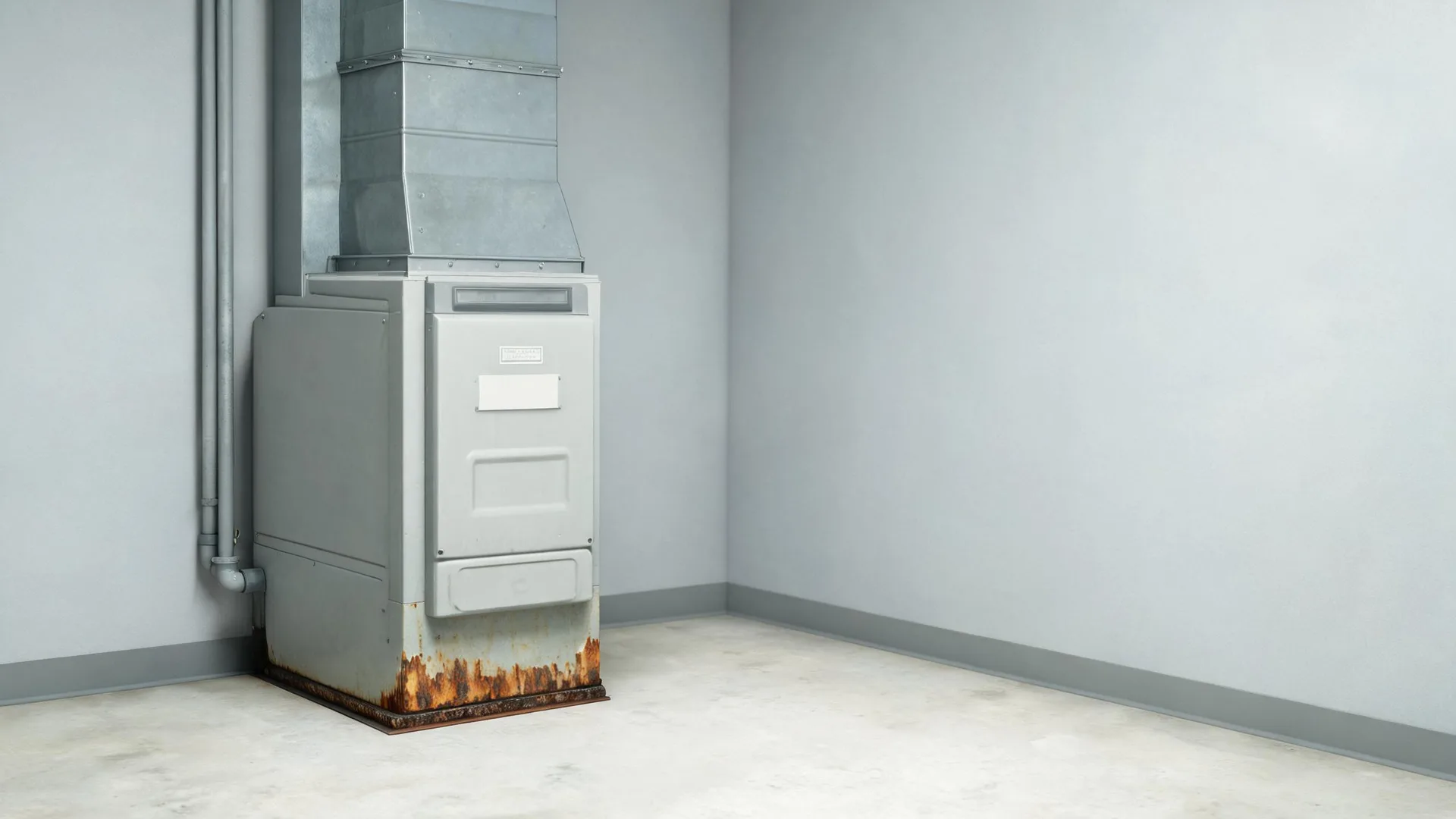
An unfinished basement containing a gray HVAC furnace with ductwork, exposed wooden joists, a concrete floor, and miscellaneous clutter in one corner.

A new furnace would cut about $120 a year off heating for a typical Stutsman County home.

  • A new high-efficiency furnace$470 a year
  • An older furnace$590 a year

Estimates for a typical Stutsman County home, compared with an older unit built to the previous federal minimum, from EIA household energy data, North Dakota fuel prices and NOAA climate normals. Your home will differ.

Repair makes sense when one part has failed and the heat exchanger is sound.

Replacement makes sense when the heat exchanger is cracked or the furnace keeps needing parts.

A cracked heat exchanger changes the math. That's the part that keeps combustion gases separated from the air moving through your house, and once it's cracked the furnace isn't safe to run no matter what else still works. Most other failures aren't like that. A bad igniter or a failed capacitor is a part replacement, not a verdict on the whole machine. What's worth asking the tech is whether this is a one-off or the latest in a string of repairs, because a furnace that keeps coming back into failure is telling you something different than one with a single part that gave out. If the rest of the system checks out sound, fixing the one thing that broke is usually the right call.