





A snow-covered suburban street at dusk with lit houses and bare trees under a twilight sky.

Furnace Repair in Elgin, ND

Tell us about the job

Takes about a minute. No obligation.

RepairFurnace or heatingGrant County, ND
Step 1 of 2

What ZIP code is the job in?

Furnaces in Grant County run from September through May, close to nine months of the year. Overnight lows average 7°F through December, January and February, and that's when a furnace runs longest to hold a steady temperature inside. That kind of stretch wears on the igniter, the blower motor, and the heat exchanger faster than it would somewhere with a shorter winter. If yours is acting up now, in the stretch it works hardest, that's usually not a coincidence. A proper diagnosis finds the actual part behind it, not just a patch that gets you through to spring.

9 months
September through May, your furnace is on duty
7°F
the average winter night it heats against
26 winter storms
in ten years, the nights a failure hurts most
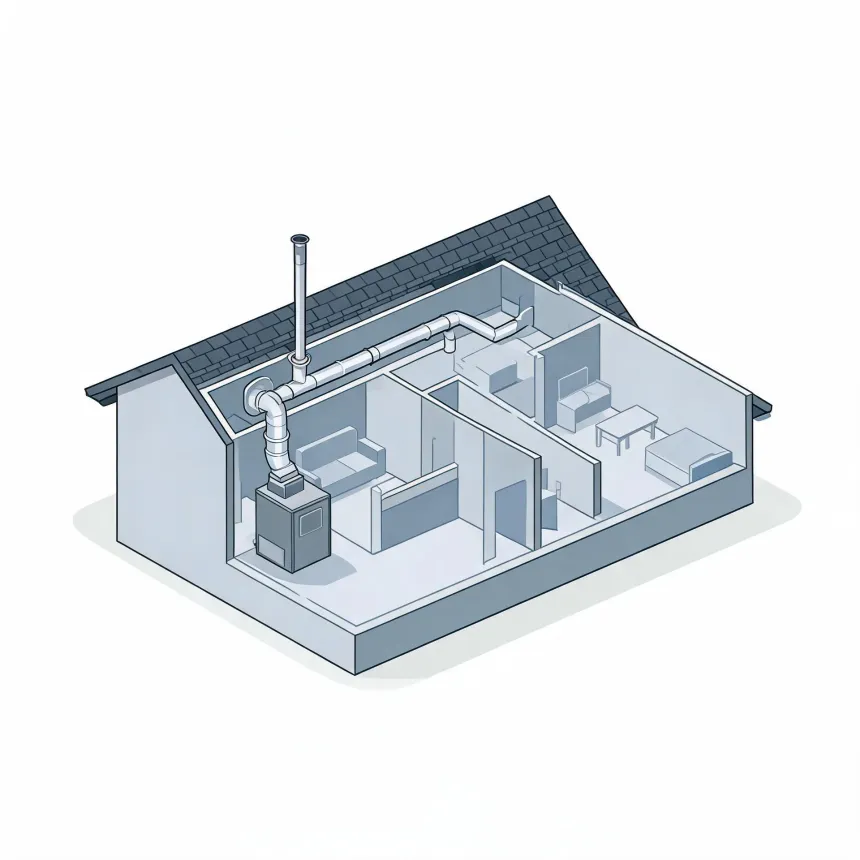
Isometric cutaway illustration of a single-story house showing interior rooms with furniture and a furnace connected to ductwork and a vertical flue pipe extending through the roof.
Your furnace works hardest from November through March.

NOAA nClimDiv, 1991–2020 normals

Half the homes in Grant County went up in 1962 or earlier.

A furnace that came with a house that old is a furnace worth asking about, not just fixing.

Propane here runs $17.33 per million Btu, and a furnace that's struggling burns more of it every day it goes unfixed

Heat runs September through May
Winter nights average 7°F
Climate zone 6A
August is the month to get ahead of itFurnaces here run September through May, and problems tend to surface in the first cold weeks.

A furnace that's been running since September has had months to develop whatever's wrong with it before it finally gets your attention. Cold snaps don't create problems so much as expose ones that were already there, a weak igniter or a blower motor that's been straining longer than you knew. Skipping the diagnosis and just swapping a part is a guess, and a wrong guess leaves you back where you started in the middle of winter. Get the actual cause found before you decide what to fix.

Ask how much is left in it before you fix it again

If your furnace came with the house, and the house dates to 1962 or before, ask what's left in it before paying for another repair. Worth knowing before you commit to the next one, not after.

Find a contractor
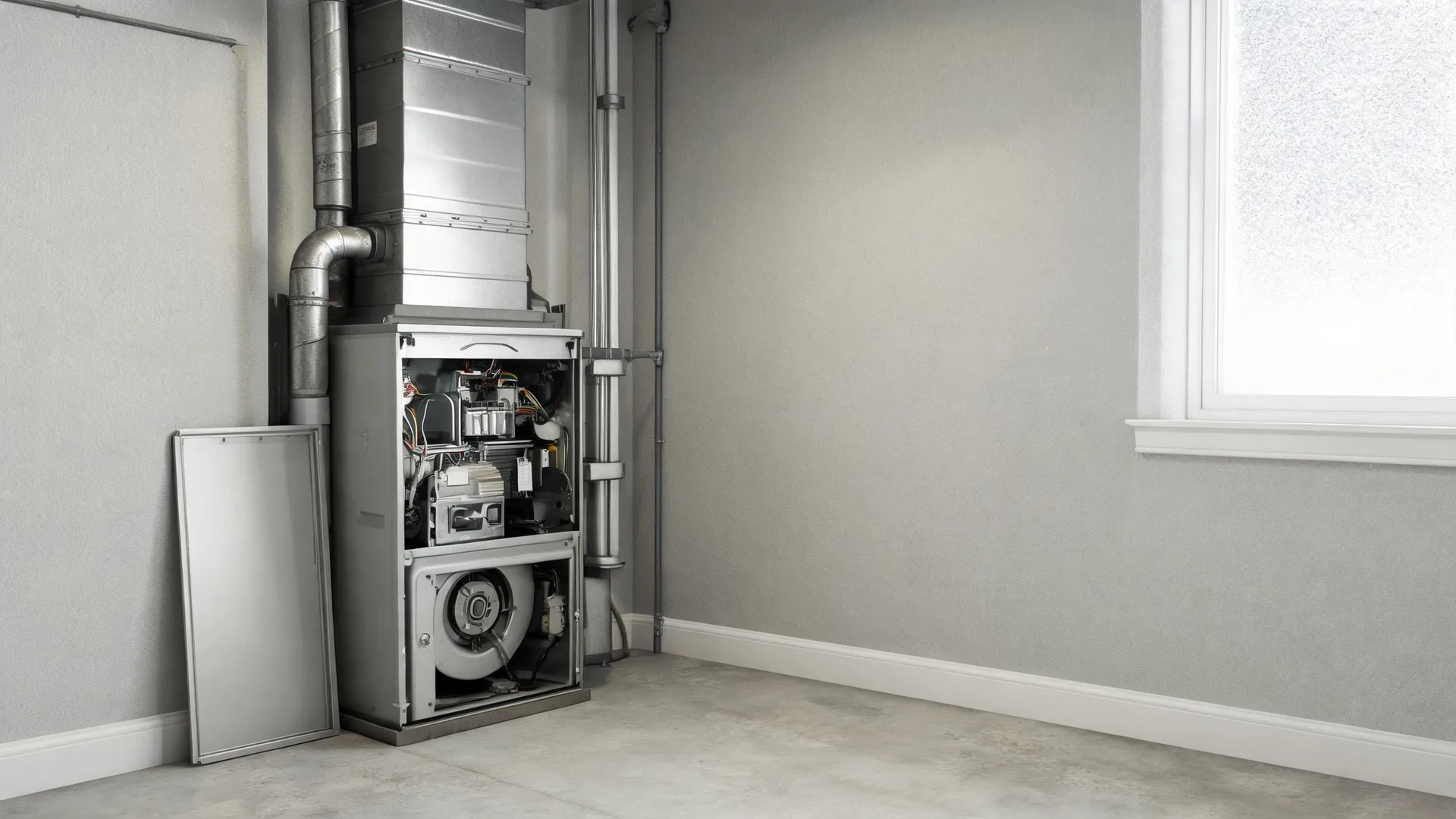
A gray residential gas furnace installed in an unfinished basement, connected to sheet-metal ductwork and PVC pipes.

Running it doesn't buy you time, it spends what's left

A cracked heat exchanger gets worse under heat and then shrinks back as it cools, and each cycle opens that crack a little more. A failing igniter has to work harder to light the burners every time it's called on, until one day it doesn't. A blower motor with worn bearings keeps turning, but the strain builds heat in the motor itself, and that heat is what finally ends it. None of these fail less because you keep running them waiting for a better time. A flame sensor coated with residue will keep shutting the burners down earlier and earlier, not because the problem is spreading but because the same thin coating matters more each time the system fires. Letting the furnace keep cycling on a known problem doesn't give it rest. It gives the weak part more chances to go.

Short cycling means something's cutting it off early

A furnace that fires up, runs briefly, then shuts off before the house warms is usually getting stopped by a safety switch. A flame sensor coated with residue, a filter so clogged the furnace overheats, or a cracked heat exchanger tripping a sensor can all cause this. It's not the thermostat being confused. Something inside is telling the furnace to quit, and that's worth finding before it quits for good.

A noisy start is the furnace telling you something's loose or worn

A bang when the burners light usually means gas is building up before it ignites, which points to a dirty burner or an igniter firing late. A screech or grinding points to the blower motor or its bearings. Either one tends to get worse on its own schedule, not better, and either one is worth having a tech listen to rather than guessing from the sound alone.

An unfinished concrete basement containing a gas furnace with sheet-metal ductwork, utility shelving, and exposed overhead joists.

A new furnace would cut about $210 a year off heating for a typical Grant County home.

  • A new high-efficiency furnace$860 a year
  • An older furnace$1,070 a year

Estimates for a typical Grant County home, compared with an older unit built to the previous federal minimum, from EIA household energy data, North Dakota fuel prices and NOAA climate normals. Your home will differ.

Repair makes sense when one part has failed and the heat exchanger is sound.

Replacement makes sense when the heat exchanger is cracked or the furnace keeps needing parts.

A diagnostic visit starts with the thermostat and works back from there, not the other way around. A tech checks the return air and the filter first, because plenty of lockouts and short cycles trace back to airflow before they trace back to a part. From there it's the burners, the flame sensor, and the igniter, checked one at a time with the panel open while the furnace actually runs, because a part that looks fine sitting still can still be the one failing under load. Pulling a code off the control board narrows it further, since most furnaces built in the last couple decades keep a log of what tripped the safety switch and when. The last step is confirming the fix, firing the furnace back up and watching it hold a full cycle rather than taking the first good sign as the answer.