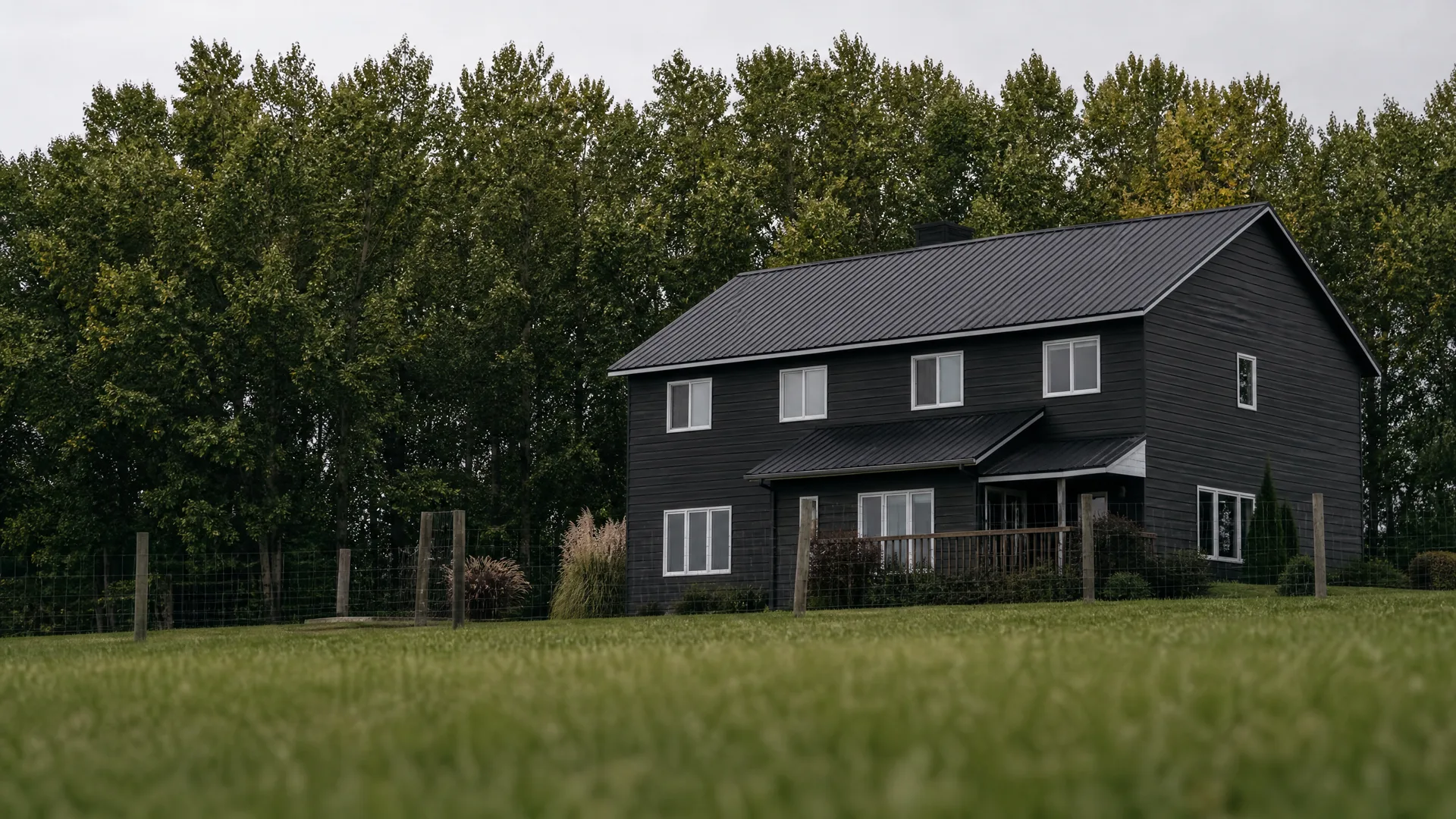






A two-story black-clad house with a dark metal roof, white-trimmed windows and a small covered porch, standing behind a wire fence on a grassy lawn with tall deciduous trees behind it under an overcast sky.

Furnace Repair in Crosby, ND

Tell us about the job

Takes about a minute. No obligation.

RepairFurnace or heatingDivide County, ND
Step 1 of 2

What ZIP code is the job in?

Ten months of heat a year is a long season for any furnace, and Crosby asks for more than that. Nights average 3 degrees in December, January and February, which means the burner is running long cycles just to hold a normal setpoint. That kind of load adds up on the igniter, the blower motor, the pressure switch, whatever part was already on its way out. A furnace somewhere mild might limp along for years with a weak part before it quits. One here doesn't get that luxury. If something's acting up, it's worth finding out exactly what, rather than guessing and hoping it holds through February.

10 months
September through June, your furnace is on duty
3°F
the average winter night it heats against
20 winter storms
in ten years, the nights a failure hurts most
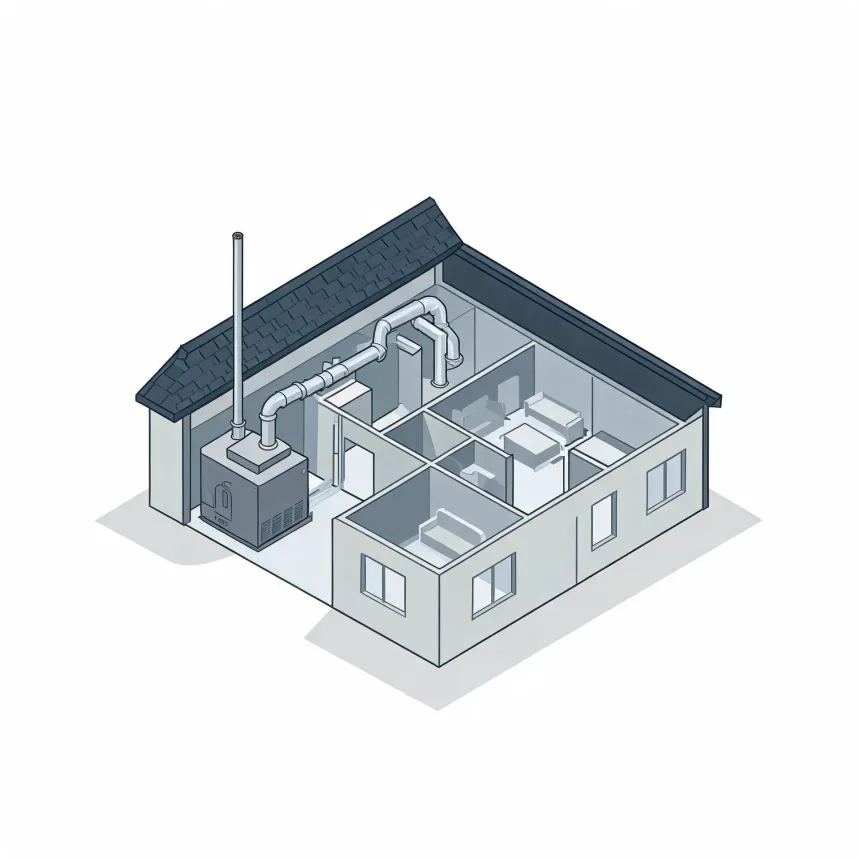
Isometric grayscale illustration of a cutaway single-story house showing interior rooms with furniture, plus an exterior furnace unit with a tall flue pipe and ducting running into the attic space.
Your furnace works hardest from November through March.

NOAA nClimDiv, 1991–2020 normals

August is when a weak furnace shows it, right before heat starts again

Heat runs September through June
Winter nights average 3°F
Climate zone 7
Ten months of heat wears a furnace fastNights average 3 degrees here in December and January.

Half the homes in Divide County were built in 1963 or earlier. A furnace that came with a house that age has been replaced at least once already, maybe more, and whatever is in there now still has a normal lifespan. If yours is original to a furnace installed decades back, or you don't know when it was last swapped out, a repair call is a good time to ask the tech straight out how much life is left in it. Paying to fix a part on a unit that's near the end just means paying again soon for the whole thing.

Get it diagnosed properly

Your furnace works hard here, and that's usually what's behind the problem. Have it diagnosed properly so the fix lasts.

Find a contractor
A man in a cap, dark shirt and tan work pants carries a worn canvas tool bag up porch steps toward a dark blue front door, with a potted shrub beside the entry.
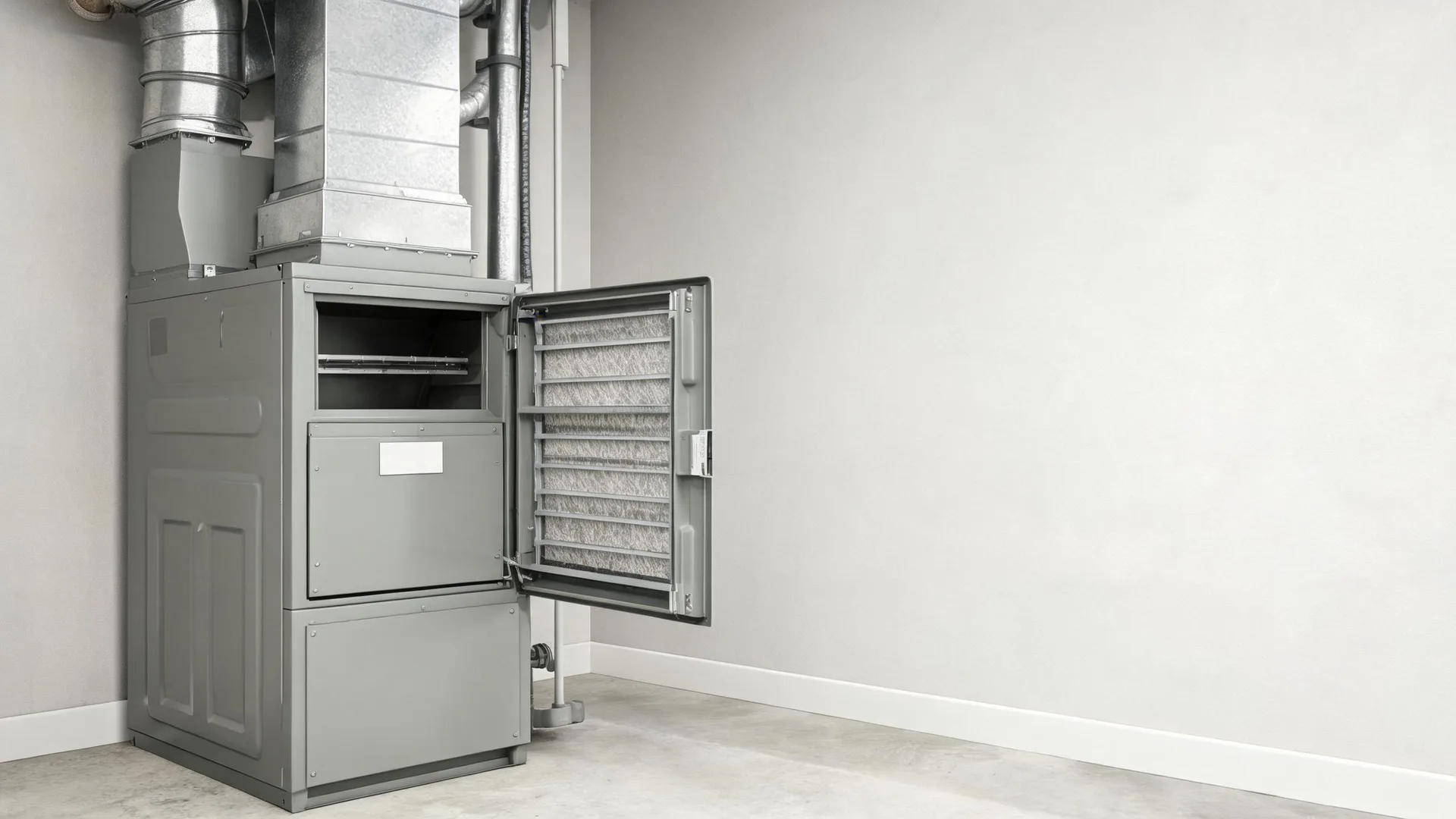
A gray gas furnace with attached ductwork and piping installed in an unfinished concrete basement.

What to check before you call anyone

Before anyone comes out, check the thermostat first. Make sure it's set to heat, not just fan, and that the setpoint is actually above room temperature. Check the batteries if it uses them. Next, find the filter. A filter clogged with dust chokes off airflow, and some furnaces will shut themselves down rather than run with no air moving across the heat exchanger. If you can see light through it, it's fine. If you can't, swap it. Go check the breaker panel too. A furnace that won't start at all sometimes just needs a tripped breaker reset. While you're down there, look at the switch on the furnace itself, the one that looks like a light switch, mounted on or near the unit. It gets bumped off more often than people expect. Last, look at the vent pipe outside where it exits the house. If it's blocked by anything, some furnaces lock out as a safety measure until it's clear. None of this tells you what's actually broken inside, but it rules out the things that aren't worth a service call.

A cracked heat exchanger doesn't heal

Once metal fatigues enough to crack, running the furnace more just flexes that crack with every heat cycle. It doesn't seal itself back up between calls for heat. Left alone, it opens further and can let combustion gas into the air moving through the house.
A struggling blower motor pulls harder each time it starts

A motor with worn bearings draws more current to overcome the drag, and that extra heat breaks the windings down faster. A motor that still starts today can seize or burn out entirely if it keeps getting asked to run while it's already struggling.

Most furnace trouble shows up as something you can hear or smell before you can name it. A burner that used to light with one soft thump and now clicks several times before it catches is telling you the igniter or the flame sensor is going. Short cycling, where it fires up, runs a few minutes, then shuts off before the house warms, usually means a dirty flame sensor or a limit switch tripping on heat it shouldn't be seeing. A burning dust smell in the first minutes of a cycle is normal after it's sat idle. That same smell sticking around, or turning sharp and metallic, is not. Rattling that changes with blower speed points to the blower wheel or motor mount, not the ducts. Any sound you'd call new is worth mentioning to the tech, even if it seems minor. It's usually the clearest clue to what's actually failing.

When a part fails, the question is never just whether it can be fixed. Almost anything can be fixed once. The real question is what else nearby is close to the same fate. A furnace is a set of parts that all got installed on the same day and have all been running the same hours since. If the igniter is going, the blower motor and the heat exchanger have put in the same work and are further down the same road. A repair that only replaces the one part that quit is still the right call most of the time. It's a different call when the furnace has already been in for other things, or the tech finds a second problem while fixing the first. At that point you're not weighing one repair against one replacement. You're weighing one repair against the repairs that are likely to follow it.