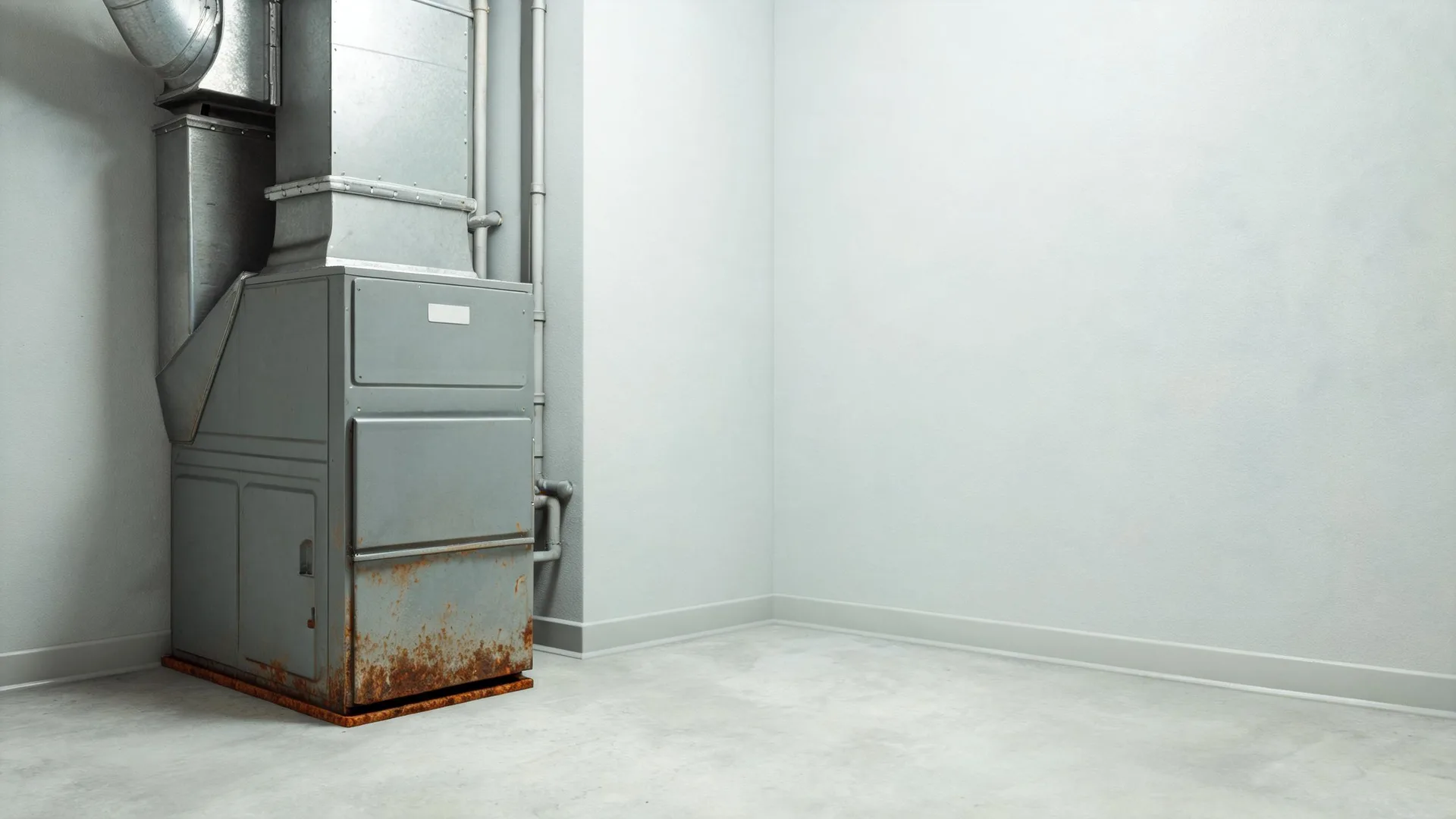
A gas furnace with sheet-metal ductwork and PVC pipes installed in an unfinished basement.

Furnace Repair in Cooperstown, ND

Tell us about the job

Takes about a minute. No obligation.

RepairFurnace or heatingGriggs County, ND
Step 1 of 2

What ZIP code is the job in?

Nine months of heat a year

Furnaces in Griggs County run from September through May. That's most of the year carrying the load, not just a few cold snaps, and it adds up on the igniter, the blower motor and everything else that cycles on and off that often.

Nights near 2 below

December through February, the overnight low here averages 2°F. A furnace working against that kind of cold runs longer each cycle and pushes harder to keep up, which is why problems tend to show up sooner than they would in a milder place.

9 months
September through May, your furnace is on duty
2°F
the average winter night it heats against
57 winter storms
in ten years, the nights a failure hurts most
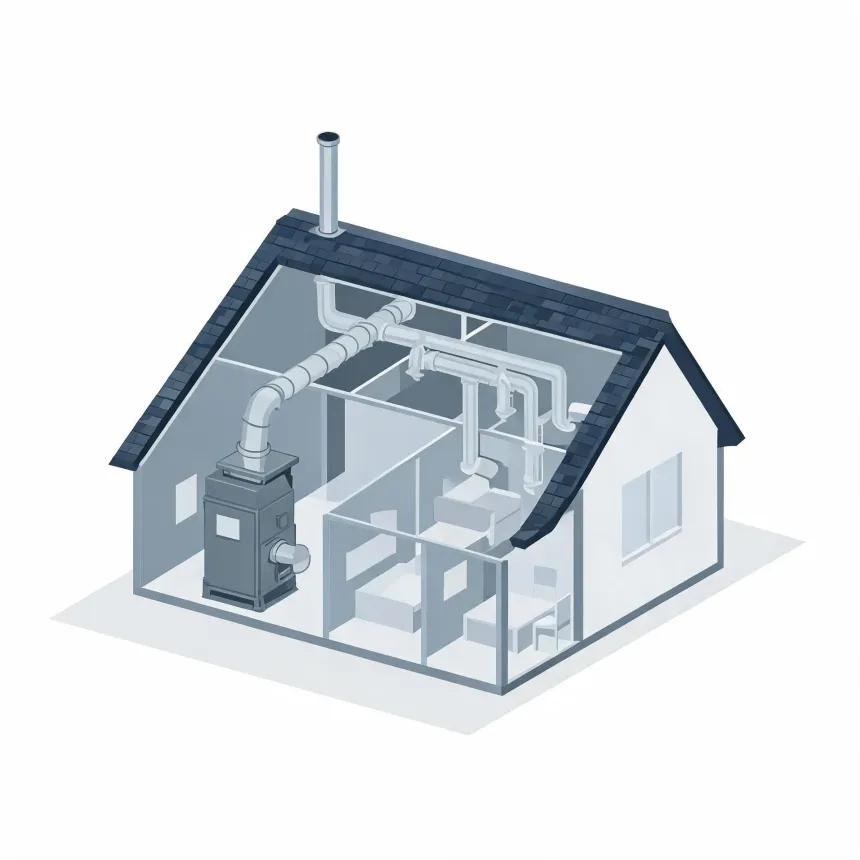
Isometric cutaway illustration of a small house showing a gray furnace unit with a flue pipe through the roof and branching ductwork running to rooms with simple furniture.
Your furnace works hardest from November through March.

NOAA nClimDiv, 1991–2020 normals

Half the homes in Griggs County were built in 1958 or earlier.

A furnace that came with a house that old has likely put in decades of work already, so it's worth asking how much life is left before paying for a big repair.

September is when a weak furnace shows it

Heat runs September through May
Winter nights average 2°F
Climate zone 6A
Electricity here runs $33.73 per million BtuA furnace losing efficiency costs you more here than almost anywhere else.

Before paying for a repair on a furnace that old, ask the contractor for a straight answer. What's the unit's realistic remaining life, and does this repair make sense against that. A cracked heat exchanger or a blower motor that keeps cycling on an old furnace can mean the next call is the same as this one. If the furnace came with the house, pull the model number off the plate inside the cabinet door. A contractor can tell you roughly how old it is from that and what parts are still available for it.

Have it diagnosed right the first time

Your furnace has been carrying the load since September, and it's got until May to go. Get a proper diagnosis now, not just a quick fix, so you know whether the repair holds up through the rest of the winter.

Find a contractor
A gray residential gas furnace installed in an unfinished basement, surrounded by ductwork, a metal flue pipe, and a gas supply line.

Running it longer doesn't fix it, it just wears the weak part faster

A furnace with a problem doesn't fail less by staying on. A cracked heat exchanger gets worse every cycle, not better, because the metal keeps flexing as it heats and cools. A blower motor with a failing bearing has to work through more hours of grinding before it seizes. Even something as simple as a dirty flame sensor gets worse the longer it runs dirty, because every cycle adds another layer of residue until the furnace stops recognizing its own flame and shuts itself down. Running a struggling furnace through more cycles asks the weak part to do the thing that's wearing it out, over and over, until it quits.

What you'll notice first

A furnace that needs attention usually tells you before it quits outright. The burner flame burns yellow or flickers instead of holding steady and blue. The furnace short cycles, switching on and off every few minutes instead of running a full heating cycle. Rooms stay cold even with the blower running, or you start hearing banging, screeching or a rhythmic clicking that wasn't there before. A gas smell, or a burning dust smell that doesn't fade a few minutes into a cycle, both count as signs worth acting on.

What to do about it

A gas smell or a tripped carbon monoxide alarm means shutting the furnace off and getting someone out right away, no waiting on that one. A furnace that's short cycling or blowing cold air can usually hold until a scheduled visit, but it won't fix itself, and every cycle it runs that way wears harder on the part that's already struggling. Tell the contractor exactly what you're hearing or smelling and when it happens. That detail lets them narrow down the problem before they open the cabinet.

Most furnace failures trace back to a handful of parts. The igniter is first in line, because it heats up and cools down every single cycle and that stress eventually cracks it. The flame sensor fouls with a thin coating of oxidation over time, and once it's coated enough it can't confirm a flame even when one's burning fine. The blower motor wears at the bearings from sheer running hours, and a failing bearing usually announces itself with noise before it seizes. Flame sensors and igniters are simple fixes. A cracked heat exchanger is not, and it's the one that matters most, since it's what keeps combustion gases out of the air moving through the house.

A diagnostic visit starts before the panels come off. The contractor asks what you've noticed, when it happens, and whether it's constant or only on some cycles, because that narrows things down before a single tool comes out. Then the cabinet comes open and the flame gets watched through a full cycle, since how it ignites and how it holds tells most of the story. The flame sensor and igniter get checked first, simply because they fail most often and take the least time to confirm. If those check out clean, the next step is pulling the blower and inspecting the heat exchanger, looking for cracks, rust-through or signs the metal has started to warp from heat stress. A combustion analyzer may come out too, reading the exhaust to confirm the furnace is burning gas cleanly and not spilling carbon monoxide back into the house. None of this is guesswork. Each step rules something out so the repair that follows is aimed at the actual problem, not a guess at it.