





An unfinished basement containing a gray HVAC furnace with ductwork, exposed wooden joists, a concrete floor, and miscellaneous clutter in one corner.

Furnace Repair in Cavalier, ND

Tell us about the job

Takes about a minute. No obligation.

RepairFurnace or heatingPembina County, ND
Step 1 of 2

What ZIP code is the job in?

Furnace here runs nine months a year, September through May. That leaves barely a stretch of summer where it sits idle. A system that gets used that much doesn't get the downtime to rest between cycles the way it would somewhere milder. The igniter, the blower motor, the heat exchanger, all of it logs more hours than it would in most places. When a furnace starts acting up after that kind of run, it's rarely bad luck. It's wear that's been building for a while and finally showing itself.

9 months
September through May, your furnace is on duty
1°F
the average winter night it heats against
62 winter storms
in ten years, the nights a failure hurts most
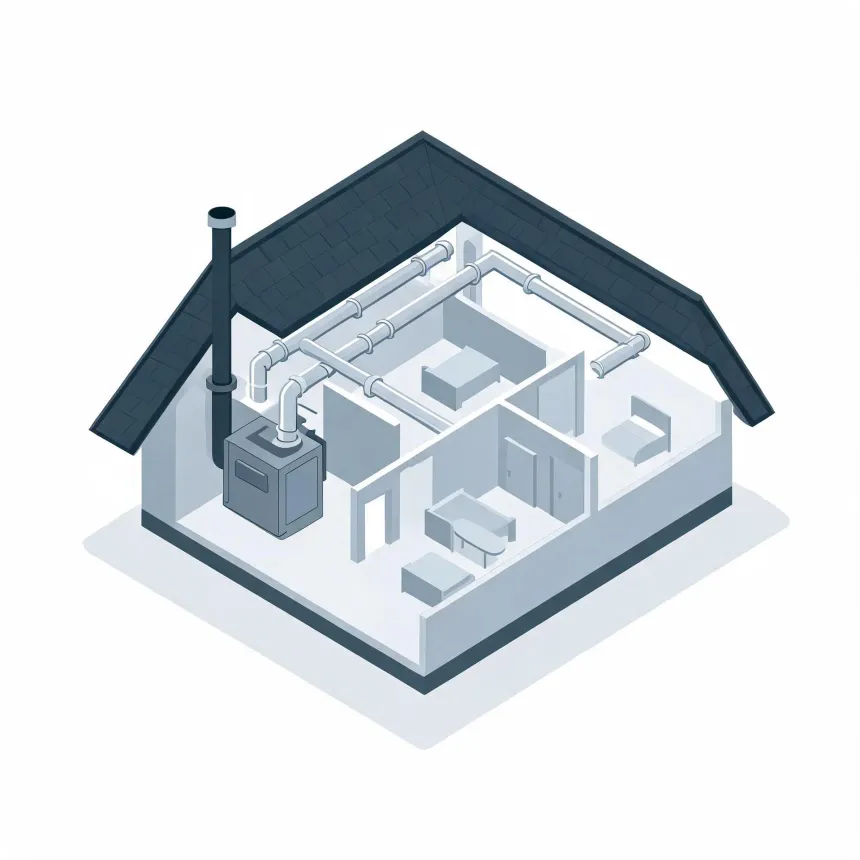
Isometric illustration of a cutaway house showing a dark furnace unit with a flue pipe and branching ductwork running through rooms with simple furniture under a dark gabled roof.
Your furnace works hardest from November through March.

NOAA nClimDiv, 1991–2020 normals

Furnace season starts in September here.

A furnace that starts cold in September will show its weak parts fast.

Half the homes here were built in 1969 or earlier

Half the homes here were built by 1969
Climate zone 7
Heat runs September through May

Nine months of runtime a year doesn't leave much room for guessing. If your furnace is short cycling, blowing cool air, or making a noise it didn't make last winter, that's a part telling you it's done absorbing the extra hours. A tune up or filter swap won't fix a cracked heat exchanger or a failing igniter. Get a licensed contractor to actually diagnose what's wearing out before you pay to replace the wrong thing. On a system that runs this much, a correct diagnosis the first time is worth more than a quick guess.

Know the age before you pay for the repair

If your furnace came with the house, find out its age before paying for a repair. Half the homes in this county were built in 1969 or earlier, and a furnace that old has already given you a long run. A big repair on a system that age is a bet on how much life it has left. Ask the contractor for its age and a straight opinion on whether it's worth fixing or worth replacing.

Find a contractor
A man in a cap, dark jacket and tan work pants carries a canvas tool bag up concrete steps toward a dark blue front door, with a potted shrub beside the entry.
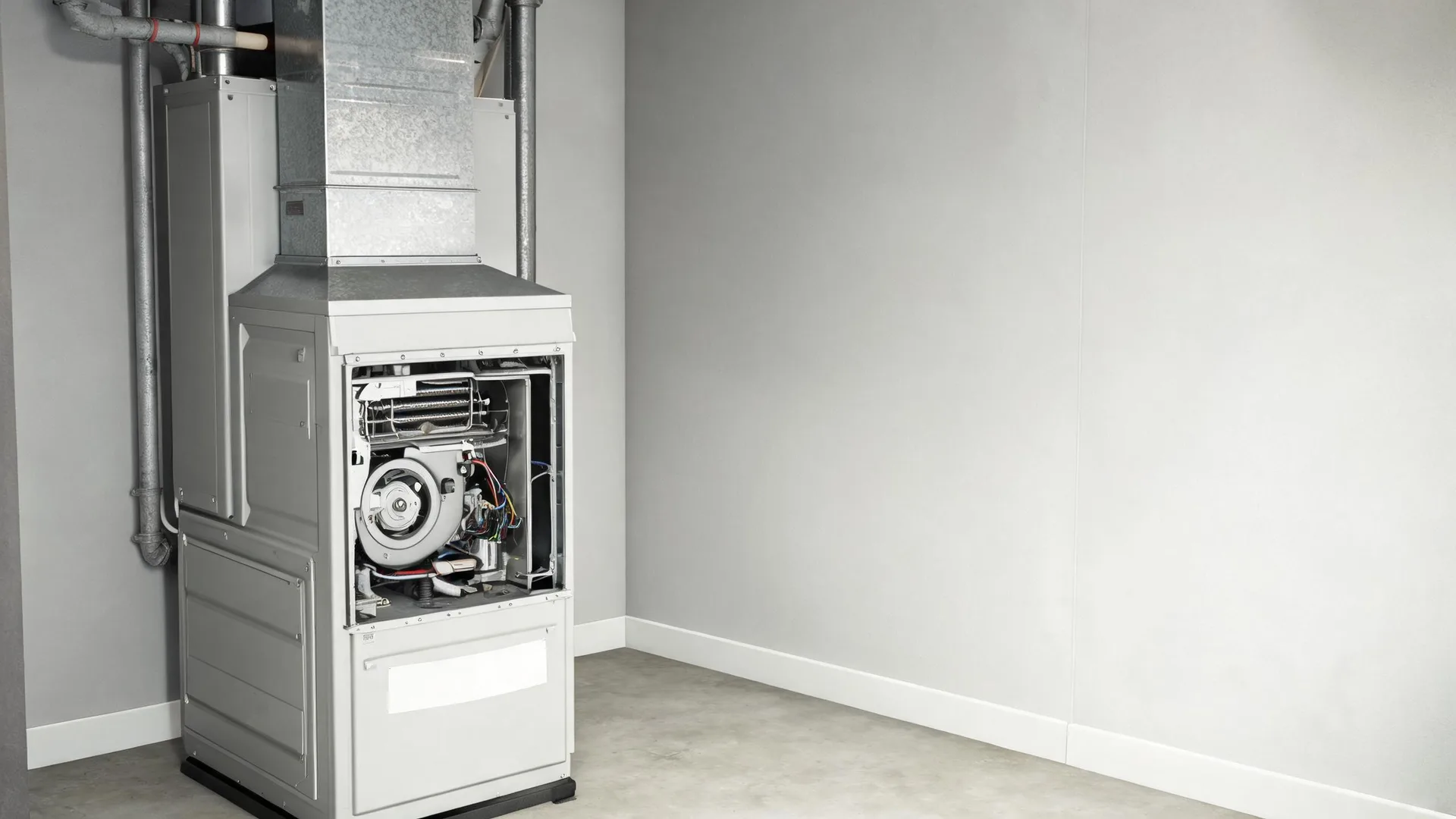
A gray residential gas furnace installed in an unfinished basement, surrounded by ductwork, a metal flue pipe, and a gas supply line.

What to check before you call

Before anyone comes out, check the thermostat first. Make sure it's set to heat and set above room temperature, and swap the batteries if it uses them. Next, go to the furnace itself and look at the filter. A filter clogged with dust chokes off airflow, and that alone can cause short cycling or a furnace that blows cool air. Replace it if it's gray or you can't see light through it. Check that the switch on the furnace itself, it looks like a light switch, is flipped on, and make sure the power is getting there at the breaker. If your furnace has a standing pilot, see if it's lit. If it's gone out, the pilot light assembly usually has relighting instructions printed right on it. Walk around the house and check that supply vents and return grilles are open and not blocked by furniture or rugs. Closed vents make the system work against itself. Look at the exhaust vent outside and make sure nothing, snow, a nest, debris, is blocking it, since a blocked vent can shut the furnace down on purpose as a safety measure. None of this fixes a cracked heat exchanger or a failed igniter, but it rules out the simple stuff before anyone pays a service call to flip a switch.

Ignition parts wear from cycling, not age alone

An igniter heats up and cools down every single cycle, and that repeated stress is what eventually cracks it or burns it out. A flame sensor coated in a thin layer of oxidation will stop sensing the flame and shut the burners down as a safety measure, even though nothing is actually wrong with the fire. Both parts fail from the number of cycles they've gone through, not from a calendar.
The heat exchanger is the part you can't ignore

A heat exchanger cracks from repeated expansion and contraction as it heats and cools, and once it's cracked it can let combustion gas mix into the air the blower pushes through the house. That's why a contractor will always check it before touching anything else on a furnace that's acting up. Everything else on this list is a repair. A cracked heat exchanger is a decision about whether the furnace gets replaced.

A furnace that's struggling doesn't fail cleanly. It fails louder the longer you let it run. A cracked heat exchanger gets worse with every heat cycle, since the metal keeps expanding and contracting around the break. A blower motor with a failing bearing will grind for a while before it seizes, and running it right up to that point usually takes the motor with it instead of just the bearing. A limit switch that's tripping from restricted airflow will keep tripping, and each time it does, it's cycling the burners on and off in a way they're not built for. Even a small gas smell or a scorch mark near the burner compartment means something is burning that shouldn't be, and that doesn't correct itself by running another cycle. The parts inside a furnace are built to handle normal stress, not stress on top of a problem that's already started.

A single repair is rarely the hard question. A dirty flame sensor, a bad igniter, a failed capacitor, these are normal wear parts, and swapping one brings the furnace back to where it was. What makes the decision harder is when repairs start stacking up close together, or when the part that's failed is the heat exchanger itself. That one doesn't get patched, because the crack sits in the one part that separates combustion gas from the air headed into the house. At that point the question isn't which part to order, it's whether the rest of the furnace, the blower, the control board, the age it's already carrying, is worth carrying forward under a new one. A furnace that needs a second repair in the same winter is usually telling you the first one wasn't the real problem.