




An unfinished basement interior showing a gray furnace unit beneath a bare incandescent bulb, surrounded by exposed joists, concrete walls, cardboard boxes, and utility pipes.

Furnace Maintenance in Powers Lake, ND

Tell us about the job

Takes about a minute. No obligation.

Tune-up, service, or cleaningFurnace or heatingBurke County, ND
Step 1 of 2

What ZIP code is the job in?

Furnaces in Powers Lake run from September clear through to June. Nights average 2°F in December, January and February, and on stretches that cold the furnace barely shuts off. All that runtime wears on the parts that start a cycle and keep it going, the igniter, the blower motor, the flame sensor. A furnace that runs this much shows its weak points early, usually right when you need it most.

Ten months of heat a year in Powers Lake means September starts a long stretch of work for your furnace.

Have it checked in August, before that first month of steady running finds the weak part.

Powers Lake homes are old enough that a furnace check is worth doing every year

Half the homes here were built by 1969
Heat runs September through June
Winter nights average 2°F

Electricity in North Dakota runs $33.73 per million Btu. A furnace that short cycles on a dirty flame sensor or labors with a clogged filter burns more of that power to put out the same heat. Cleaning the sensor, swapping the filter and checking the igniter are small jobs. A furnace that runs as many hours as this one does gives that small waste a lot of time to add up. A tune-up catches the worn part before it costs you power, and before it fails on the coldest night.

Gas heat means more to check than a filter

Most of Powers Lake heats with bottled or LP gas, and that kind of furnace needs more than a filter change. The burner, the venting and the safety controls want a yearly check, same as the igniter and blower this page already covers. Get that checked before the cold sets in.

Find a contractor
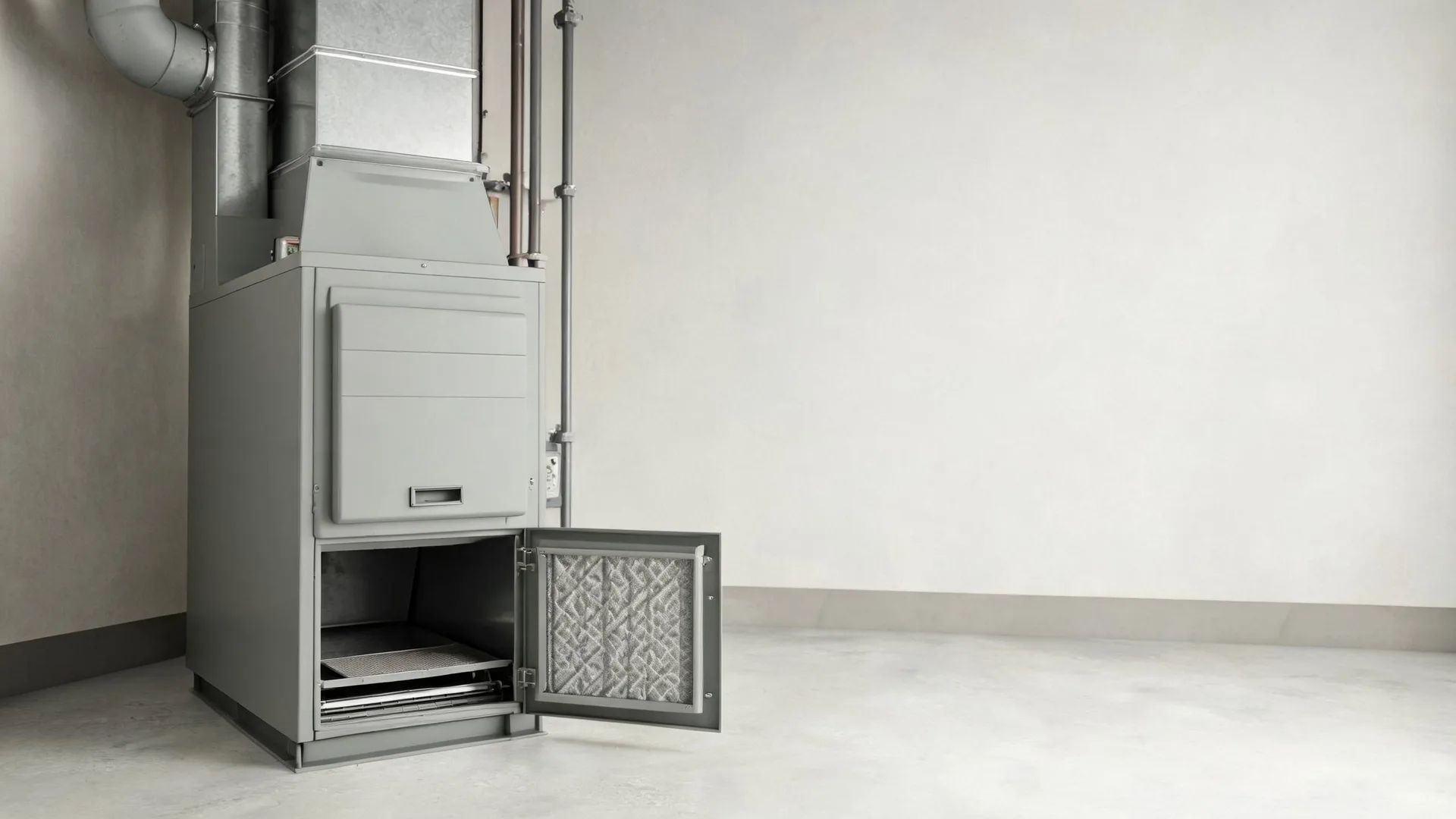
A gray gas furnace with attached ductwork and piping installed in an unfinished concrete basement.

Ten months of runtime, one short window to check it

Get a tune-up booked before September, while a worn igniter or a weak flame sensor is still an easy fix instead of a no-heat call.

A longer heat cycle than it used to run

If the furnace takes longer to bring a room up to temperature than it did last year, something is making it work harder to do the same job. A cracked heat exchanger, a weak blower or a dirty burner can all show up this way before anything actually fails.
A smell that wasn't there before

A burning dust smell at the start of a cycle is normal and clears fast. A smell that lingers, or anything sharp like gas, means the furnace needs a look before it runs again. Don't wait for the next cold snap to find out why.

A furnace filter is the cheapest part to check and the one that causes the most trouble when it's ignored. Airflow that should move across the heat exchanger backs up instead, and the furnace runs longer to push the same heat through. A blower pulling against a clogged filter works harder than it was built to, and that shortens its life. None of this touches the coils or drain the way an air conditioner's would, since a gas furnace doesn't cool or condense anything on the heating side. But a furnace paired with central air shares that indoor coil, and a coil caked in dust blocks airflow the same way a dirty filter does, just on the cooling side of the year. Keep the filter clean and the coil stays clean too, since most of what fouls a coil came through a filter that wasn't doing its job.

A tune-up starts with the furnace apart enough to see the parts that don't show on a quick look. The burners come out for cleaning, since a burner coated in dust or corrosion burns uneven and puts soot on the heat exchanger behind it. The heat exchanger gets checked for cracks, because a cracked one can let exhaust mix into the air the furnace is pushing through the house. The igniter gets tested under load, not just looked at, since an igniter can glow and still fail to light the burner reliably. The flame sensor gets cleaned, because a film of oxidation on it reads as no flame even when the burner is lit, and that shuts the furnace down mid-cycle. The blower gets checked for wear and for amp draw, since a motor pulling more current than it should is heading toward failure. The venting gets inspected for a clear path outside, because a blocked vent backs exhaust up into the house instead of out of it.