




A dark-painted two-story house with a covered porch and metal roof stands behind a wire fence and shrubs, backed by tall evergreen trees, with a blurred grassy field in the foreground under an overcast sky.

Furnace Maintenance in Oakes, ND

Tell us about the job

Takes about a minute. No obligation.

Tune-up, service, or cleaningFurnace or heatingDickey County, ND
Step 1 of 2

What ZIP code is the job in?

A furnace losing efficiency doesn't shut off. It just runs longer to make the same heat, and every extra minute shows up on the bill. North Dakota power costs $33.73 per million Btu, among the higher rates homes deal with, so a furnace working harder than it should costs more here than it would somewhere cheaper. A dirty flame sensor, a clogged filter, a blower pulling more amps than it needs, none of these stop your furnace from running. They just make it spend more to do the same job. A tune-up catches that drift before a full winter of higher bills makes it expensive.

Skip enough tune-ups and the flame sensor gets coated until the furnace can't tell it's lit, then it shuts itself down to be safe.

A yearly cleaning keeps that flame sensor reading clean and keeps the furnace running instead of locking out.

Half the furnaces in Oakes are as old as the house they're in

Half the homes here were built by 1964
Heat runs September through May
Winter nights average 6°F
What's actually heating Oakes homesElectricity heats 46.1% of homes in Dickey County, LP gas another 37.9%, and that gas furnace needs its burner and venting checked, not just a filter swap.

Furnace season starts in September here and runs through May, nine months of the year. August is the slot to get a furnace looked at, right before it has to carry the house every day. A furnace that starts the season with a dirty flame sensor or a weak igniter is working against itself from the first cold morning, not easing into it. Book the check in August and whatever needs attention gets handled before the furnace needs to run right.

Get your furnace running the way it's supposed to, before it costs you to run the way it is

A furnace that's drifted out of tune doesn't cost you in one big bill. It costs you every day it runs, at $33.73 per million Btu. A tune-up gets the flame sensor clean and the furnace carrying the house the way it should, instead of working harder than it needs to.

Find a contractor
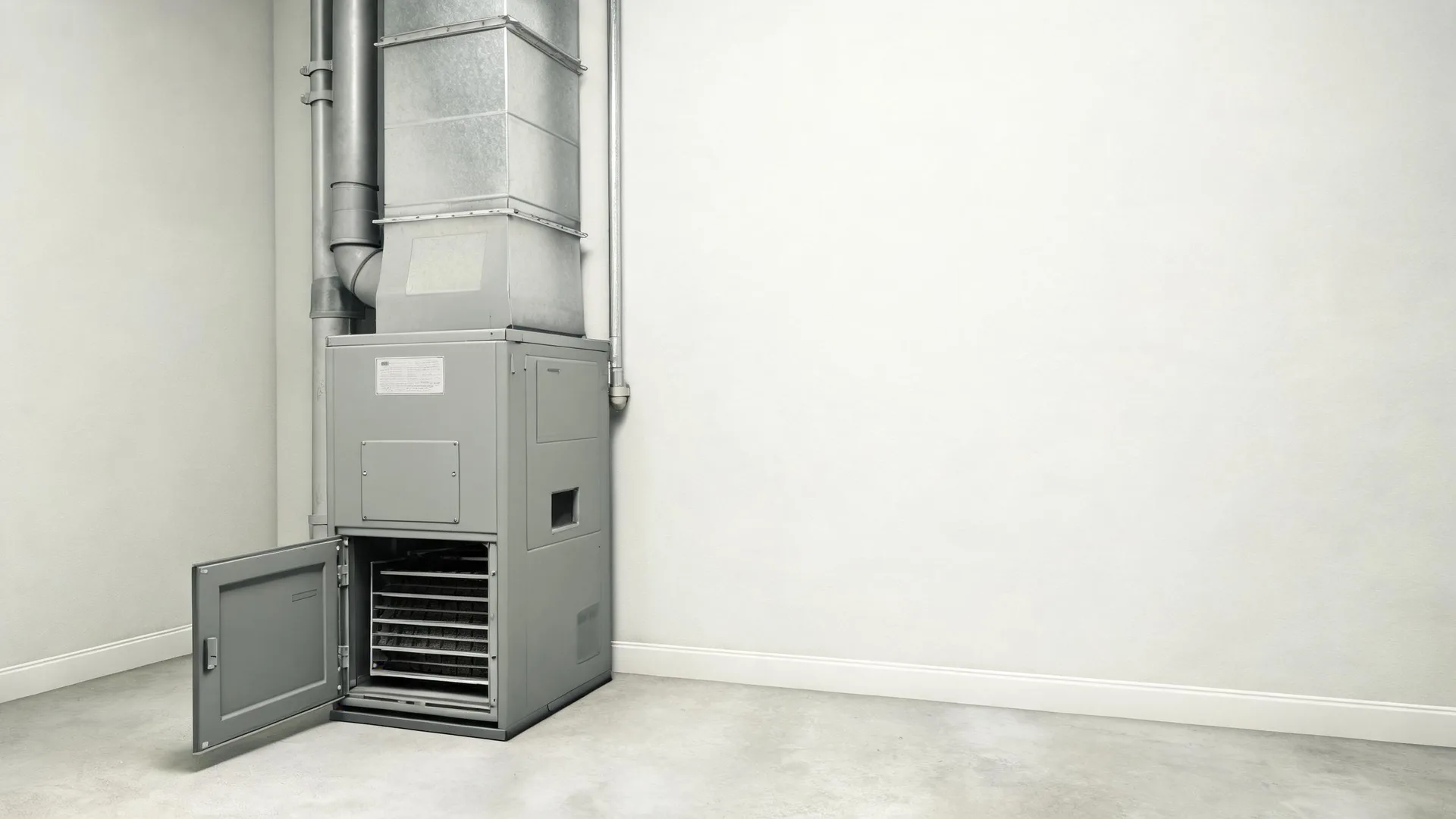
A gas furnace with attached ductwork, gas piping, and condensate lines installed in a concrete-block basement.

Nine months of work, most of it in the cold

Nine months of heat a year is most of the calendar. Add nights that average 6°F across December, January and February and the furnace isn't cycling on and off, it's holding that line for hours at a stretch. That's what wears a flame sensor down and tires out an igniter faster than the same parts would somewhere milder. The clip beside this shows what that looks like from one day into the next, the burner firing again and again because outside never lets up. A furnace built for that kind of winter can handle it. One running on a dirty sensor or a weak igniter is carrying nine months of work on parts already behind.

A noisy burner is telling you something

A furnace should light with a steady whoosh and settle into a low hum. A bang on startup means gas is pooling before it catches, usually from a dirty igniter or a burner that needs cleaning. Rattling or screeching while it runs points to a blower wheel working loose or a motor bearing wearing out. None of these fix themselves, and all of them get worse the longer the furnace keeps running that way.
Short cycling wears out the parts that start it

A furnace that shuts off a few minutes after starting, then kicks back on soon after, is short cycling. It usually means the flame sensor can't hold a clean reading or airflow is restricted enough to trip the limit switch. Every one of those starts puts a load on the igniter and the ignition control board. A furnace that short cycles all winter asks those parts to start far more times than a furnace that runs normal, longer cycles, and that's what sends an igniter bad before its time.

Between visits, the filter is the one thing worth checking yourself. A dirty filter chokes airflow, and a furnace starved for air runs its heat exchanger hotter than it should, which trips the limit switch or scorches the exchanger over time. Look at it monthly and swap it when it looks gray instead of white. Keep the area around the furnace clear too, nothing stacked against the cabinet, since it needs open air to draw in and breathe. Check that the vent pipe outside isn't blocked by anything that's piled up against it, because a blocked vent keeps exhaust from leaving the way it should. Past that, leave the burner and the flame sensor alone. Those need a trained hand and the right tools, not a homeowner with a rag.

A proper tune-up starts with the burner and the flame sensor, since those decide whether the furnace lights clean or struggles every time it starts. The technician pulls the burner assembly, cleans off any rust or residue, and checks that the flame itself burns steady and blue instead of flickering yellow. The heat exchanger gets inspected for cracks, because a cracked exchanger lets exhaust mix with the air moving through the house, and that's not something a filter change will catch. The igniter gets tested under load, not just looked at, since an igniter can look fine and still fail to get hot enough to light the gas. Belts aren't part of this on a modern furnace, since the blower motor drives the wheel directly, but the motor still gets checked for bearing wear and the wheel for anything thrown off balance. Gas pressure gets measured at the valve, because too high or too low both cause problems that show up as a furnace running rough or short cycling for no obvious reason.