





An unfinished basement containing a forced-air furnace with metal ductwork, exposed wooden ceiling joists, a hanging Edison bulb, and bare concrete floors.

Furnace Maintenance in New Town, ND

Tell us about the job

Takes about a minute. No obligation.

Tune-up, service, or cleaningFurnace or heatingMountrail County, ND
Step 1 of 2

What ZIP code is the job in?

A furnace that's skipping its yearly service has to work harder to put out the same heat, and that shows up on your bill. North Dakota power runs $33.73 per million Btu, among the higher rates in the country. A dirty flame sensor or a clogged filter makes the burner cycle more to hit the same temperature, burning more of that expensive power every time it runs. A tune-up catches those problems before they cost you anything. Out here, with the furnace running most of the year, that difference adds up fast.

Furnace heat runs here from September through June.

Ten months of runtime wears parts down faster than a furnace that gets to rest.

Book the tune-up in August, because September is when this furnace stops being idle

Heat runs September through June
Climate zone 6A
Winter nights average 4°F

Half the homes in Mountrail County were built in 1997 or later, so a lot of the furnaces here are still well within their working life. A newer furnace doesn't need less maintenance than an old one. It needs the same yearly check. The igniter still wears. The flame sensor still coats over with buildup. The filter still clogs. Catching a weak igniter or a dirty sensor now, while the system is young, keeps it running the way it did when it was installed. Skip that check for a few years and a newer furnace starts burning power like an old one.

A tune-up pays for itself here

A neglected system uses more power, and power costs more here. A tune-up pays for itself.

Find a contractor
A man in a dark long-sleeved shirt and tan work pants, seen from behind, climbs porch steps toward a navy front door while carrying a canvas tool bag.
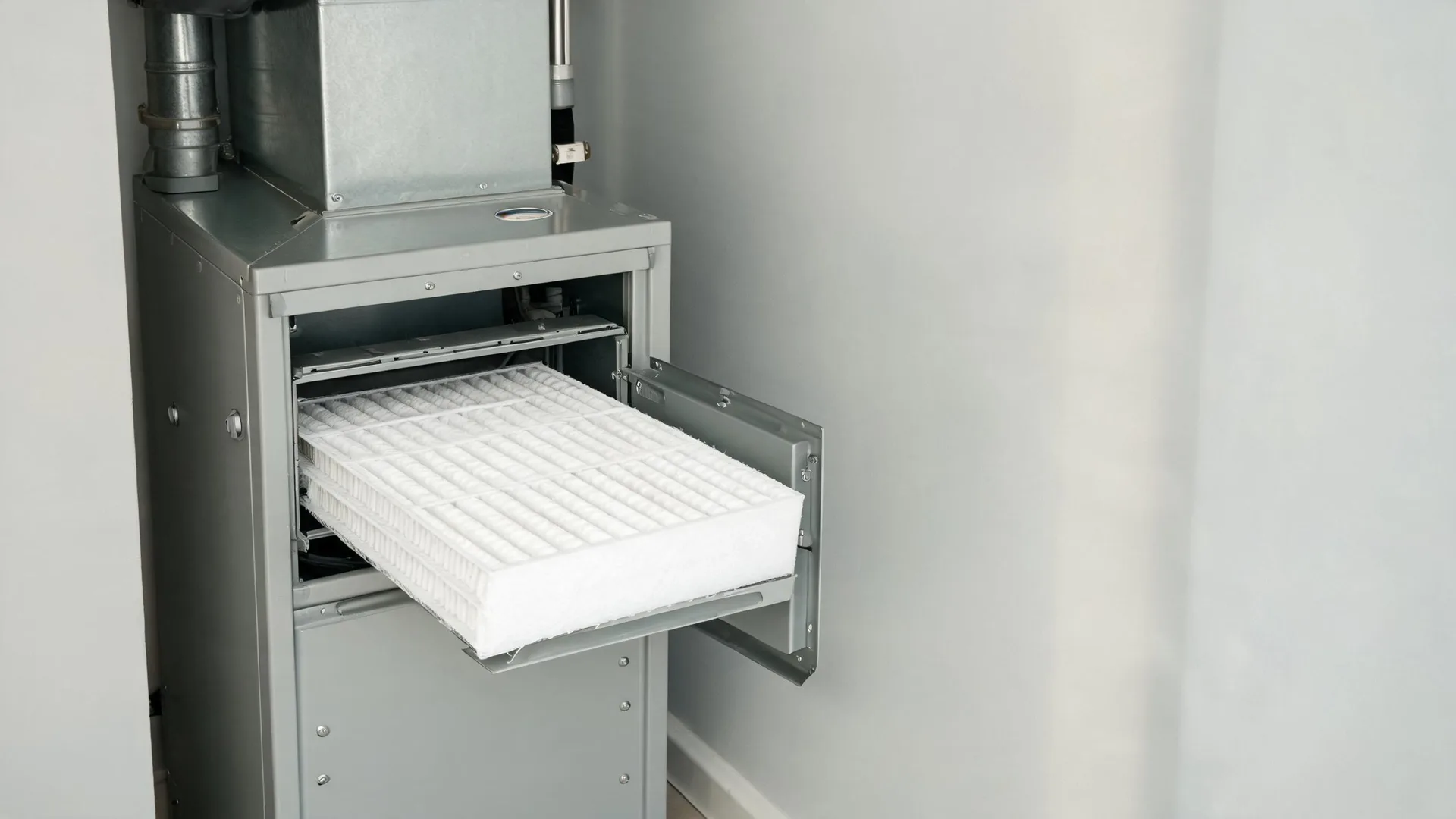
A gray residential gas furnace installed in an unfinished basement, surrounded by ductwork, a metal flue pipe, and a gas supply line.

Ten months of work starts soon. Check it first.

Get the furnace looked at before September. Once it's running most days, a tech has to work around your heat instead of catching a worn igniter or a dirty flame sensor before it fails on a cold night. With lows averaging 4°F in December and January, this isn't a system that can sit broken while you wait for a slot to open up.

A small problem doesn't stay small

A cracked heat exchanger, a failing inducer motor, a blower bearing going bad. Every one of them starts out minor and gets worse under use. A furnace that runs for months without anyone looking at it just keeps operating on those small faults until one of them stops the system outright, usually on a night it's working hardest.
One worn part stresses the next one

A furnace is a chain of parts reacting to each other. A worn igniter means more failed ignition attempts, and each failed attempt is extra strain on the circuit board that times the ignition sequence. A clogged filter forces the blower motor to push harder against the blockage. Left alone, one weak part wears down the part next to it.

A tune-up opens the cabinet and looks at things you'd never see running the thermostat. A tech pulls the burner assembly and checks the flame itself, whether it burns steady and blue or flutters and licks yellow at the edges, which says something about how clean the gas is burning. The heat exchanger gets checked for cracks, because a cracked one can let exhaust mix into the air moving through your house, and there's no way to spot that from the vents. The flue is checked for proper draft, pulling exhaust out instead of letting it back up. Amp draw on the blower motor gets tested against what it should be, which catches a motor working harder than it used to long before it quits. None of this shows up as a symptom you'd notice. It shows up as a number on a gauge, or it doesn't show up at all until the part fails.

A tune-up also covers the parts that cause a no-heat call if they're skipped. The igniter draws current and should glow evenly across its length. One that glows weak or cracks under a light touch will likely fail the next time it's asked to light the burner. The flame sensor gets cleaned of the oxidation that builds up on it, because a coated sensor can't tell the control board the burner lit, and the board shuts the gas valve down even though everything is working fine. Belts and bearings on older blower assemblies get checked for wear, though most newer furnaces drive the blower directly and don't have a belt to break. Wiring connections at the control board get tightened, since a loose connection causes the same intermittent shutdowns as a failing part and is easy to miss without pulling the panel. A gas furnace also gets its gas pressure checked at the manifold, because pressure that drifts too high or too low changes how the burner flame behaves even when every part is otherwise sound.