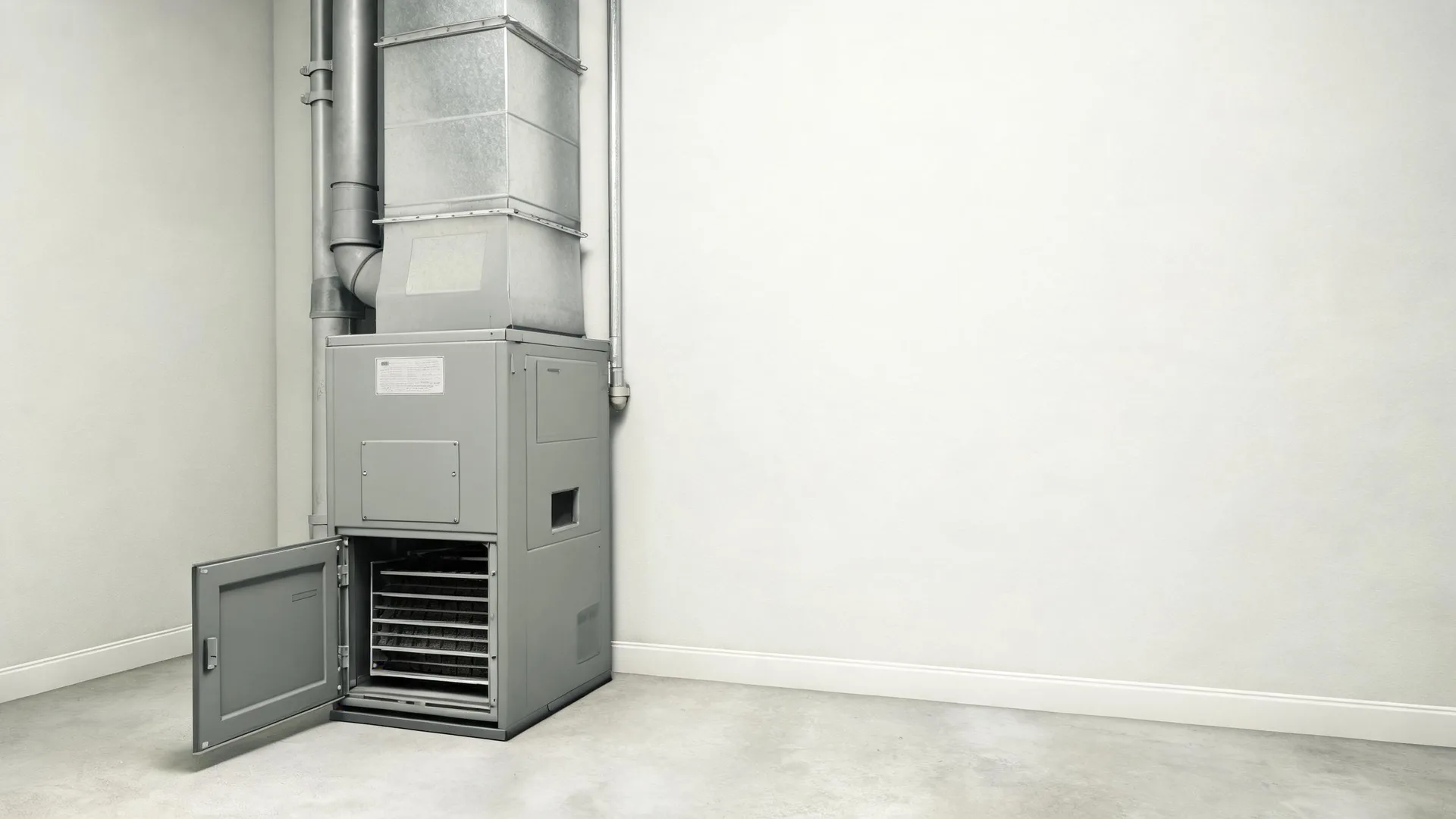
Gas here costs more to waste
Natural gas ran $8.44 per million Btu in North Dakota in 2024. A furnace with a dirty burner or a clogged filter has to run longer to put out the same heat, and every extra minute burns gas at that price.
Takes about a minute. No obligation.
Natural gas ran $8.44 per million Btu in North Dakota in 2024. A furnace with a dirty burner or a clogged filter has to run longer to put out the same heat, and every extra minute burns gas at that price.
A furnace that lights clean and moves air the way it was built to use less gas to heat the same house. Checking that over before the cold sets in is what a tune-up is for.
Your furnace runs about nine months a year here, September through May.
That is most of the year asking parts to work, so a tune-up before the season starts catches what is wearing thin.


Half the homes in Hettinger County were built in 1964 or earlier. A furnace that old has usually been replaced at least once, but check if yours came with the house or was swapped in later. Either way, a system that's been running for years has had more time to drift out of adjustment, a little at a time, in ways you wouldn't notice day to day. A yearly check catches that drift. A burner that's lighting unevenly or a blower working harder than it needs to won't announce itself. It just shows up as wear, and wear is cheaper to deal with before the season starts than after.
A tune-up before the cold sets in is what keeps that gas bill from paying for waste. Get a furnace tune-up scheduled now, while there's still time before the heat has to run.
Find a contractor
Nine months of runtime means nine months of a burner lighting, a blower spinning up, a limit switch cycling. Every one of those gets more chances to show wear here than in a place where heat only runs a few months. Once September comes the furnace doesn't get a break to fail quietly. It just runs, and whatever was already wearing thin runs with it.
A healthy burner flame is steady and mostly blue. If it's flickering, yellow, or pulling away from the burner, something in the combustion process is off. Left alone, that kind of flame leaves soot on the heat exchanger and can point to a cracked exchanger itself, which is a safety issue, not just a performance one.
A furnace that kicks on, runs a few minutes, then shuts off before the house warms up is short cycling. It usually means a clogged filter, a failing flame sensor, or a blower pulling bad airflow. Each cycle puts a jolt through the ignition system and the blower motor, and a furnace doing that all season wears those parts down long before their time.
A quick tune-up gets the filter swapped and calls it done. A thorough one opens the cabinet and checks what the filter alone won't tell you. That means pulling the burner assembly to look at the flame, checking that the flue is drafting right so exhaust is actually leaving the house, and testing the flame sensor and igniter instead of just glancing at them. It means checking the blower wheel for dust buildup, since a dirty wheel moves less air even when the motor runs fine. A good tech also checks the limit switch and the pressure switch, two safety parts that can fail quiet and leave the furnace short cycling or not starting at all. If the visit takes about as long as it takes to change a filter, that's what happened. A real inspection takes longer because there's more to open up and test.
Gas heats close to half the homes in this county, more than any other fuel. That means most furnaces here are burning something, not just pushing air with a heating strip. A gas furnace has a burner, a flue and a set of safety switches that an electric system doesn't have, and each one needs to be checked on its own. A filter swap doesn't tell a tech whether the burner is lighting clean or the flue is venting exhaust the way it should. Those are the parts that matter most once the cold weather settles in and the furnace has to keep running.